There’s never been a better time to turn your online influence into income — but with so many programs out there, it’s easy to feel overwhelmed. Two of the most popular ways to start earning from Amazon are the Amazon Influencer Program and the Amazon Affiliate Program (also known as Amazon Associates).
At first glance, they might sound the same. Both let you earn commissions by recommending Amazon products. But they’re built for different types of creators, use different tools, and can lead to very different results.
In this guide, we’ll break down Amazon Influencer vs Amazon Affiliate Program, how each works, their requirements, commission structures, and how to decide which is right for you.
This article is part of our Ultimate 2026 Amazon Influencer Program Guide, where we cover everything from getting approved to growing your storefront and maximizing commissions.

What Is the Amazon Affiliate Program?
The Amazon Affiliate Program (also called Amazon Associates) is one of the oldest and most beginner-friendly affiliate marketing programs online. It allows you to earn a commission every time someone purchases a product through your unique Amazon affiliate link.
How Does the Amazon Affiliate Program Work?
Here’s the simple version:
- You sign up for a free Amazon Associates account.
- You create affiliate links to any product on Amazon.
- You share those links on your blog, website, or YouTube description.
- When someone clicks and buys, you earn a small percentage of the sale.
Most beginners start here because you don’t need a large following — just a platform where you can drive traffic.
Let’s say you write a blog about home office setups and link to your favorite ergonomic chair. If your reader clicks your link and buys it within 24 hours, you’ll earn a commission (usually between 1%–10%, depending on the category).
Amazon Affiliate Commission Structure
The Amazon Affiliate commission structure varies by category:
| Product Category | Commission Rate Range |
| Luxury Beauty, Luxury Stores Beauty, Amazon Explore | 10% |
| Digital Music, Physical Music, Handmade, Digital Videos | 5% |
| Physical Books, Kitchen, Automotive | 4.50% |
| Amazon Fire Tablet Devices, Amazon Kindle Devices, Amazon Fashion Women’s, Men’s & Kids Private Label, Luxury Stores Fashion, Apparel, Amazon Cloud Cam Devices, Fire TV Edition Smart TVs, Amazon Fire TV Devices, Amazon Echo Devices, Ring Devices, Watches, Jewelry, Luggage, Shoes, and Handbags & Accessories | 4% |
| Toys, Furniture, Home, Home Improvement, Lawn & Garden, Pets Products, Headphones, Beauty, Musical Instruments, Business & Industrial Supplies, Outdoors, Tools, Sports, Baby Products, Amazon Coins | 3% |
| PC, PC Components, DVD & Blu-Ray | 2.5% |
| Televisions, Digital Video Games | 2% |
| Amazon Fresh, Physical Video Games & Video Game Consoles, Grocery, Health & Personal Care | 1% |
| Gift Cards; Wireless Service Plans; Alcoholic Beverages; Digital Kindle Products purchased as a subscription; Vehicles – Leasing and Sales; Pet Prescription Medications; Food prepared and delivered from a restaurant; Amazon Appstore, Prime Now, or Amazon Pay Places | 0% |
| All Other Categories | 4% |
While rates are relatively low, you can make steady income with consistent traffic, especially from evergreen blog posts, Pinterest pins, and YouTube videos that continue to rank over time. For the most up-to-date commissions list of the Amazon Affiliate program, check out their official site.
Amazon Affiliate Requirements
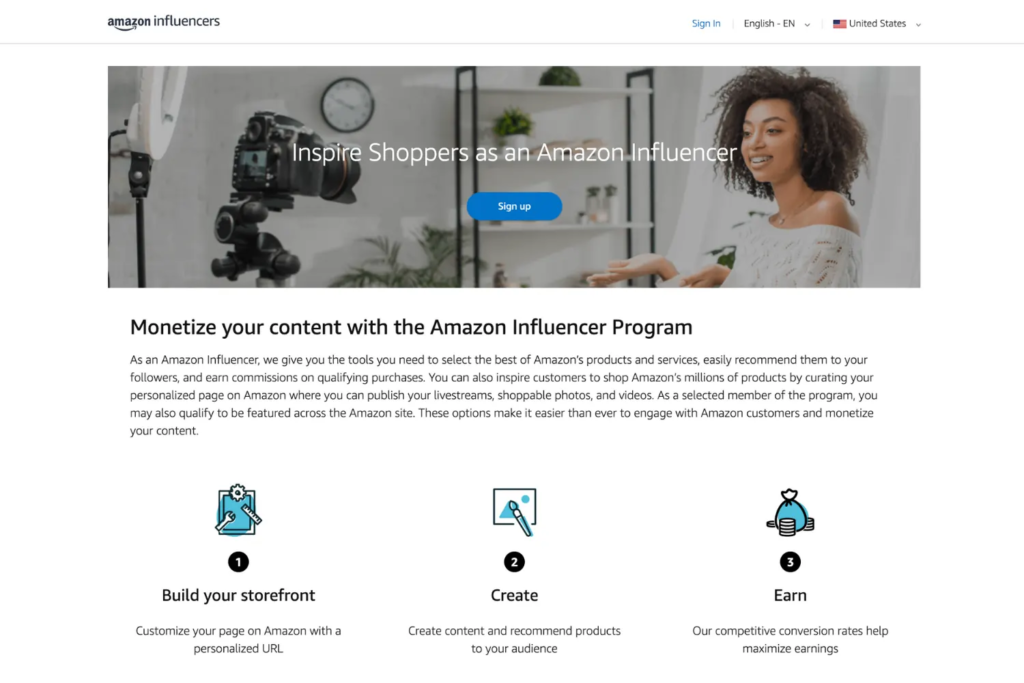
To get approved, you’ll need a website, blog, or social media channel that meets Amazon’s basic guidelines. You must generate at least three qualified sales within the first 180 days to stay active.
Amazon reviews each account manually, so make sure your content feels authentic and avoids excessive product promotion.
What Is the Amazon Influencer Program?
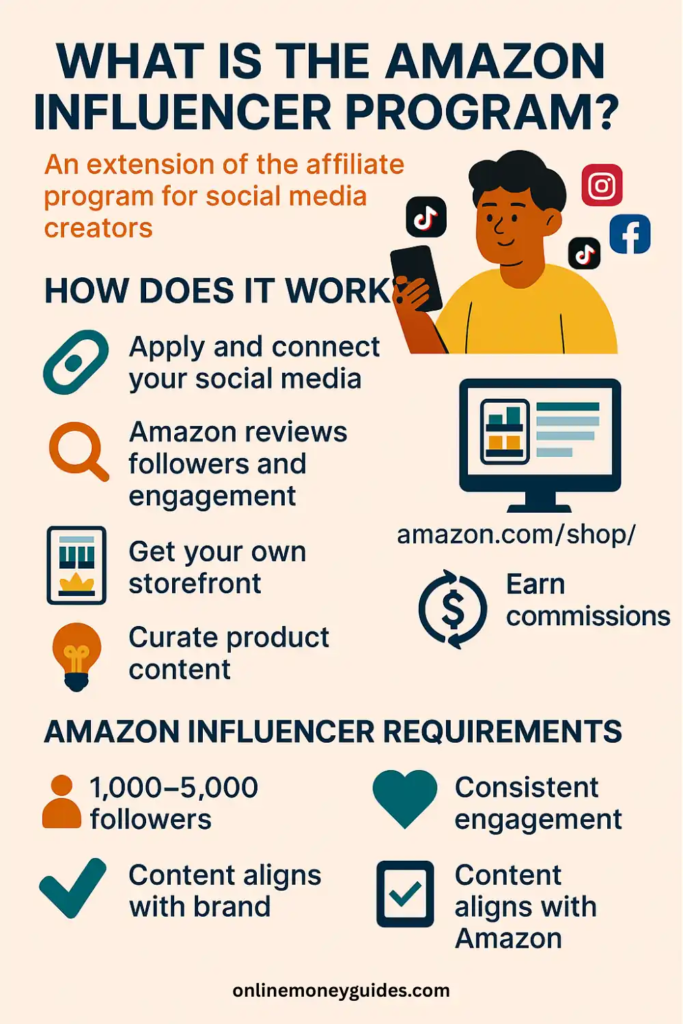
The Amazon Influencer Program is an extension of the affiliate program, designed for social media creators — people who build audiences on platforms like YouTube, Instagram, TikTok, and Facebook.
Instead of posting individual links, Influencers get a personalized Amazon Storefront, a mini-shop where followers can browse your curated product lists and shop directly from your recommendations.
How Does the Amazon Influencer Program Work?
Here’s how it typically works:
- You apply through your Amazon account and connect your social media.
- Amazon reviews your follower count and engagement metrics.
- If approved, you get your own Amazon Storefront URL (e.g., amazon.com/shop/yourname).
- You curate Idea Lists, Videos, or Livestreams showcasing your favorite products.
- You earn commissions when people buy from your storefront or your video content.
This makes it perfect for creators who are already sharing lifestyle content, unboxings, or product recommendations.
Amazon Influencer Requirements
While Amazon doesn’t publish exact numbers, most approved creators have:
- At least 1,000–5,000 followers on one platform
- Consistent engagement (comments, likes, clicks)
- Content that aligns with Amazon’s brand and guidelines
You don’t need a website — your social media reach is your qualification.
Amazon Influencer vs Amazon Affiliate Program: Key Differences
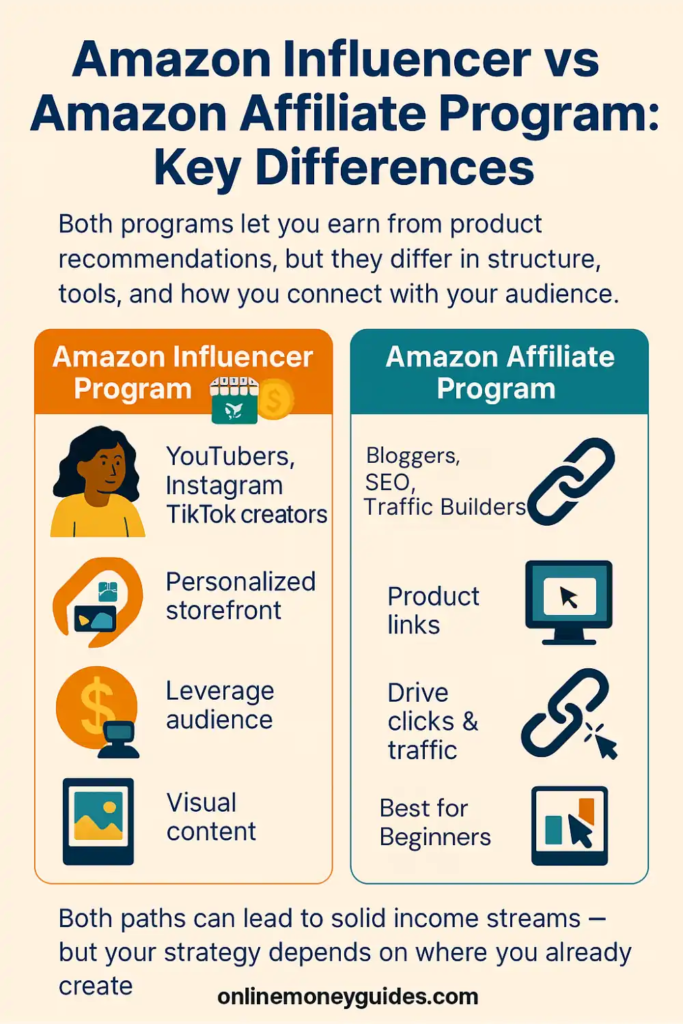
Both programs let you earn from product recommendations, but they differ in structure, tools, and how you connect with your audience.
| Feature | Amazon Affiliate Program | Amazon Influencer Program |
| Best For | Bloggers, website owners, SEO traffic builders | YouTubers, Instagrammers, TikTok creators |
| Main Tool | Product links | Personalized Amazon Storefront |
| Approval Requirement | Website or YouTube channel | Active social media with followers |
| Commission Structure | 1%–10% depending on category | Similar rates, but potential bonuses via videos/live |
| Cookie Duration | 24 hours | 24 hours (storefront sales), 90 days (for shoppable videos) |
| Monetization Style | Passive via blog or YouTube SEO | Active via community engagement and video content |
| Customization | Limited | Branded storefront and product lists |
| Best For Beginners? | Yes | Yes, if you already have social presence |
So in short:
- Affiliates earn by driving clicks and traffic.
- Influencers earn by leveraging their audience and visual content.
Both paths can lead to solid income streams — but your strategy depends on where you already create.
Which Program Pays More?
The commission rates are technically similar, but the earning potential depends on your traffic source.
- A blogger might earn $100–$500/month from affiliate links after a few months of consistent SEO and Pinterest traffic.
- A mid-sized Influencer (10K–50K followers) can earn $500–$2,000/month through storefront sales and Amazon shoppable videos, especially during holiday seasons or viral product trends.
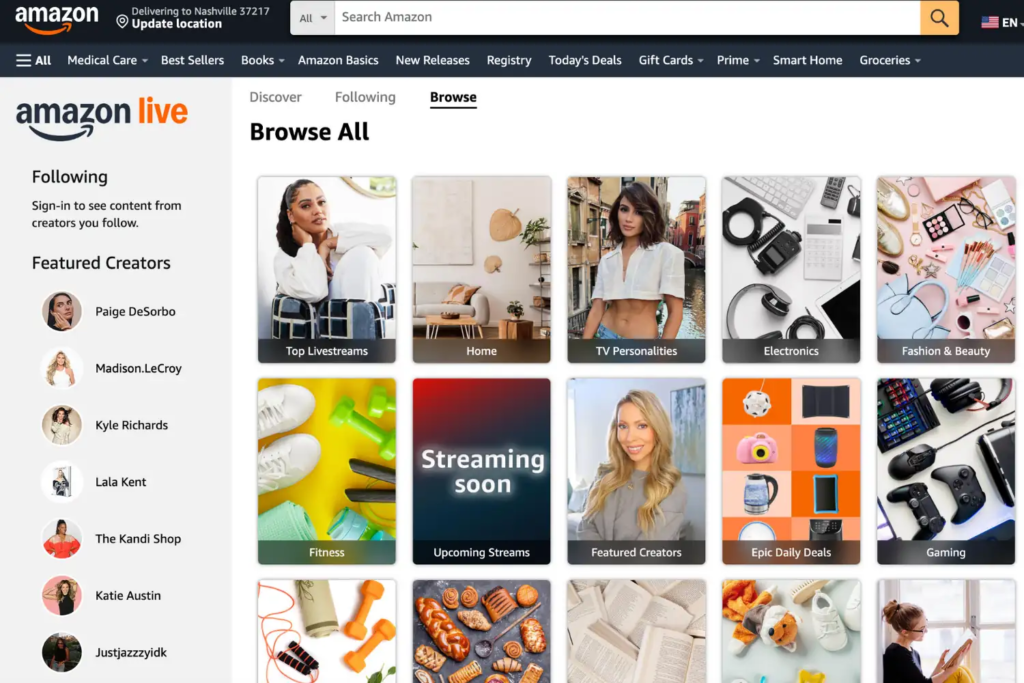
Influencers also have opportunities to earn bonuses through Amazon Live streams or product page placements.
If you’re strong at storytelling, product demonstrations, or content creation, then the Influencer Program may yield faster results.
If you prefer writing, SEO, and long-term passive traffic, the Affiliate Program offers more stability.
Tools That Help You Monetize Smarter
You don’t need fancy equipment to start earning, but these tools can help you grow and automate your income streams:
- ConvertKit – Build an email list and automatically send new posts or product roundups.
- Systeme.io – Create simple landing pages or mini funnels for product roundups and bonuses.
- VidIQ – Optimize YouTube titles and tags if you’re doing video product reviews.
- Visme – Design branded graphics or product collages for your Amazon storefront.
- Geniuslink – Automatically localize Amazon links to match international buyers.
Each of these tools lets you create a smoother, more professional experience for your audience, without needing to code or overthink it.
Can You Join Both Programs?
Yes — and in fact, many creators do.
You can use both to diversify your income and reach different audiences. For example:
- Use the Affiliate Program to monetize blog posts, product reviews, or Pinterest content.
- Use the Influencer Program to monetize your TikToks, YouTube Shorts, or Instagram Reels.
Amazon allows creators to cross-promote both as long as you follow their disclosure rules and avoid double-tagging the same product link.
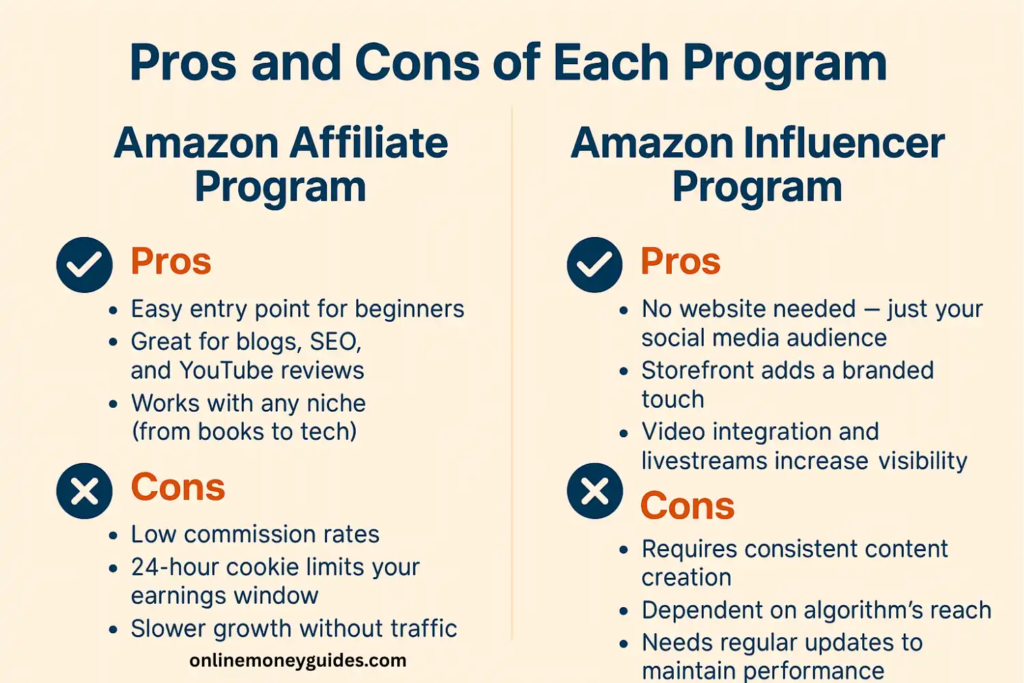
Pros and Cons of Each Program
Amazon Affiliate Program
Pros:
- Easy entry point for beginners
- Great for blogs, SEO, and YouTube reviews
- Works with any niche (from books to tech)
Cons:
- Low commission rates
- 24-hour cookie limits your earnings window
- Slower growth without traffic
Amazon Influencer Program
Pros:
- No website needed — just your social media audience
- Storefront adds a branded touch
- Video integration and livestreams increase visibility
Cons:
- Requires consistent content creation
- Dependent on algorithm’s reach
- Needs regular updates to maintain performance
Which One Should You Start With?
Here’s a quick guide to help you decide:
| Your Strength | Start With | Why |
| You enjoy writing blogs or SEO content | Amazon Affiliate Program | Easier to scale through organic traffic |
| You post consistently on social media | Amazon Influencer Program | Converts followers directly into buyers |
| You want long-term passive income | Amazon Affiliate Program | SEO-driven earnings can grow over time |
| You like creating videos or reviews | Amazon Influencer Program | Shoppable content boosts engagement |
Most creators eventually use both, blending them into a single ecosystem: blog + YouTube + social media + email list.
Combining Both for Maximum Income
Let’s say you’re a YouTuber who reviews tech gadgets:
- Use your Amazon Influencer Storefront to feature your full setup.
- Add affiliate links to individual products in your video description for SEO traffic.
- Build an email list using ConvertKit to send roundups of trending products.
- Automate sales funnels with Systeme.io.
That’s how creators go from earning a few extra dollars a month to consistent side income or even full-time freedom.
Choose What Fits Your Strengths
Both the Amazon Influencer and Amazon Affiliate Programs are powerful entry points into online income.
If you love content creation, visual storytelling, and community, the Influencer route gives you faster momentum.
If you prefer blogging, SEO, and building long-term assets, the Affiliate path builds slow but steady growth.
Both programs can be profitable, but if you want to learn how to qualify, get approved, and scale your income, read our complete 2026 Amazon Influencer Guide.
You don’t have to choose forever — you can start with one, learn the ropes, then expand into both.
The most important step is simply starting. Don’t wait until you “feel ready.” Apply, experiment, and adjust as you go. Every click, every product you share, is a small step toward earning on your terms.