You’ve probably wondered: “Do I need thousands of followers before brands even notice me?” Or maybe you’ve tried reaching out to companies on your own, only to hear nothing back. That’s frustrating, and it makes a lot of creators feel like sponsorships are only for the lucky few.
Here’s the truth: brands are actively looking for everyday creators just like you. In fact, micro and nano influencers with audiences under 50,000 or even 10,000 are some of the most in-demand partners right now. Why? Because smaller audiences often engage more deeply, and that translates into real results for brands.
This is where influencer sponsorship platforms come in. Instead of cold emailing brands and hoping for a reply, these platforms act as a meeting place where:
- Brands post campaigns they need help with.
- Creators apply directly to be considered.
- The platform manages contracts, payments, and sometimes even performance tracking.
It takes the guesswork out of the process and makes your first sponsorship far less intimidating.
Think of it as the bridge between your growing audience and the companies that want to reach them. And the best part? Many platforms welcome beginners; you don’t need millions of followers to get started.
You don’t have to wait until you’re “big enough.” Sponsorship platforms exist so you can start landing partnerships earlier than you think.
This guide is part of our Ultimate 2026 Influencer Sponsorship Guide, where we cover everything from landing your first brand deal to negotiating paid collaborations.
How Do Influencer Sponsorship Platforms Work?
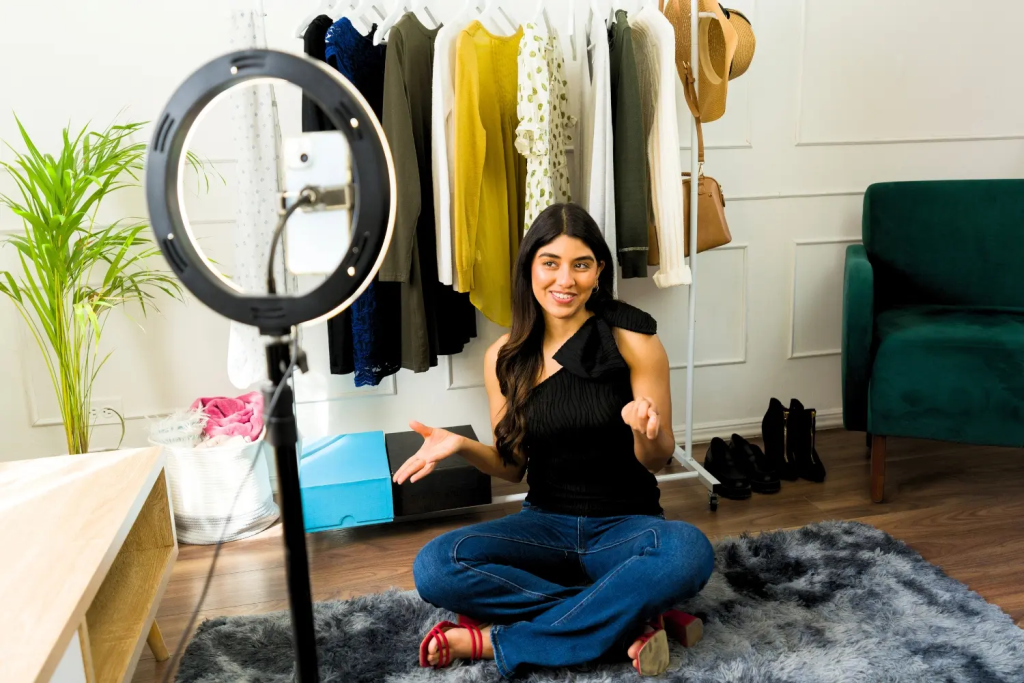
At their core, influencer sponsorship platforms are built to make life easier for both creators and brands. Instead of sending out dozens of cold emails, you get access to a centralized space where opportunities are already waiting for you.
Here’s the basic flow: a brand sets up a campaign on the platform, describing what kind of content they need, the budget they have in mind, and the type of creator they’re looking for. As a creator, you can browse these campaigns, submit your profile, and apply. If you’re selected, the platform often helps manage communication, deadlines, and payments.
Most influencer marketplaces also include built-in tools like analytics dashboards, so you can show brands exactly how your posts perform. This helps you look professional, even if you’re just starting out.
The advantages go beyond convenience. Using a dedicated influencer platform means you don’t have to worry about shady payment practices or unclear expectations. Everything is spelled out in advance, and platforms usually offer some level of contract protection. That safety net is huge, especially when you’re new and still learning the ropes.
When choosing a platform, look for features that give you confidence and structure: campaign management tools, reliable payment systems, audience insights, and clear guidelines for both sides. These details may not feel exciting at first, but they’re the backbone of sustainable brand partnerships.
Sponsorship platforms aren’t just about finding deals; they’re about giving you a safe, structured way to grow your creator business without wasting time or risking your income.
Key Features to Look for in an Influencer Sponsorship Platform
Not all platforms are created equal. Some are simple influencer marketplaces where you can apply for one-off campaigns, while others are full influencer marketing platforms that provide everything from analytics to contract management. Knowing what to look for makes it easier to choose the right fit for where you are in your creator journey.
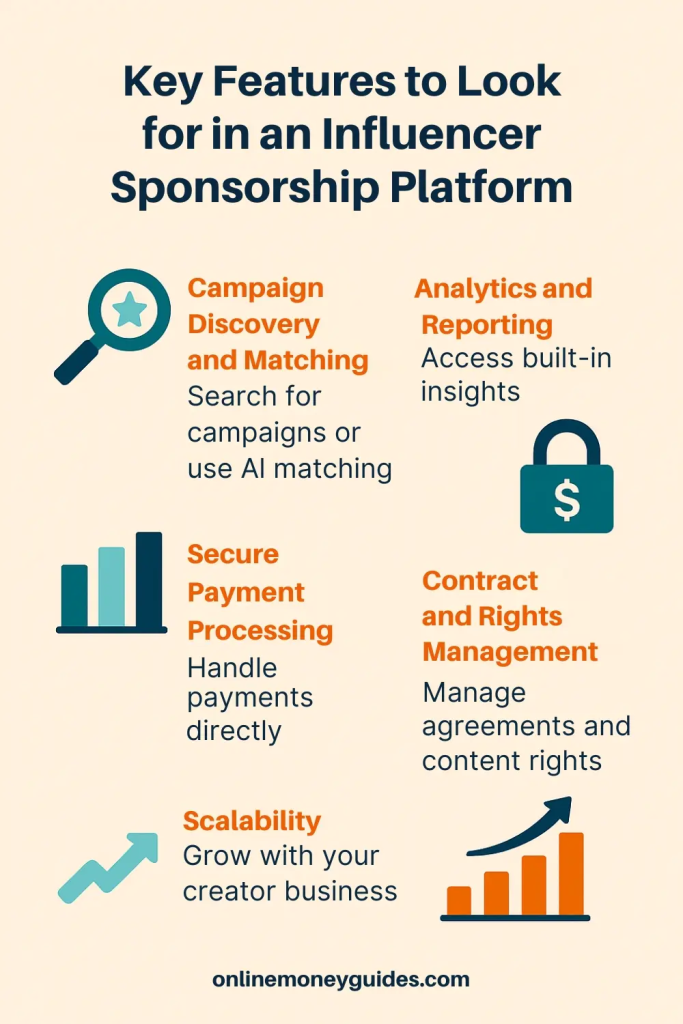
Here are the main features worth paying attention to. Think of this as your checklist when signing up:
- Campaign discovery and matching: Does the platform let you search for campaigns that fit your niche, or does it use AI matching to connect you with brands automatically?
- Analytics and reporting: Having built-in insights makes you look more professional and helps you justify your rates.
- Secure payment processing: Look for platforms that handle payments directly, so you don’t have to chase brands for invoices.
- Contract and content rights management: This protects you from surprises like a brand reusing your video without permission.
- Scalability: Can the platform grow with you as you take on bigger deals or manage multiple campaigns at once?
Some creators rush into the first platform they hear about, but slowing down to compare these details can save a lot of frustration later. A little upfront research makes sure you’re investing your energy where it will actually pay off.
Before signing up, ask yourself: “Does this platform give me both opportunities and protection?” If the answer is yes, you’ve found a strong partner for your creator business.

Top Influencer Sponsorship Platforms for Beginners and Side Hustlers
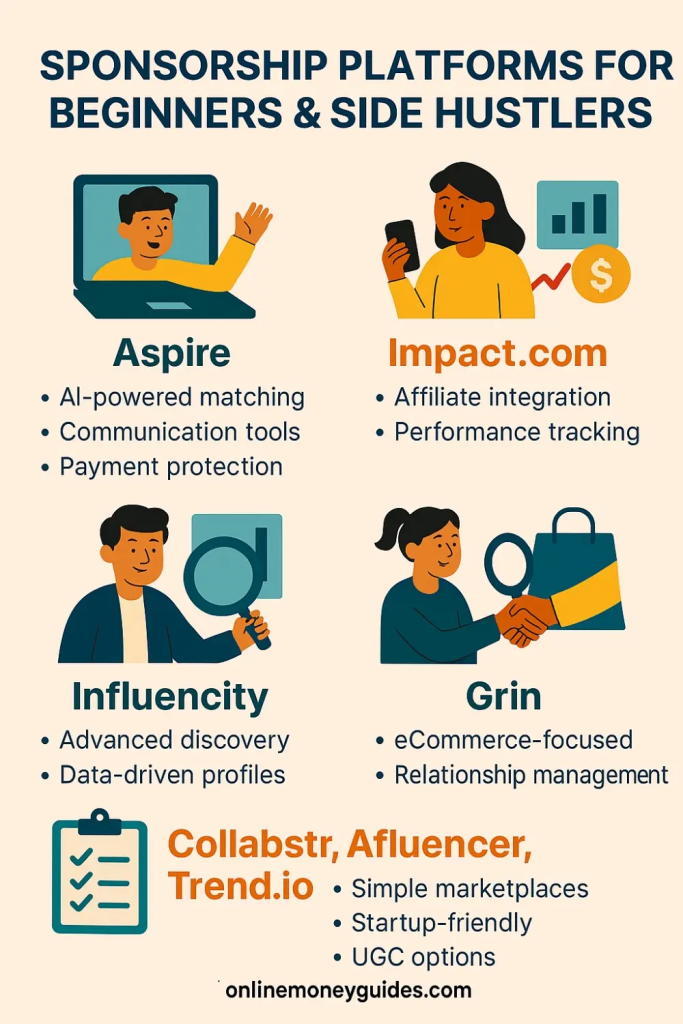
Aspire
Aspire has become one of the most well-known influencer sponsorship platforms because it strikes a balance between being beginner-friendly and offering serious tools for growth. Unlike marketplaces that just post open campaigns, Aspire uses advanced search and AI matching to help brands discover creators who are the right fit.
For you as a creator, that means less time chasing opportunities and more time focusing on creating content. Aspire also makes onboarding simple. You can sign up, build your profile, and start applying to campaigns without a steep learning curve.
A few things that make Aspire stand out:
- AI-powered campaign matching: You’ll see opportunities that align with your niche and audience size.
- Built-in communication tools: No need to swap endless emails; you can manage everything inside the platform.
- Payment protection: Aspire handles payments securely, so you’re not left waiting on a brand’s accounting team.
Aspire is also widely used by brands of all sizes, from startups to big names. This mix is great if you’re testing the waters and want to build a portfolio of collaborations.
Aspire is a strong starting point if you want a professional, all-in-one influencer platform that grows with you as your audience expands.
Impact.com
Impact.com is one of the most established names in the influencer marketing platform space. While it’s often associated with big affiliate programs and partnerships, it has expanded into influencer sponsorships in a big way. That means you can use one platform to manage brand deals, affiliate links, and even long-term partnerships.
For creators, this is especially helpful if you’re looking to combine sponsorship income with affiliate marketing. Imagine promoting a brand’s campaign on Instagram while also earning a commission through an affiliate link from Impact.com that lets you track it all in one place.
Some of the features that make Impact.com stand out include:
- Performance tracking and reporting: Brands love data, and you’ll be able to share detailed reports of your reach, engagement, and conversions.
- Affiliate + sponsorship integration: A unique mix that makes your work more profitable over time.
- Trusted by major companies: While this can feel intimidating, it also gives smaller creators credibility when they join campaigns through the platform.
Impact.com can feel more advanced than simpler influencer marketplaces, but don’t let that discourage you. If you’re ready to treat content creation like a real business, this is a platform that helps you scale beyond one-off deals.
Impact.com is ideal if you want to combine influencer sponsorships with affiliate programs, giving you multiple income streams under one roof.
Influencity
If you’ve ever wished you could filter potential partnerships the way you filter products when shopping online, Influencity is the tool for you. It’s one of the leading influencer platforms for discovery and analytics, giving both brands and creators detailed data to make smarter decisions.
For creators, this means you can position yourself to be discovered by the right brands instead of pitching blindly. Brands can search by niche, location, audience demographics, or even engagement quality, which means you’re more likely to connect with companies that value exactly what you bring to the table.
A few reasons creators like Influencity:
- Advanced discovery tools: Great for niche creators who want to stand out in specific categories.
- Data-driven profiles: Your account is backed up by analytics, which builds trust with brands.
- Campaign management: Once you’re selected, the platform helps track deliverables and deadlines.
While it’s slightly more analytics-heavy than marketplaces like Collabstr, that’s actually a plus if you want to show brands you’re serious. Having data at your fingertips makes it easier to negotiate fair rates and prove your value.
Influencity is a smart choice if you want to be discovered by the right brands and use analytics to level up your sponsorship game.

Grin
Grin is often described as an end-to-end influencer marketing platform, meaning it covers everything from finding brands to managing campaigns, tracking results, and handling payments. While some platforms are better for quick one-off deals, Grin is built for long-term, relationship-driven partnerships.
One reason creators like Grin is its strong connection to eCommerce and Shopify brands. If you’ve ever wanted to partner with direct-to-consumer companies (think skincare startups, lifestyle products, or fitness gear), Grin is a powerful way to get your foot in the door.
What sets Grin apart:
- Seamless eCommerce integration: Many Shopify brands use Grin to manage influencer programs, so you’ll often find product sponsorship opportunities here.
- Relationship management: Designed for long-term collaborations instead of one-off campaigns.
- Scalability: Works well as you grow, whether you’re handling one partnership or juggling multiple deals.
Grin may feel a little more “professionalized” than some influencer marketplaces, but that’s not a bad thing. If you’re ready to start building recurring partnerships where a brand doesn’t just pay you once but comes back again and again, Grin helps set that foundation.
Grin is the right fit if you want to go beyond quick campaigns and start building lasting, revenue-generating relationships with brands.
Collabstr, Afluencer, and Trend.io
While platforms like Aspire or Grin give you a full suite of campaign management tools, sometimes you just want something straightforward. That’s where Collabstr, Afluencer, and Trend.io shine. These are influencer marketplaces, easy-to-use platforms where brands can browse creator profiles, and creators can apply to campaigns quickly.
For beginners, this simplicity is a big win. You don’t need to learn complicated software or worry about integrations. You just set up your profile, showcase your content style, and start pitching yourself to available campaigns.
Here’s what makes each one useful:
- Collabstr: Think of it like a marketplace where brands “shop” for influencers. Creators list their services (like Instagram posts or TikTok videos), set prices, and brands can purchase directly.
- Afluencer: Designed with micro-influencers in mind, Afluencer makes it easy to connect with startups and smaller businesses that often prefer working with creators who feel approachable and relatable.
- Trend.io: Focuses heavily on user-generated content (UGC). If you’re open to creating branded content that companies can repurpose for ads, Trend.io is worth exploring.
These platforms won’t overwhelm you with analytics dashboards or advanced reporting, but that’s the point. They’re built for speed and accessibility, perfect if you’re looking for your very first sponsorship deal.
Collabstr, Afluencer, and Trend.io are excellent starting points if you want a simple, low-barrier way to land your first paid collaborations.
Comparison of Top Influencer Sponsorship Platforms
| Platform | Best For | Key Features | Payment Handling | Ease of Use |
| Aspire | Beginners to mid-level creators | Influencer discovery, niche filtering, and campaign management | Secure in-platform payments | Easy to start, grows with you |
| Impact.com | Creators who want both sponsorships + affiliate income | Performance tracking, affiliate + sponsorship integration, trusted by major brands | Centralized payouts for affiliate + sponsorship | Slightly advanced, but powerful |
| Influencity | Creators who want to stand out with data | Relationship management, scalable campaigns, and eCommerce integration | Payments tied to campaigns | Moderate learning curve, data-driven |
| Grin | Long-term brand relationships (eCommerce/Shopify) | Relationship management, scalable campaigns, eCommerce integration | Contracts + secure payments handled in-platform | More professional, built for scaling |
| Collabstr | Quick one-off collaborations | Marketplace style: list services, set prices | Direct transactions managed in-platform | Very simple to use |
| Afluencer | Micro-influencers and startups | Easy campaign access, brand matching for smaller businesses | In-platform payments | Beginner-friendly |
| Trend.io | UGC-focused creators | Campaigns built around content brands can reuse | Manages usage rights + payments | Simple, ideal for UGC deals |
If you’re just starting, marketplaces like Collabstr or Afluencer are the easiest entry points. As you grow, platforms like Aspire, Influencity, or Grin give you the structure to build lasting partnerships.
Best Influencer Marketplaces for Micro and Nano Influencers
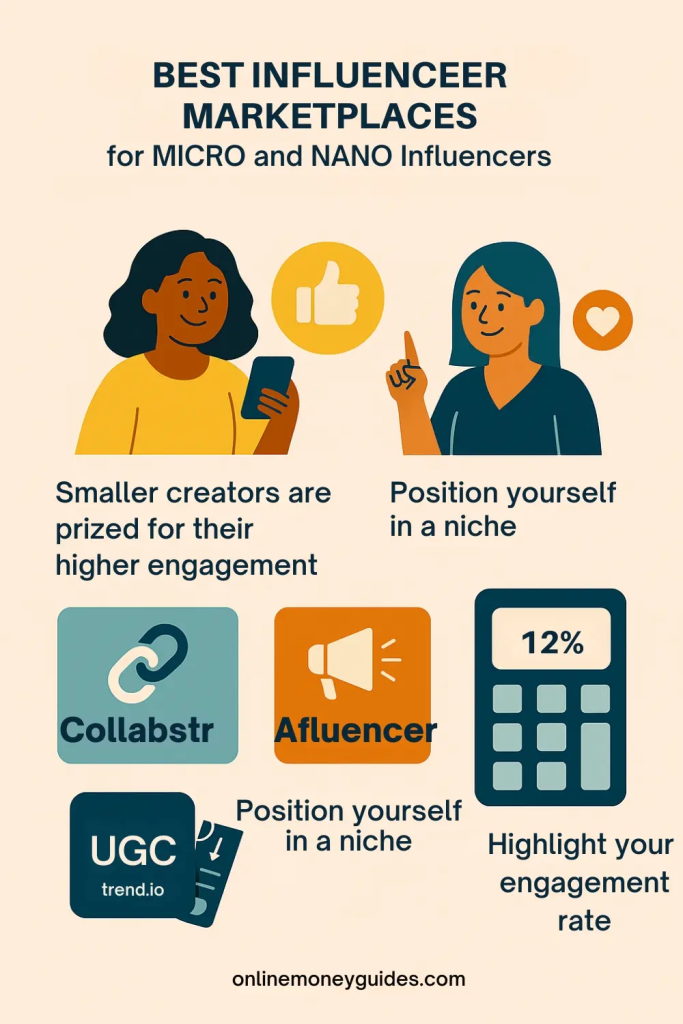
One of the biggest myths in content creation is that you need hundreds of thousands of followers to land sponsorships. In reality, brands are increasingly shifting their budgets toward micro-influencers (10,000–50,000 followers) and nano-influencers (under 10,000 followers). Why? Smaller creators often have higher engagement rates and more trust with their audiences.
If you’ve ever felt “too small” to get noticed, here’s the mindset shift: brands don’t just care about reach, they care about results. A nano creator who gets 12% engagement on Instagram can drive more sales than a larger creator with millions of passive followers.
This is exactly why influencer marketplaces are so powerful. Platforms like Collabstr, Afluencer, and Trend.io make it easy for brands to discover smaller creators who align with their values. You don’t need to cold pitch; your profile and audience data speak for you.
Here’s how to make the most of these marketplaces as a smaller creator:
- Highlight your engagement rate. Even if you have 2,000 followers, showing that 15% of them interact with your posts makes you stand out.
- Position yourself in a niche. Whether it’s sustainable fashion, coffee culture, or budget travel, having a clear theme makes it easier for brands to find you.
- Start with UGC. Platforms like Trend.io let you create branded content that companies can repurpose in a smart way to earn while building your sponsorship portfolio.
Remember, every big influencer started with their first small deal. These marketplaces are designed to help you take that step without needing to feel “big enough.”
If you’re a micro or nano creator, influencer marketplaces are your fastest path to getting noticed, not despite your size, but because of it.
Beyond Platforms: Expanding Your Sponsorship Income
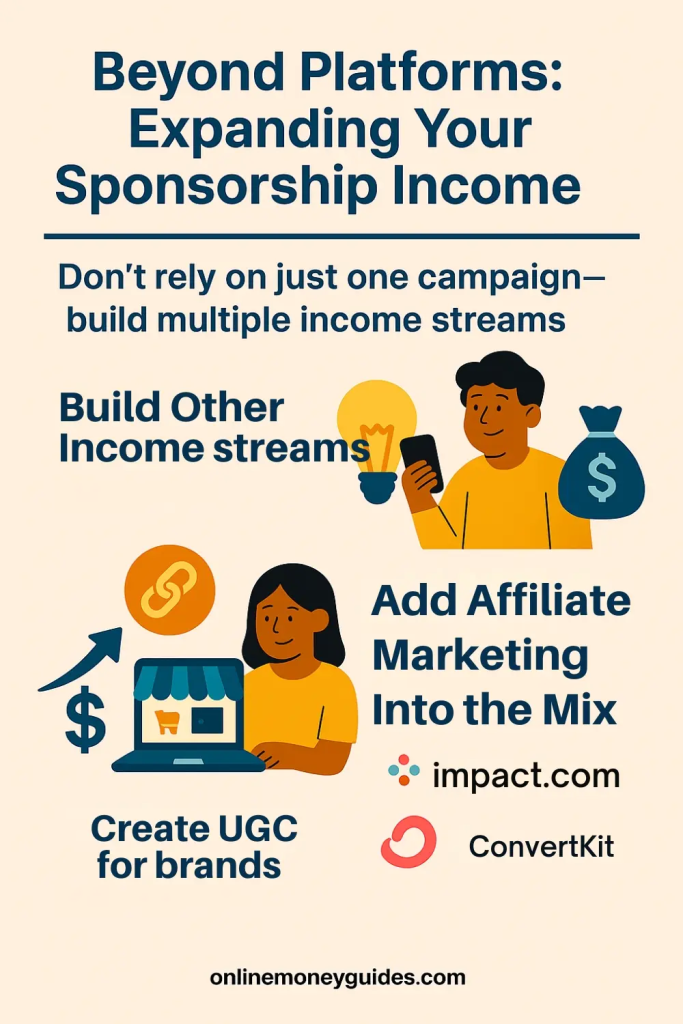
Getting brand deals through influencer sponsorship platforms is an exciting milestone, but it shouldn’t be your only income stream. The smartest creators use these platforms as a launchpad while also building other ways to monetize their content. That way, you’re not relying on a single campaign to pay the bills.
Here are a few practical ways to expand beyond sponsorships:
Add Affiliate Marketing Into the Mix
Affiliate marketing is one of the simplest ways to earn extra income from the content you’re already creating. For example, if you land a skincare sponsorship, you can also share affiliate links for the products you genuinely use. That way, every time someone clicks and buys, you earn a commission.
Great tools to start with:
- Impact.com: Doubles as an affiliate + sponsorship platform, so you can combine income streams in one place.
- ConvertKit: Not just for email lists, it also has a Creator Network where you can promote digital products with affiliate links.
Create User-Generated Content (UGC) for Brands
Platforms like Trend.io specialize in UGC deals. Instead of just posting on your own feed, you create branded content that companies can repurpose for their ads or websites. It’s a low-risk way to get paid without needing a massive following.
Build Your Own Audience Assets
Long-term success comes from owning your audience, not just renting attention on social media. Even if a platform changes its algorithm tomorrow, you’ll still have a direct line to your followers.
- Start an email list with ConvertKit.
- Create digital products like media kits, templates, or guides with Visme to sell directly to your audience.
Offer Services Alongside Sponsorships
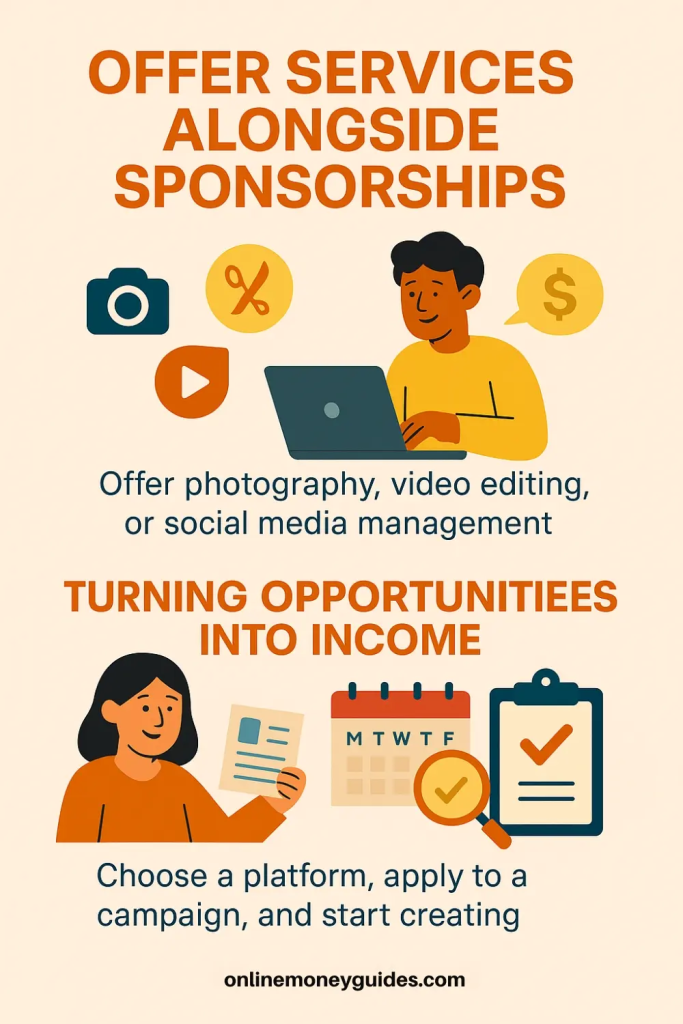
Think beyond being “just” a content creator. You can package your skills into services like photography, video editing, or social media management. Platforms like Fiverr make it easy to test the waters without building a whole new business from scratch.
Sponsorship platforms are the entry point, but pairing them with affiliate marketing, UGC deals, and audience-building creates a sustainable ecosystem where you control your income, not the algorithm.
Turning Opportunities Into Income
Scrolling through social media, it’s easy to believe that sponsorships are reserved for big influencers with polished teams and glossy feeds. But the reality is far more encouraging: brands are looking for creators of every size, and platforms exist to make those connections smoother, safer, and more accessible.
Your first collaboration doesn’t need to be huge to matter. Even a small paid campaign can open the door to bigger opportunities, new relationships, and the confidence that comes with knowing your creativity has value in the marketplace.
And here’s the real shift: when you start using influencer sponsorship platforms as part of your toolkit, you move from waiting on opportunities to actively creating them. Instead of hoping a brand finds you, you’re stepping into spaces designed to match you with companies that are already looking. That’s where side hustles start turning into sustainable income streams.
Platforms are a great starting point, but the real money comes from building direct relationships and scaling your sponsorship income. For the full roadmap, read our Ultimate Guide to Influencer Sponsorships in 2026.