There’s never been a better time to create something once and sell it forever. But with so many options, such as courses, templates, planners, eBooks, or even AI prompt packs, the hardest part isn’t making the product. It’s knowing what niche to choose.
When you pick the right niche, everything becomes easier. Your products sell faster, your content connects deeper, and you stop feeling like you’re shouting into the void. Whether you’re a new creator, side hustler, or digital entrepreneur looking for real, low-risk ways to make money online, this guide will walk you through the best niches for digital products, show you profitable ideas you can copy, and help you turn your creativity into consistent income.
Before we dive in, a quick heads up: some of the tools mentioned here are affiliate links, which means we may earn a small commission if you purchase through them at no extra cost to you. It helps support free content like this, so thank you for being part of the journey.
This article is part of our Ultimate 2026 Digital Products Guide, where we show you how to turn your ideas into profitable online products—from setup to scaling.

What Makes a Niche Profitable for Digital Products?
Not every idea turns into a winner. The difference between a digital product that earns $20 a month and one that earns $2,000 is rarely luck; it’s alignment. Profitable digital product niches sit at the intersection of demand, transformation, and scalability.
Understand the Core of a Profitable Niche
A profitable niche solves a clear, repeatable problem for a specific group of people. It’s not about what’s trending this week; it’s about what people will keep needing year after year.
Here’s a simple way to think about it:
- High demand: Are people already searching, talking, or spending money on this topic?
- Low to medium competition: Are there gaps in how existing products deliver results?
- Evergreen relevance: Will this topic still matter six months or two years from now?
For example, digital planning and social media templates continue to thrive because people always want to save time, stay organized, and look professional online. That’s why they remain some of the most profitable digital product niches year after year.
When you find a niche that meets those three criteria, you’re not guessing anymore; you’re building on proven demand.
Signs of a High-Demand Niche
You can identify a high-demand niche by observing audience behavior. Are people typing it into search bars, saving related posts, or buying existing versions on Etsy or Gumroad?
Here’s how you can check:
- Search for your idea on Etsy, Gumroad, or Creative Market and sort by “best-selling.”
- Use Ubersuggest or Everbee to see search volume and sales data.
- Browse subreddits, Facebook groups, or TikTok hashtags to spot real-world conversations.
If you see dozens of products already selling and people leaving reviews, it’s not saturation, it’s validation. It means the market exists. Your job is to create something that solves the same problem in a more specific or aesthetic way.
How to Choose the Best Niches for Digital Products (Step-by-Step)
Choosing the right niche isn’t about chasing trends. It’s about aligning what you love with what people already pay for. The best niches for digital products are usually hiding in plain sight in the problems you’ve solved, the tools you use daily, or the things people already ask you for help with.
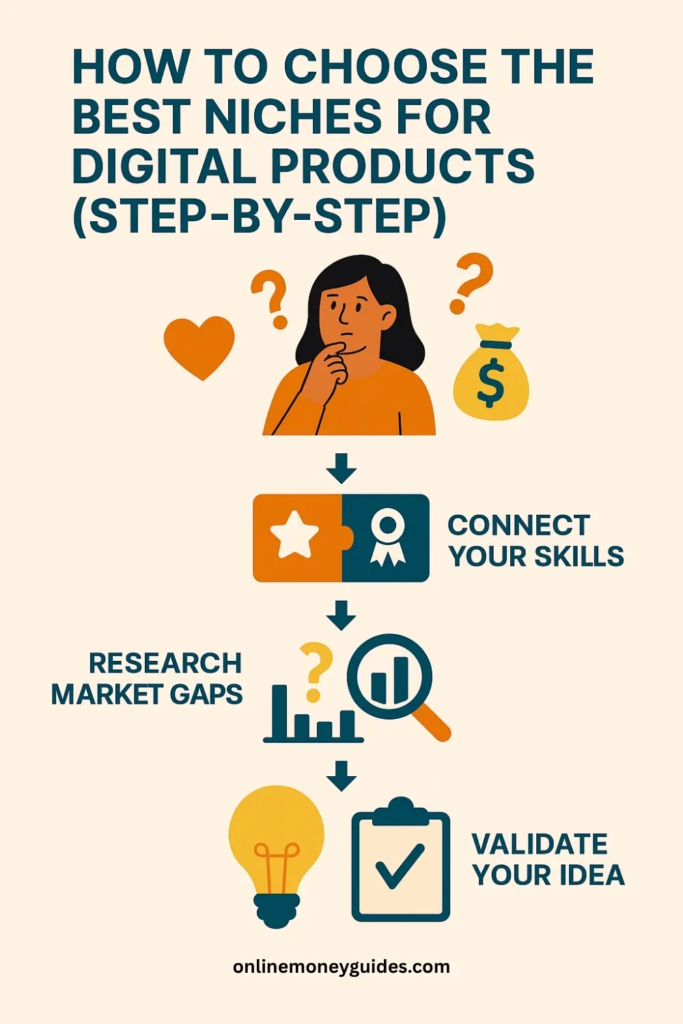
Finding your digital product niche doesn’t have to be complicated. You can follow a simple three-step approach: connect your skills, research market gaps, and validate your idea before creating.
Start With Your Interests and Skills
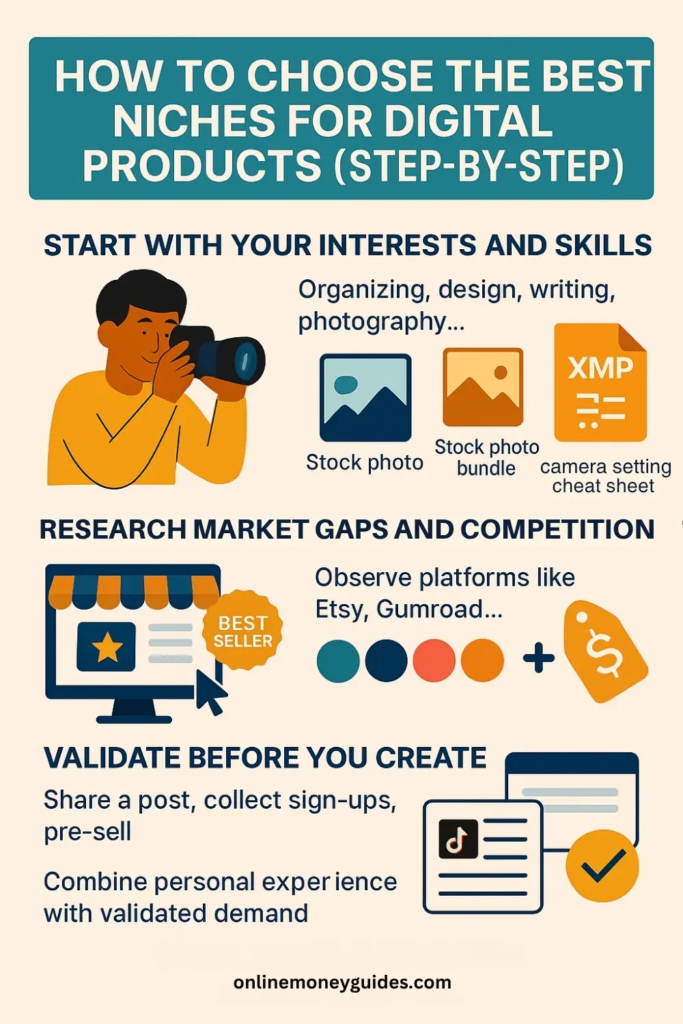
Every profitable idea starts with something you already understand. Think about what people often come to you for, maybe it’s organizing, design, writing, or photography. That’s where your edge lies.
Let’s say you’re a photographer. You could sell Lightroom presets, stock photo bundles, or even camera setting cheat sheets. A teacher or coach might create printable planners or habit trackers that help others stay productive.
The key is overlap. Your skills give you insight into what your audience struggles with, and your passion keeps you consistent when the initial excitement fades.
When you choose a niche that feels authentic, marketing becomes storytelling, not selling.
Research Market Gaps and Competition
Before creating anything, spend time observing what’s already working. Platforms like Etsy, Gumroad, and Creative Market are goldmines for market research.
Instead of reinventing the wheel, look for angles others are missing. Maybe most digital planners are minimal, but your audience prefers colorful and feminine. Maybe social media templates exist, but not many are designed for coaches or personal trainers. Those small differentiators can make your product stand out immediately.
Pay attention to:
- The categories that consistently show “bestseller” badges.
- The visual styles people favor (modern, aesthetic, simple).
- The price range products sell for this helps you understand buyer psychology and value perception.
This process will help you spot opportunity gaps in proven demand with room for personalization.
Validate Before You Create
The best way to avoid wasting time on an idea that doesn’t sell is to validate it early. That means testing real interest before you invest hours designing or recording anything.
Here’s a simple validation flow:
- Talk about your idea publicly. Share a concept post or mockup on TikTok, Pinterest, or Instagram. If people comment, “I need this,” you’re on to something.
- Collect early sign-ups. Use ConvertKit to create a quick landing page and waitlist even before the product exists.
- Pre-sell or beta test. Platforms like Gumroad or Podia let you sell a digital product pre-launch. This helps you gauge demand and get feedback to improve your final version.
You don’t need perfection, you need proof. Once you know people are interested, then it’s worth refining and scaling.
When you combine personal experience with validated demand, your digital product stops being a gamble. It becomes a business.
7 Best Niches for Digital Products (With Examples You Can Copy)
Now that you understand how to find a profitable niche, let’s look at what’s actually working right now. These are some of the best niches for digital products in 2026: proven, scalable, and beginner-friendly. Each one can be started with low risk and minimal upfront cost.
Think of these niches as launch pads. You can start small, test what sells, and then layer on complementary products later.
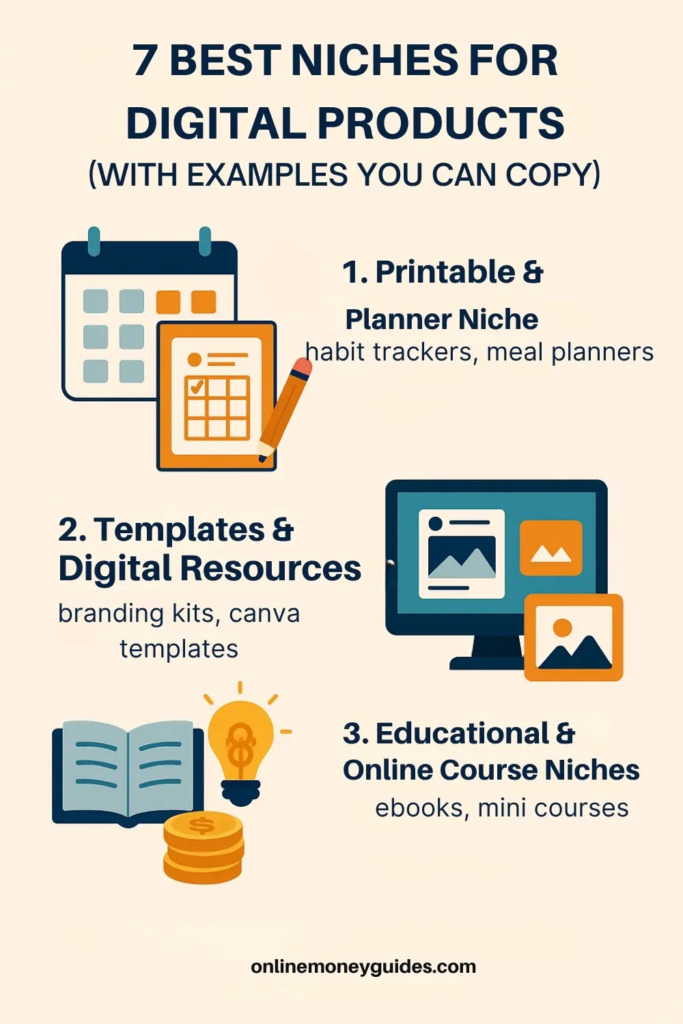
1. Printable & Planner Niche
The printable and planner niche has exploded in popularity because people love instant downloads that make their lives easier. From digital planners and budget sheets to wedding checklists, this niche thrives on organization and visual design.
A few strong product types include printable habit trackers, meal planners, coloring pages, and digital sticker sets. Each can be created once and sold infinitely through marketplaces like Etsy or Creative Market.
If you’re not a designer, use Visme or Creative Fabrica to customize ready-made templates. The beauty of this niche is flexibility. You can target different audiences, such as students, parents, or small business owners.
Well-designed printables regularly sell for $5–$20, and bestsellers can easily generate $1,000+ a month from passive traffic alone.
2. Templates & Digital Resources
This niche is perfect for creatives, freelancers, or entrepreneurs who want to save people time. Digital templates are among the most profitable digital product niches because they solve a direct pain point: speed and simplicity.
Social media templates, resume layouts, or Notion dashboards are great starting points. For example, a designer might sell Instagram carousel templates or branding kits, while a productivity lover could create Notion habit trackers or goal planners.
You can sell these on Gumroad, Notion, or your own website. If you want to build a mini brand, upload your designs to Visme or Creative Market to expand your reach.
The top sellers often combine clean visuals with niche specificity, such as “Notion Templates for Coaches” or “Instagram Templates for Real Estate Agents.” The narrower you go, the better your conversions.
3. Educational & Online Course Niches
If you love teaching, this is your lane. Educational digital products like mini-courses, eBooks, or PDF guides allow you to share what you know and get paid for it repeatedly.
Some of the highest-demand digital products right now are skill-based: writing, productivity, personal finance, or photography. The entry barrier is low, and platforms like Podia, Systeme.io, or Gumroad make setup simple.
Start small with one focused guide or workshop instead of building a full course immediately. A $19 digital guide that clearly solves a problem (“How to Edit Photos Like a Pro”) can outperform a $200 course with too much information.
Once your content starts selling, you can bundle lessons or offer an upsell with a coaching call or template pack.
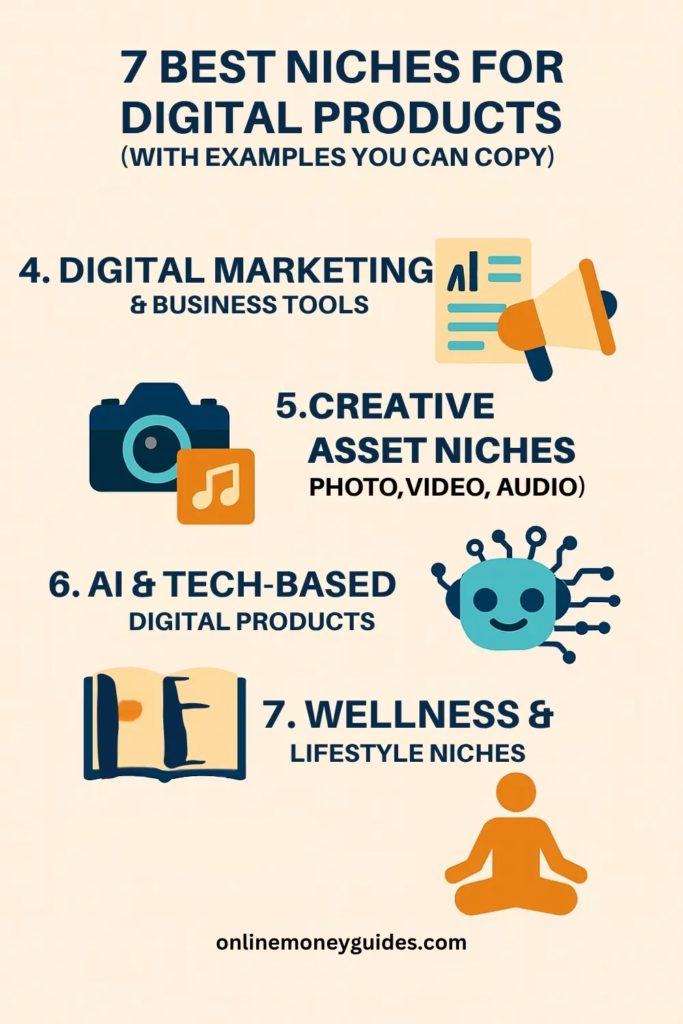
4. Digital Marketing & Business Tools
Online entrepreneurs and freelancers are constantly looking for shortcuts that save time or make them money. That’s why marketing and business templates are among the most profitable digital product niches today.
Think email swipe files, funnel blueprints, or marketing plan templates. These sell incredibly well on platforms like Systeme.io, ConvertKit, or even your own store using ThriveCart.
What makes this niche strong is that its audience of business owners always has budgets for tools that help them grow. If you can show measurable results (like time saved or leads gained), your product’s perceived value skyrockets.
This category also lends itself to recurring income. You can bundle tools or offer a monthly subscription of updated templates, giving you predictable revenue.
5. Creative Asset Niches (Photo, Video, Audio)
If you have a creative background, you’re sitting on one of the most scalable digital product niche ideas out there. Photographers, videographers, and musicians are turning their art into passive income by selling creative assets.
Popular products include Lightroom presets, stock photo bundles, video LUTs, and sound effect packs. Creators use them on Envato Elements, Epidemic Sound, or Pictory to enhance their work.
You can niche even further with travel presets, cinematic sound effects, or social media B-roll packs. These micro-niches attract dedicated audiences and repeat buyers.
While this niche requires creative skill, the payoff is strong: high perceived value and endless reuse potential. Once your assets are listed, they can be sold for years with little maintenance.
6. AI & Tech-Based Digital Products
This niche is booming. With the rise of ChatGPT and generative AI tools, digital entrepreneurs are packaging their expertise into AI prompt packs, automation templates, and productivity systems.
These are low-cost to create and in massive demand as people seek ways to simplify their workflow. You could sell “ChatGPT Prompts for Copywriters” or “AI Automation Templates for Small Businesses.”
Use Systeme.io or Gumroad to host and deliver these products instantly. You can also build a personal brand around your AI knowledge by sharing quick tutorials on social media, then linking to your shop.
AI-based products are still new enough that early adopters stand out easily, making it one of the top digital product markets to enter now.
7. Wellness & Lifestyle Niches
Wellness never goes out of style. Whether it’s mindfulness, health, or productivity, people are always searching for ways to feel better and live more intentionally.
Digital product ideas in this niche include self-care journals, meal planners, yoga trackers, and guided meditation audios. You can create these using Etsy, Podia, or Envato Elements for design support.
The key to standing out is authenticity. Share your own story of what helped you overcome stress or stay consistent and turn that into a product that supports others. These niches grow best through community and connection, not just transactions.
The best niches for digital products aren’t random; they’re built on simple human needs to save time, make money, feel better, or express creativity. Pick one that aligns with your strengths, and you’ll find creating and selling feels less like a hustle and more like purpose.
How to Validate a Digital Product Niche (Before You Launch)
Even the most creative ideas can flop if the demand isn’t there. That’s why validation is the most crucial step before you design, film, or publish anything. It doesn’t have to be complicated or time-consuming; you just need enough feedback to confirm that people are willing to pay for what you plan to create.
Validation helps you avoid months of wasted effort. It’s your reality check before the excitement takes over. Here’s how to approach it like a digital entrepreneur instead of a dreamer.
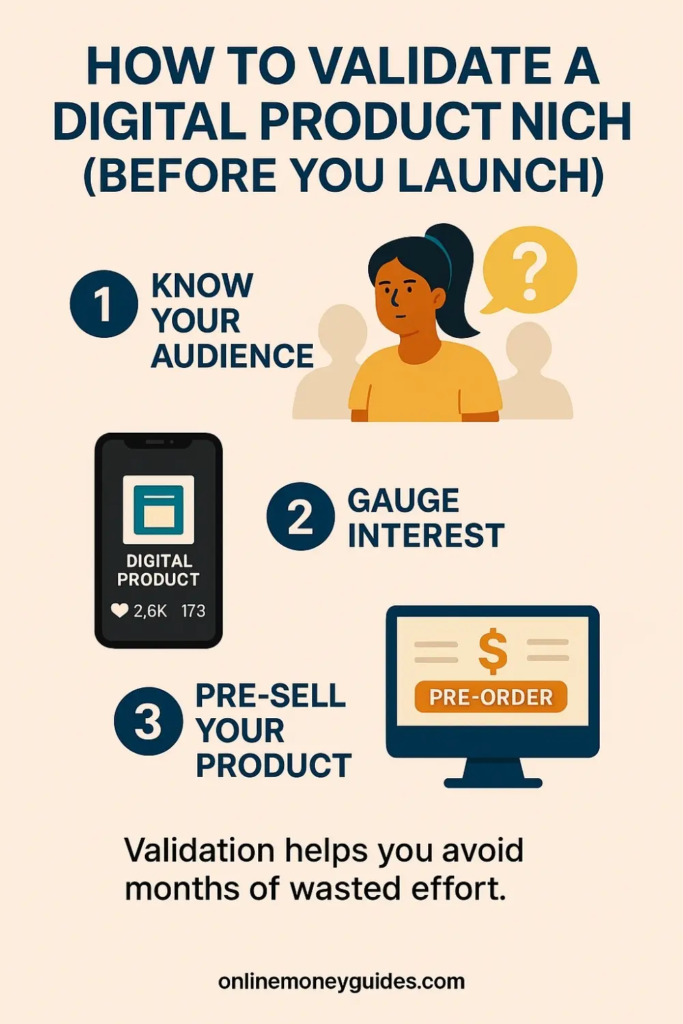

Quick Market Validation Methods
You don’t need to be a marketing expert to test your niche. All you need is curiosity and a willingness to listen. Start by observing how people behave around your idea rather than how they talk about it.
For example, if you’re planning to sell digital planners, search for them on Etsy or Creative Market. Pay attention to what’s already popular, how products are titled, priced, and reviewed. If dozens of similar items have hundreds of sales, that’s a positive sign.
Beyond marketplaces, explore what people share or save on Pinterest or TikTok. These platforms often reveal early demand for trends long before search engines catch up.
When you want data to back your instincts, tools like Google Trends, Ubersuggest, or Everbee show keyword volume and traffic interest over time. They help you understand whether your niche is stable, growing, or fading.
Create MVPs (Minimum Viable Products)
An MVP is a simplified version of your product that lets you test the idea quickly. It’s better to release something small and gather feedback than to spend months polishing a product no one wants.
For instance, instead of creating a full 30-day productivity course, start with a short $9 guide or a mini Notion template. Share it with a small audience and note who buys it and why.
Collect early feedback through ConvertKit by sending short surveys to your email list or a beta group. Ask questions that reveal what people value most:
- What problem did this product help solve?
- What would make it even more useful?
That feedback is gold; it helps you refine your offer and language before scaling. Once your MVP proves there’s real interest, you can confidently invest more time in creating higher-value versions or bundled offers.
Validate With Pre-Sales or Waitlists
Another way to measure genuine demand is to sell before you create. Platforms like Gumroad, Podia, or Systeme.io allow you to publish a pre-sale page in minutes. You can offer an early-bird discount or exclusive bonuses for people who join the waitlist.
If you get sign-ups or purchases, you’ve confirmed the niche’s potential. Even a small group of pre-orders, of 10–20 people, proves that your idea resonates enough for strangers to spend money on it.
Validation doesn’t require thousands of followers. It just takes paying attention to the few who are already interested. That’s where every successful digital product business begins.
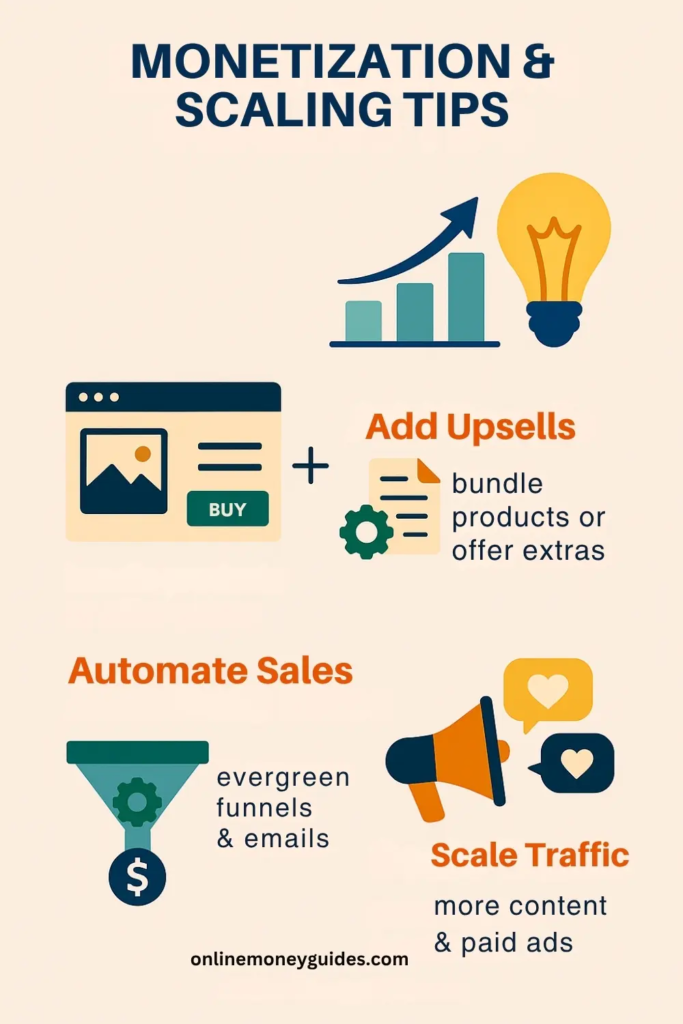
Monetization & Scaling Tips
Once you’ve validated your idea and made your first few sales, the next step is turning that spark into a system. Selling one digital product is exciting, but building a repeatable process is what creates freedom.
Scaling doesn’t mean hustling harder; it means setting up structures that work while you sleep. Here’s how to build toward sustainable, growing income from your digital products.
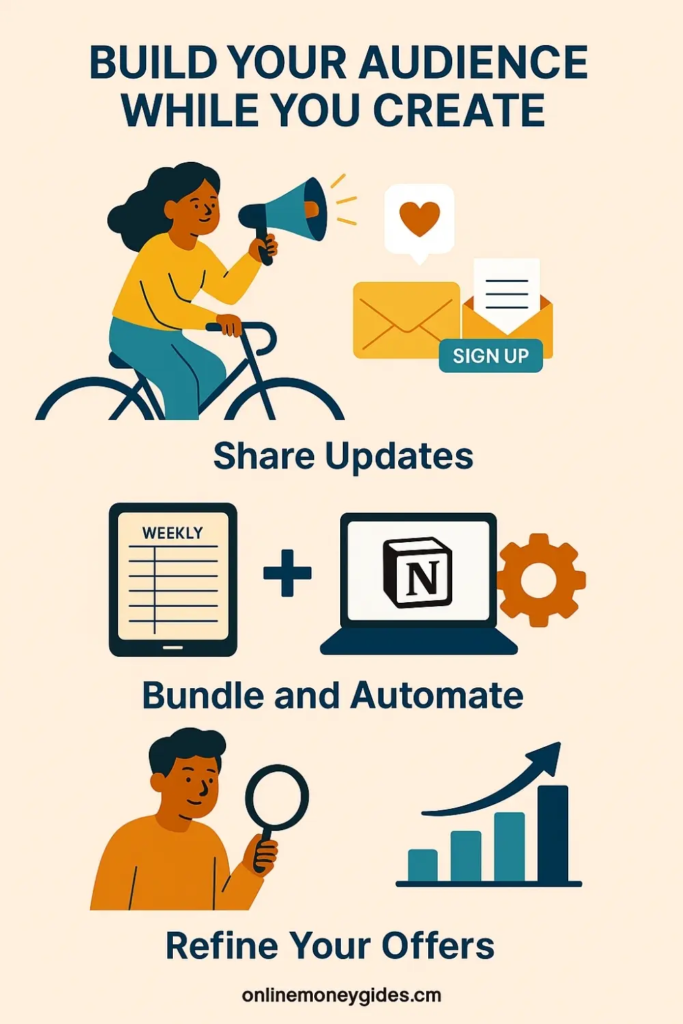
Build Your Audience While You Create
The most successful creators don’t wait until launch day to build excitement; they involve their audience in the journey. Share sneak peeks, progress updates, or lessons learned along the way. This builds anticipation and trust at the same time.
Start collecting emails early using ConvertKit or a simple landing page from Systeme.io. Even fifty engaged subscribers can make a huge difference. Those first buyers become your best feedback source and your word-of-mouth marketers.
When you treat your audience like collaborators instead of customers, they’ll feel invested in your success. That emotional connection often leads to repeat purchases and loyal fans.
Bundle, Upsell, and Automate
Once you’ve launched one successful product, you can multiply your results without starting from scratch. Bundle complementary products like a printable planner and a Notion dashboard to turn your guide into a short course. Each addition increases the average order value and strengthens your brand authority.
Automation is the quiet engine behind scalable income. Platforms such as Podia and Systeme.io allow you to set up automatic delivery, upsells, and follow-up emails. For example, someone who buys your digital planner could automatically receive an offer for your course or template pack.
Automation also helps with consistency. Instead of manually promoting every product, create a simple email sequence that introduces new subscribers to your bestsellers. Over time, that’s what creates the feeling of momentum in your business, even when you’re offline.
Refine What Works and Retire What Doesn’t
Scaling isn’t just about adding new products. It’s also about focusing on the ones that perform best. Review your analytics regularly. Check which listings or pages bring in most of your revenue and double down there.
If a product underperforms, don’t see it as a failure. Use the insights to improve your future offers or repurpose the material into a new format. Maybe that slow-selling guide could become a video mini-course or be broken into smaller, easier-to-digest templates.
By constantly refining and improving, your library of digital products evolves with your audience, and that’s what keeps revenue steady year-round.
Your Niche Is Waiting
The truth is, there’s no single “perfect” niche waiting to be discovered. What makes the best niches for digital products work isn’t just the topics; it’s the creator behind them. It’s the way you interpret an idea, the story you tell, and the problem you help someone solve just a little faster or easier.
Every big digital entrepreneur started where you are now: uncertain but curious. The first product doesn’t need to be perfect; it just needs to exist. Because once it’s out there, you have real data, real feedback, and real customers to learn from.
Start small. Maybe it’s a $9 guide, a printable template, or a single Notion dashboard. Focus on the people who need it most and create something that makes their lives simpler, calmer, or more productive. That’s how your brand begins to take shape.
And when you’ve proven your idea, build systems to grow it. Automate your sales, expand your product line, and keep refining your craft. The beauty of digital products is that they scale infinitely. You can be earning while you’re sleeping, traveling, or working on your next idea.
Your digital product niche isn’t just about making money online. It’s about building something that reflects your creativity, your values, and your freedom. The first step is choosing to begin today.
Once you’ve chosen your niche, the next step is learning how to create and sell your products effectively. Read our complete guide to making money with digital products to see the full process.