You want to start coaching or consulting, but every time you sit down to decide on your coaching niche, your mind spins. Part of you thinks you need more certifications. Another part worries that choosing wrong will lock you into something forever. Meanwhile, you keep scrolling through other coaches online who seem to have it all figured out, and you’re left wondering whether you’ll ever stand out.
Here’s the truth: the lack of a clear niche is what’s holding you back. When you try to serve “everyone,” you end up connecting with no one. Clients hire specialists, not generalists. And the good news is, you don’t need to guess or copy what others are doing. You can build a niche that fits your skills, values, and lifestyle, while still making it profitable.
This article is your step-by-step roadmap. By the end, you’ll know exactly how to find your coaching niche (or consulting niche) and start positioning yourself in a way that attracts the right people, without endless second-guessing.
This article is part of our full guide on How to Start and Grow an Online Coaching or Consulting Business in 2026. If you want the big picture—from marketing to scaling—start there.

What Is a Coaching Niche (and Why Does It Matter)?
A niche is simply the specific lane you choose in the coaching or consulting world. Instead of saying “I’m a coach” or “I’m a consultant,” you define exactly who you help and what problem you solve. That clarity makes it easier for clients to find you, trust you, and pay you.
Think of it this way: nobody types “general coach” into Google. They type “career transition coach,” “executive coaching services,” or “business consultant for startups”. These are niche searches. When you align yourself with a niche, you show up in the exact conversations and search results that lead to clients.
Choosing a coaching niche also matters for three big reasons:
1. Authority and Trust
People don’t want someone who can “do everything.” They want someone who understands their exact situation. Specializing builds authority faster than trying to cover it all.
2. Easier Marketing
It’s much simpler to market yourself when you know who you’re talking to. Content, offers, and even your bio feel sharper and more magnetic.
3. Higher Earning Potential
Specialists get to charge more. A health and wellness coach with a clear focus can often package services at $1,500–$3,000 per program, compared to a generalist charging $50 per session.
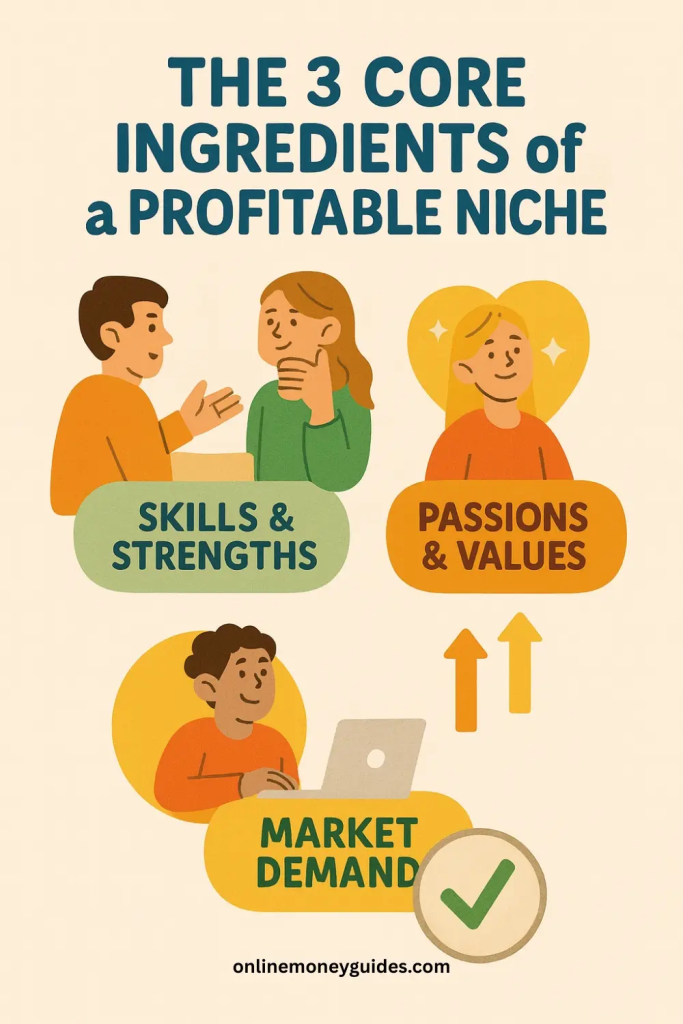
The 3 Core Ingredients of a Profitable Niche
A lot of new coaches and consultants think they need to chase trends or copy someone else’s success. The reality is, your coaching niche becomes sustainable only when three ingredients come together: your skills, your passions, and real market demand. Miss one of these, and you’ll either burn out or struggle to get clients.
1. Your Skills and Strengths
Start by looking inward. What problems have you already solved for yourself or others? Maybe you’ve successfully navigated a messy career transition, built a profitable side hustle, or learned how to manage stress after burnout. These lived experiences can translate directly into a coaching offer.
The best niches often come from areas where you’re just a few steps ahead of your clients. You don’t need a PhD in psychology to become a confidence coach. You just need proven methods that helped you (or people around you) make progress.
2. Your Passions and Values
Even if a niche looks profitable on paper, you won’t stick with it unless it excites you. Do you enjoy deep, emotional conversations? A relationship coach for couples could be fulfilling. Do you light up when helping others plan their career? Maybe a career transition coach is your lane.
Ask yourself: Could I talk about this topic for hours without getting bored? If the answer is yes, that passion will fuel your marketing, client sessions, and long-term consistency.
3. Market Demand
This is where too many coaches get stuck. Passion is great, but if no one is searching for or paying for your service, it won’t be sustainable. Luckily, demand is measurable. Tools like Google Trends or SEMRush show whether people are actively searching terms like “ADHD coach for adults” or “executive coaching services.”
You can also validate demand by checking competitors. If there are already coaches making money in your area of interest, that’s not a sign to run away; it’s proof the market exists. The key is carving your own unique angle.
Pro Tip: Circle the overlap of your skills, passions, and market demand. That’s where your most profitable niches live.

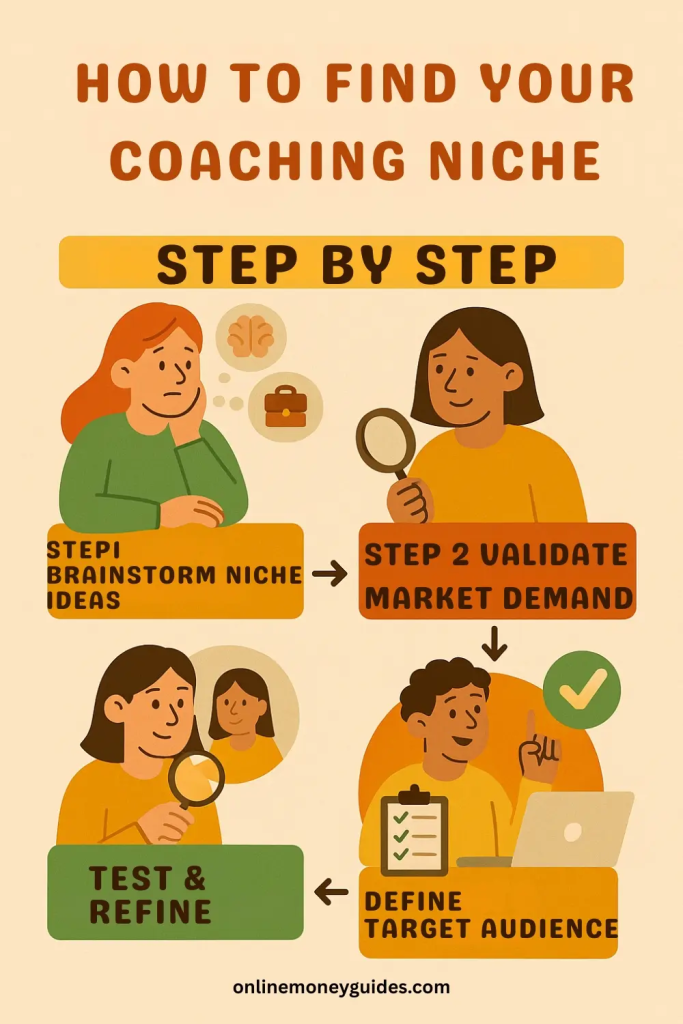
How to Find Your Coaching Niche Step by Step
Picking a coaching niche doesn’t need to feel like a life-or-death decision. Think of it as an experiment. You test, refine, and adjust as you go. Here’s a simple roadmap to guide you through the process.
Step 1: Brainstorm Coaching Niche Ideas
Start with a wide list. Think about:
- The challenges you’ve overcome in your own life.
- Skills from your past jobs, side hustles, or studies.
- Areas where people naturally come to you for help.
For example, if coworkers often ask you to review their presentations, you might consider public speaking coaching or confidence coaching techniques. If you’ve built a small e-commerce shop, you could lean toward digital marketing coaching.
Step 2: Validate Market Demand
Not every idea will translate into paying clients. This is where research comes in. Use tools like:
- Google Trends (see whether interest in your idea is rising).
- AnswerThePublic (discover what real people are asking online).
- SEMRush or Mangools (check search volume for terms like “career transition coach” or “sales consulting”).
For instance, the keyword “ADHD coach for adults” gets thousands of monthly searches, which signals strong demand.
Step 3: Define Your Target Audience
Once you know there’s demand, zoom in on who you’ll serve. Get as specific as you can:
- “Recent grads stuck in their first job.”
- “Women over 40 navigating divorce.”
- “Startup founders who need help with sales.”
Think of it as creating a client persona. Write down their age range, goals, pain points, and budget. This exercise makes it easier to design offers and marketing messages that resonate.
Step 4: Test and Refine Your Coaching Niche
Before you lock yourself in, test your idea in the real world. You don’t need a polished website or 10k followers to do this. Try:
- Hosting a free workshop or webinar.
- Posting content specific to your niche on TikTok, LinkedIn, or Instagram.
- Offering 3–5 beta sessions at a reduced rate in exchange for testimonials.
These tests give you feedback and confidence. If people engage with your posts or sign up for a free session, you’re on the right track. If not, tweak your angle and try again.
Examples of Profitable Niches in 2026
When you’re choosing your coaching niche, it helps to see where other coaches and consultants are thriving. These aren’t just random ideas; they’re areas with growing demand and real client budgets behind them.
| Niche | Why It’s Growing | Example Service You Could Offer |
| Career Transition Coaching | More professionals are switching careers or leaving corporate for side hustles. | A 12-week “Career Reset” program guiding clients through resumes, networking, and interviews. |
| Health & Wellness Coaching | The global wellness industry is projected to surpass $7 trillion. People want holistic support. | Stress reduction programs, meal-planning guidance, or lifestyle accountability coaching. |
| Digital Marketing Consulting | Small businesses need affordable, hands-on support to compete online. | Helping entrepreneurs set up ads, funnels, or social media strategies. |
| ADHD Coaching | Awareness of neurodiversity is increasing, and adults are seeking personalized systems. | Productivity coaching, time management frameworks, or accountability programs. |
| Leadership Development Coaching | Companies continue investing heavily in leadership and executive growth. | Executive coaching packages, team leadership workshops, or one-on-one mentorship. |
Notice that these aren’t vague “life coaching” labels. They’re targeted and specific. That’s what makes them profitable niches. People know exactly what problem you solve.
Profitability isn’t just about high fees. It’s about creating offers that attract committed clients who see the value in what you do.

Coaching vs. Consulting Niche: What’s the Difference?
One of the biggest points of confusion for beginners is the difference between a coaching niche and a consulting niche. Both can be profitable paths, but they aren’t the same thing.
A coaching niche is built around guiding people to find their own answers. You act more like a partner, asking questions, holding space, and helping clients uncover their next steps. For example, a career transition coach might help clients explore their values, build confidence, and design a career path that feels aligned.
A consulting niche, on the other hand, is about delivering solutions. You’re positioned as the expert who has been there before. Clients hire you to solve problems directly, often with a clear framework or strategy. A marketing consultant, for instance, might audit a company’s funnel, design a new campaign, and even oversee implementation.
The key difference is the delivery of value:
- Coaches empower clients to grow through guided discovery.
- Consultants step in with specialized knowledge and tell clients what to do and how to do it.
Both models work. In fact, many professionals blend them; coaching to help clients set goals and consulting to offer tactical steps. The important part is choosing a lane (or combination) that matches your strengths and the audience you want to serve.
Try This: Ask yourself whether you prefer empowering people to uncover their own answers (coaching) or offering clear solutions as the expert (consulting). Your preference will shape the right niche for you.
How to Actually Stand Out in Your Niche
Choosing a coaching niche is the first step, but standing out inside that niche is what brings clients to your door. The coaching and consulting space is crowded, so clarity and positioning matter more than trying to “shout louder” than everyone else.
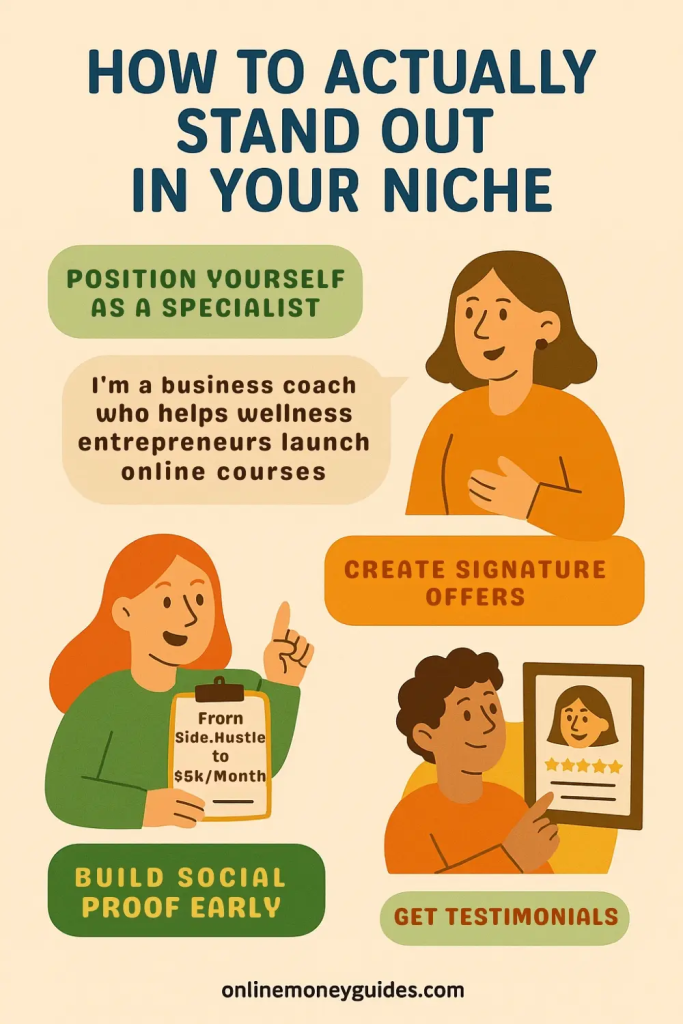
Position Yourself as a Specialist
Think of how different these two introductions sound:
- “I’m a business coach.”
- “I’m a business coach who helps wellness entrepreneurs launch online courses.”
The second version instantly communicates who you help and how. That level of clarity doesn’t just stand out; it builds trust from the very first interaction.
Create Signature Offers
Clients don’t buy “sessions.” They buy outcomes. A generalist might sell coaching by the hour, while a specialist designs a clear path. For example, you could offer:
- “From Side Hustle to $5k/Month” — a 90-day roadmap for new entrepreneurs.
- “LinkedIn Client System” — a consulting package for professionals who want inbound leads.
Notice how the offers focus on transformation, not just time spent together.
Build Social Proof Early
Even a handful of testimonials can make you stand out from dozens of other coaches. If you don’t have paying clients yet, start with beta testers. Collect their feedback and results, then turn those into stories you can share.
Tools and Platforms to Support Your Niche
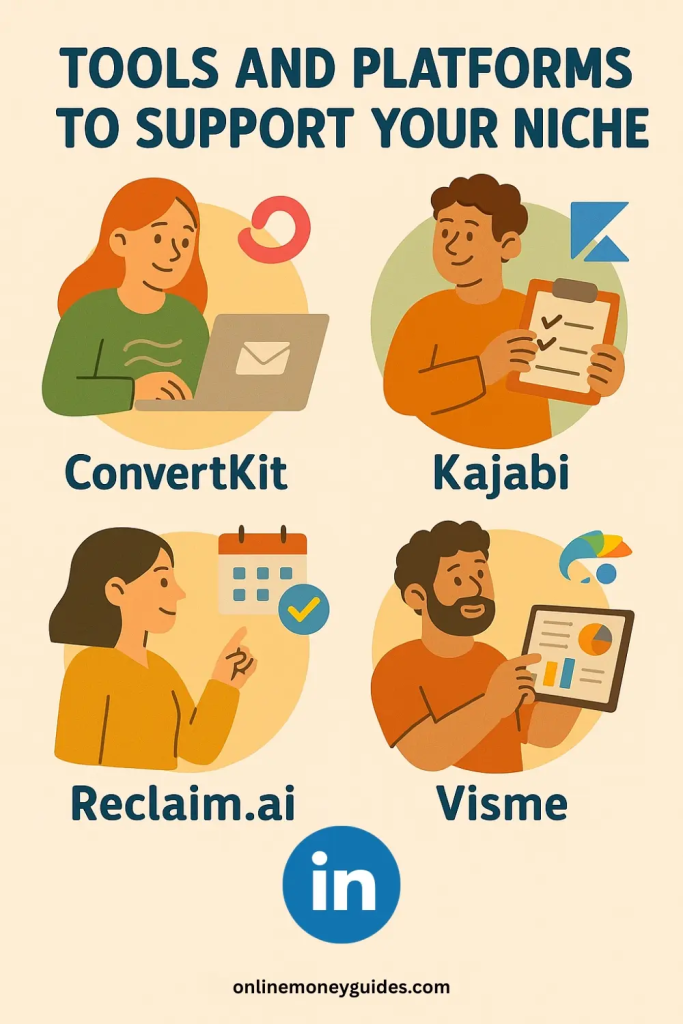
Once you’ve chosen your coaching niche, the right tools make it easier to deliver value, stay organized, and look professional from day one. You don’t need to invest in a dozen platforms, but having a few essentials in place will save you time and build credibility.
For email marketing, ConvertKit is a favorite among coaches and consultants. It allows you to build simple landing pages, automate follow-ups, and nurture leads without feeling like you’re drowning in tech.
When it comes to packaging and selling programs, Kajabi offers an all-in-one setup. You can host courses, create membership areas, and handle payments in one place; ideal if you’re leaning toward group coaching or consulting offers.
For scheduling, Reclaim AI uses smart automation to block time for meetings, tasks, and routines, syncing directly with your calendar.
On the creative side, Visme helps you design presentations, infographics, and social media graphics. No design skills required.
And for visibility, don’t underestimate LinkedIn if you’re in a consulting niche. It’s one of the best platforms for connecting with business clients who are actively looking for expertise.
Pro Tip: Pick one tool for marketing, one for delivery, and one for organization. Start simple. Add more only when your business demands it.
Common Mistakes to Avoid When Choosing a Niche
A clear coaching niche can accelerate your business, but choosing poorly or avoiding a decision altogether can hold you back for months. Here are some of the most common traps new coaches and consultants fall into.
Being Too Broad
When you say “I help people with life,” nobody really knows what that means. Clients are looking for specific results. Broad messaging makes you blend in with thousands of other coaches. Narrowing your focus gives potential clients a reason to say, “Yes, that’s exactly what I need.”
Choosing Only by Passion
Passion is powerful, but it isn’t enough on its own. You may love journaling or meditation, but is there a paying market for it? Before going all in, make sure your coaching niche ideas intersect with real demand. This is where keyword research and competitive analysis come in handy.
Changing Niches Too Often
Many beginners switch niches every few weeks because they don’t see instant results. The problem isn’t the niche, it’s the lack of consistency. Building trust and visibility takes time. Even with a profitable niche, it often takes three to six months of steady action to gain traction.
Picking a niche doesn’t mean locking yourself in forever. Think of it as your starting point. As you work with clients, you’ll refine, adjust, or even pivot. What matters most is committing long enough to give it a fair test.
Choosing a coaching niche or consulting niche isn’t about boxing yourself in; it’s about clarity. The clearer you are on who you help and how, the easier it becomes to attract clients, build authority, and scale your income.
Remember, your niche lives at the intersection of three things: your skills, your passions, and real market demand. Start by brainstorming ideas, validate them with research, then test them in the real world. From there, refine as you go.
Most importantly, don’t let indecision stall you. Your first niche doesn’t need to be perfect; it just needs to be clear enough to get started. Momentum creates clarity.
Your niche is just the foundation. Once you know who you serve, the next step is building systems to attract and convert clients. Explore the Ultimate Coaching & Consulting Guide to learn how to market yourself and make money.