If you’ve been curious about dropshipping, you’ve probably seen the mixed opinions out there. Some people swear it’s the easiest way to make money online, while others call it dead or oversaturated.
If you’re here, chances are you’re wondering: “Can I really start a dropshipping business in 2026, or is it too late?”
Here’s the truth: dropshipping isn’t dead, it’s just evolved. E-commerce sales worldwide are projected to hit over $6 trillion in 2026, and a big slice of that comes from dropshipping businesses. The model still works, but the way you approach it matters.
The good news? You don’t need thousands of dollars to get started. You don’t need to rent a warehouse, stock inventory, or even quit your job to test the waters. What you do need is:
- A clear step-by-step roadmap.
- Realistic expectations about profit margins and startup costs.
- The right tools and suppliers that make your life easier.
That’s exactly what this guide is for. Whether you’re a complete beginner or you’ve dabbled in ecommerce before, you’ll walk away knowing how to start a dropshipping store, find winning products, and scale it into a business that actually makes money.
And here’s the mindset reframe we want you to keep in your back pocket: you don’t have to be perfect — you just have to start.
Picking the right niche is what makes or breaks a dropshipping business. To shortcut the process, we’ve created a resource on the best dropshipping niches with real examples that sell.

What is Dropshipping and How Does It Work?
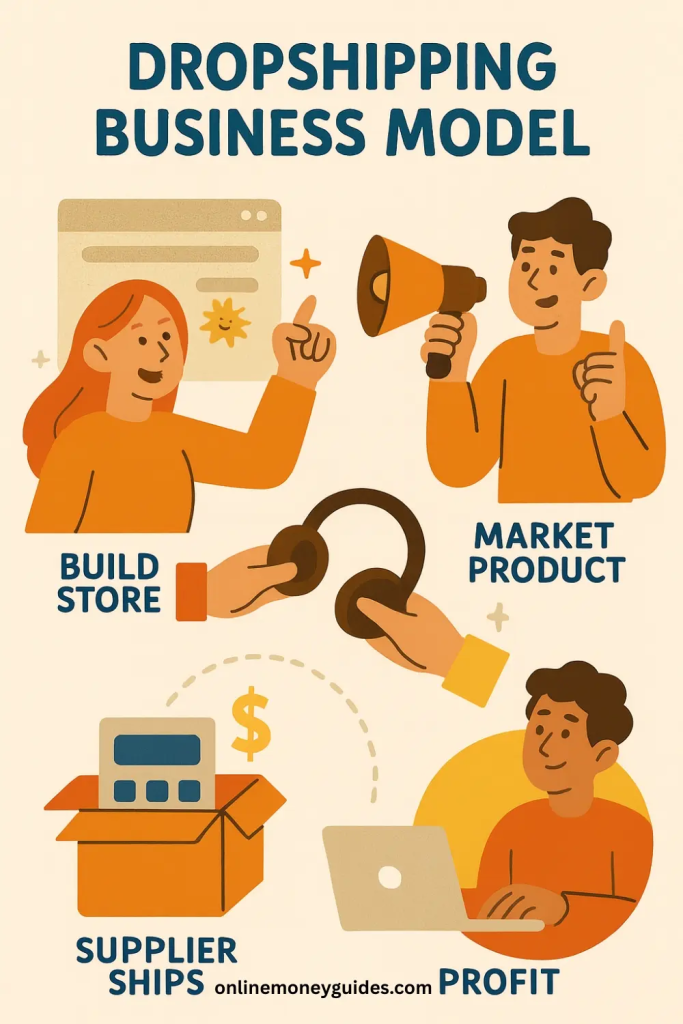
Dropshipping is one of the simplest ecommerce business models out there, which is why it’s so popular for beginners. Instead of buying products upfront and hoping they sell, you only purchase items from a supplier after a customer has already paid you.
The supplier then ships the product directly to your customer, while you keep the difference between the wholesale price and the retail price.
Think of it as being the middle point in the transaction:
- Your customer places an order on your online store.
- You forward that order to your supplier.
- The supplier packages and ships the product directly to the customer.
- You pocket the profit without ever touching the inventory.
The Dropshipping Business Model Explained
At its core, dropshipping is inventory-free selling. You don’t need to store products in your garage or worry about renting warehouse space. Instead, you’re focusing on building the storefront, attracting customers, and handling the marketing side of the business.
The logistics (inventory, packaging, and shipping) are handled by your supplier.
For example, let’s say you sell a pair of headphones for $50. Your supplier charges you $25 for the same item. Your customer pays you $50, you pay your supplier $25, and you keep $25 profit.
How Dropshipping Differs From Traditional E-commerce
Traditional e-commerce usually requires big upfront investments. You buy products in bulk, manage your own inventory, and pay for storage and shipping. Dropshipping flips this on its head by letting you only pay for what you’ve already sold.
This makes it lower risk for new entrepreneurs, but it also means margins are slimmer compared to bulk wholesale. Instead of 40–60% profit margins, many dropshippers operate on 10–30% margins.
The trade-off is simple: less risk, less upfront cost, but slightly smaller margins. For beginners, that’s often a good thing as it lets you learn the ropes without gambling your savings.
Benefits and Challenges of Dropshipping in 2026
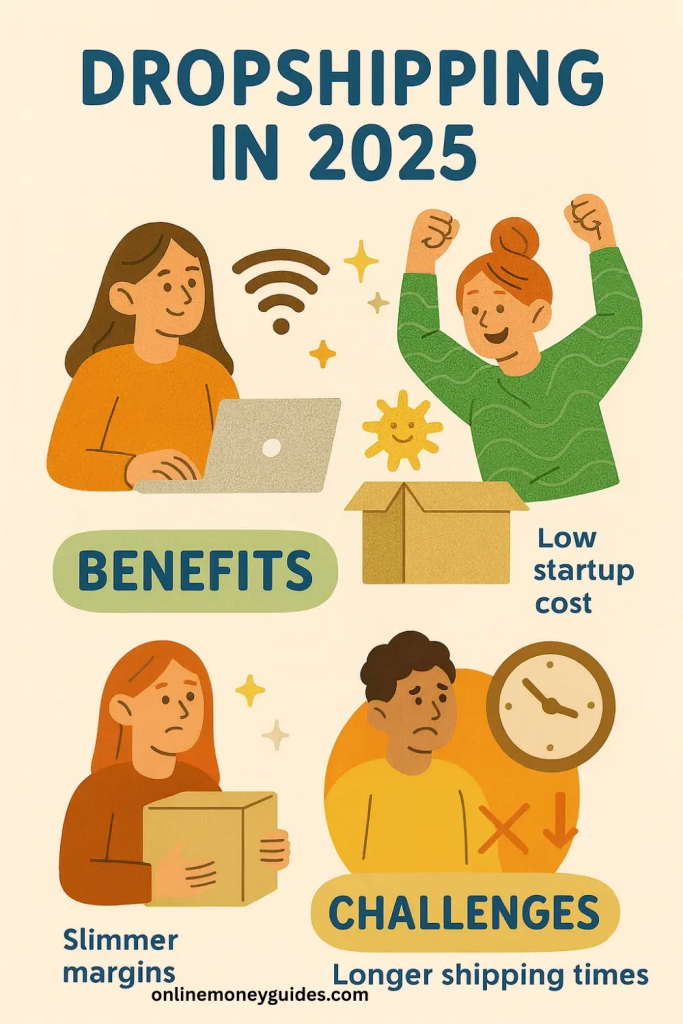
The Benefits:
- Low startup costs (you can launch with as little as a few hundred dollars).
- Flexible enough so you can run your business from anywhere with Wi-Fi.
- Wide product variety without holding inventory.
- Easy to test and pivot into new niches.
The Challenges:
- Lower profit margins compared to bulk buying.
- Shipping times can be slow if you rely only on overseas suppliers.
- Competition is higher, so you’ll need to stand out with better branding and marketing.
The key is to go into dropshipping with clear eyes: it’s not a “get rich quick” scheme, but it is a proven business model for building consistent online income if you treat it like a real business.
Key Takeaway: Dropshipping is simple to start, flexible to run, and still profitable in 2026, but only if you understand both its strengths and limitations.
Is Dropshipping Profitable in 2026?
One of the first questions people ask is, “Can I actually make money with dropshipping this year?” It’s a fair question, especially since you’ve probably seen people on YouTube or TikTok flexing six-figure screenshots while others say they barely broke even.
The truth is somewhere in the middle: dropshipping is profitable in 2026, but it depends on your niche, your margins, and how you market your store.
Average Profit Margins & What to Expect
On average, dropshipping stores run on 10–30% profit margins. That means if you sell a product for $40, you’re likely keeping $4–$12 after supplier costs and transaction fees. It may not sound huge at first, but when you’re selling at scale, it adds up.
Here’s a realistic range for beginners:
- A small store making $1,000/month in sales could net around $100–$300 in profit.
- A well-run store hitting $10,000/month in sales might pull in $1,000–$3,000 in profit.
- Experienced sellers who know how to optimize ads and upsells can scale to $50K+/month in sales, with consistent 20–25% margins.
So yes, it’s profitable but not in the “instant millionaire” way social media sometimes makes it look. Think of dropshipping as a stepping stone: you can start small, learn e-commerce skills, and then grow into higher-margin models like private label.
How Much Money Do You Need to Start a Dropshipping Store?
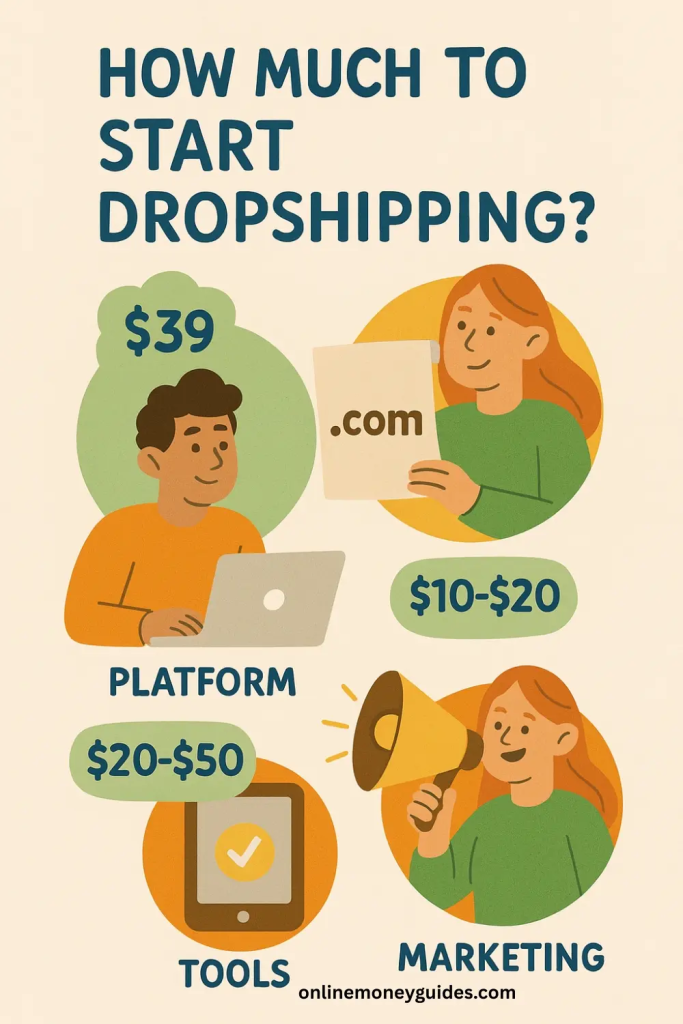
Another common concern: “Do I need thousands to get started?” The answer is no. Most people can launch a store with $300–$500 in startup funds, depending on how lean you run things.
Your main expenses will be:
- E-commerce platform fees (like [Shopify]) are around $39/month.
- Domain name is usually $10–$20/year.
- Apps and tools — many are free at first, but budget $20–$50/month if you use product research or automation tools.
- Marketing — this is the big variable. Paid ads can cost hundreds, but if you start with organic traffic (TikTok, Instagram, Pinterest), you can spend very little upfront.
If you want to start ultra-lean, you can even build on [WooCommerce] (free plugin for WordPress), though it requires more tech setup.
Can You Start Dropshipping with No Money?
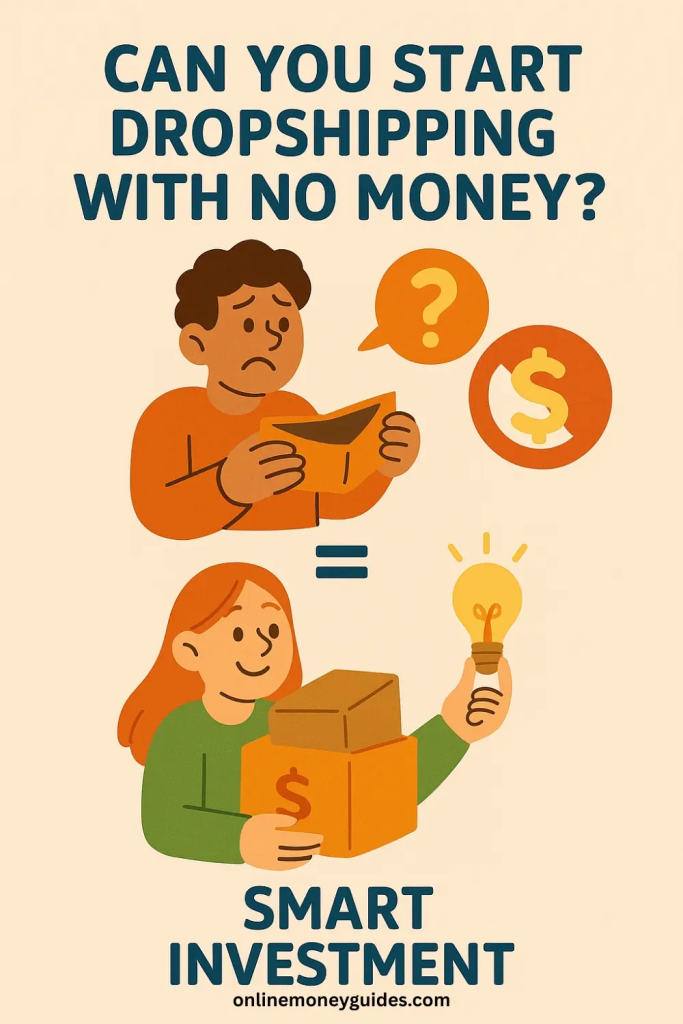
Technically, yes, but with major limitations. You could set up a free store on platforms like Big Cartel or even test products through a TikTok account without paying for ads. But realistically, you’ll still need some money for a domain, branding, and tools to make your store look trustworthy.
Instead of asking “Can I do this with no money?” ask “What’s the smallest, smartest investment I can make to learn the ropes?” Even $200–$300 can get you far if you use it wisely.
Key Takeaway: Dropshipping in 2026 is profitable, but expect realistic margins of 10–30%. You don’t need thousands to start; a few hundred is enough if you’re scrappy and focused.
How to Start a Dropshipping Business Step by Step
If you’re serious about building a dropshipping store, the best way to cut through the overwhelm is to follow a clear roadmap. Think of this as your blueprint. You don’t need to reinvent the wheel; you just need to follow proven steps and add your own twist.
Step 1: Choose a Profitable Niche in 2026
Your niche is the foundation of your store. Pick something too broad, and you’ll drown in competition. Go too narrow, and you might struggle to get enough buyers. The sweet spot is finding a niche that solves problems, taps into trends, or sparks passion.
In 2026, trending dropshipping niches include eco-friendly home goods, fitness recovery gear, pet accessories, and smart lifestyle gadgets. But instead of chasing trends blindly, ask: Would I actually buy this? Products that feel useful or exciting to you are usually easier to sell.
Pro tip: Use tools like SaleHoo, JungleScout, or Google Trends to validate demand before committing.
Before you launch your store, you need proof of demand. Our dropshipping niches guide shows you exactly which categories are trending and profitable right now.
Step 2 — Find Reliable Dropshipping Suppliers
Your supplier can make or break your business. A bad supplier means late deliveries, poor product quality, and angry customers. A good supplier makes you look like a pro.
Popular options include:
- Spocket, which is great for U.S. and EU suppliers, with faster shipping.
- CJ Dropshipping has a wide product variety and customizable branding options.
- AliExpress has a huge selection, but watch out for long shipping times.
If you’re using Shopify, apps like DSers and AutoDS plug directly into your store, so you can import products and automate fulfillment with a few clicks.
Step 3 — Pick the Best E-commerce Platform
Most beginners start with Shopify, and for good reason, it’s beginner-friendly, has sleek templates, and integrates seamlessly with dropshipping apps. It costs around $39/month, but the ease of use often outweighs the price.
If you’re a bit more tech-savvy and want more control, WooCommerce (WordPress plugin) is free, though you’ll handle hosting and setup yourself. For marketplace selling, you can explore Amazon Dropshipping, but make sure you understand their stricter rules.
Step 4 — Set Up and Design Your Dropshipping Store
Your store is your storefront. Customers judge whether they trust you within seconds, so design matters. Thankfully, platforms like Shopify and WooCommerce offer professional templates you can customize quickly.
Focus on:
- A clean, simple homepage that explains what you sell.
- High-quality product photos (suppliers often provide these).
- Easy navigation and a mobile-friendly layout.
You don’t need to hire a designer to look legit. Tools like Canva make it easy to create logos and banners.
Choosing the right products is what separates profitable stores from ones that fail. To learn exactly how to research, test, and validate trending items, check out our step-by-step guide to finding winning dropshipping products.
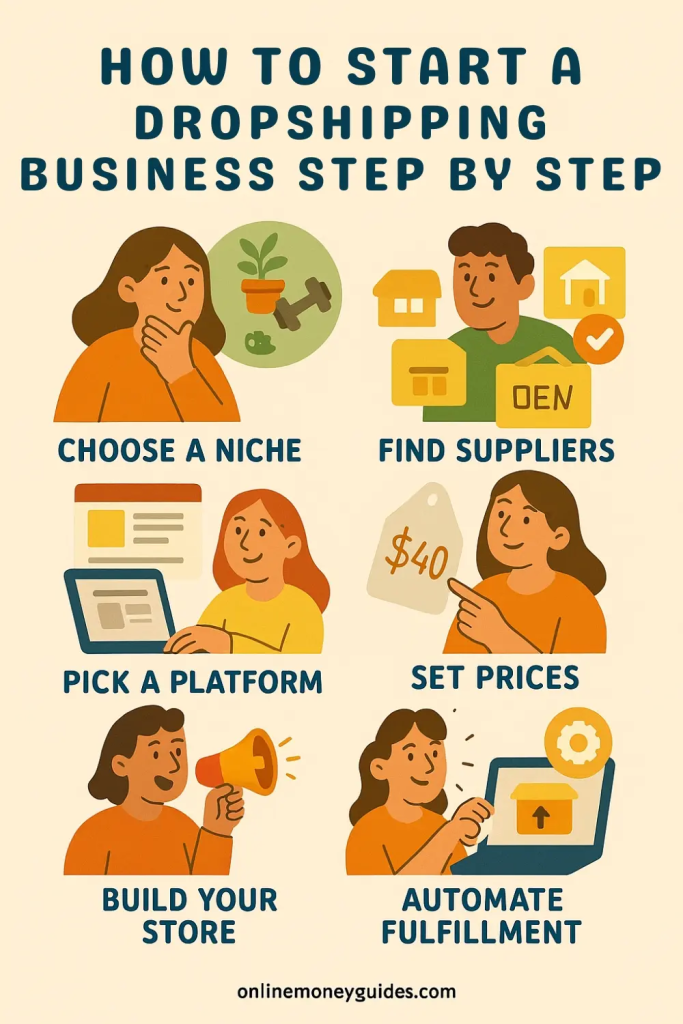

Step 5 — Price Your Products for Profitability
Remember the average 10–30% margin? That should guide your pricing. If you buy an item for $15 from your supplier, you’ll likely price it around $30–$40 to cover costs and still leave room for profit.
Don’t just copy what everyone else charges. Position your brand a little higher with better customer service, faster shipping, or added value (like a free PDF guide, bundled items, or thank-you emails).
Step 6 — Market and Drive Traffic to Your Store
This is where the magic happens. Even the best store won’t make sales without traffic. In 2026, organic marketing through TikTok, Instagram Reels, and Pinterest is one of the smartest ways to start without burning cash on ads.
Once you have some sales, you can reinvest into paid ads with Meta Ads Manager or Google Ads. A balanced strategy often combines both: organic for trust and reach, and paid for quick scaling.
And don’t forget email marketing. Building a list with tools like ConvertKit helps you turn one-time buyers into repeat customers.
Step 7 — Automate and Manage Order Fulfillment
The beauty of dropshipping is automation. With apps like AutoDS or DSers, you don’t have to manually place orders. When a customer buys, the software automatically forwards the order to your supplier, tracks shipping, and updates the customer.
Automation not only saves time but also reduces mistakes, letting you focus on growth instead of admin work.
Key Takeaway: Follow these seven steps: niche, suppliers, platform, store setup, pricing, marketing, and automation — and you’ll have a working dropshipping business you can test and scale.
Finding Winning Dropshipping Products in 2026
One of the biggest questions new sellers have is: “How do I know which products will actually sell?” The truth is, not every item you see trending on TikTok or AliExpress will make you money. Some products look exciting but fizzle out fast, while others quietly generate consistent sales for years.
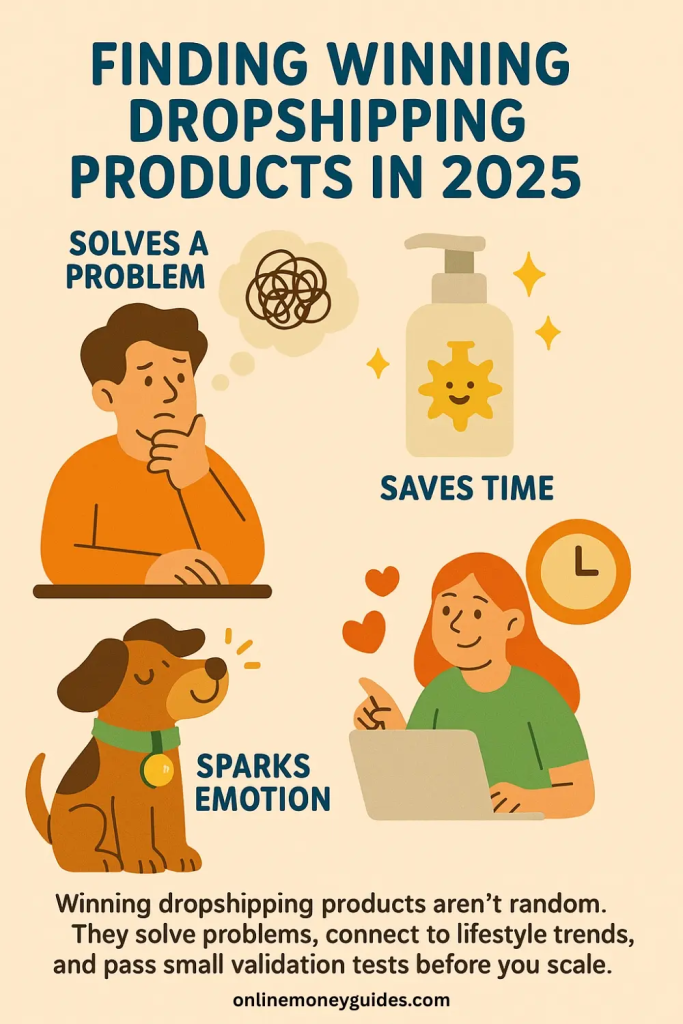
The real skill in dropshipping is learning how to separate a “cool product” from a winning product. Winning products usually solve a problem, save time, or spark an emotional reaction (“I need that now”).
Trending Dropshipping Niches in 2026
This year, certain categories are showing strong momentum. Eco-conscious shopping continues to rise, and consumers are also spending more on wellness, pets, and home organization. A few niches with growth potential include:
- Eco-friendly and reusable household items.
- Fitness recovery tools (massage guns, yoga props).
- Smart pet accessories (GPS collars, automatic feeders).
- Remote work gear (ergonomic gadgets, desk organizers).
Notice how each of these connects to lifestyle shifts, sustainability, health, and working from home. That’s the secret: instead of chasing “viral gadgets,” build around a lifestyle or value people care about.
Best Tools to Research Dropshipping Products
Instead of guessing, lean on data-driven tools. Platforms like SaleHoo, JungleScout, and Ecomhunt give you real-time product performance data. Spocket also has curated collections of trending U.S./EU products with fast shipping, which can give you a competitive edge.
If you’re on a budget, free tools like Google Trends, TikTok Creative Center, and Amazon’s “Movers & Shakers” list are great for spotting early signals before a product explodes.
Dropshipping Tools & Platforms (2026 Guide)
| Category | Tool / Platform |
| Store Builders | Shopify, WooCommerce, BigCartel, Amazon |
| Suppliers | Spocket, CJ Dropshipping, AliExpress, Printful |
| Product Research | SaleHoo, JungleScout, Ecomhunt, Google Trends, TikTok Creative Center |
| Marketing & Design | Canva, ConvertKit, Klaviyo, Meta Ads Manager, Google Ads, Ahrefs, Ubersuggest |
| Automation & Fulfillment | AutoDS, DSers, Tidio, Gorgias |
| Business Support | QuickBooks, Wave, Upwork, OnlineJobs.ph |
How to Test and Validate Product Ideas
Even with research, not every product will be a winner. That’s why testing is crucial. Instead of loading 50 random products into your store, pick 3–5 products you feel confident about and run small experiments.
For example, you could:
- Post organic TikToks and Instagram Reels showcasing the product. If you get engagement, that’s a green light.
- Run a small $20–$50 ad campaign to see if people click and add to cart.
- Check competitor reviews on Amazon or AliExpress to confirm demand and quality.
Think of it as “paying for data.” Even if a product doesn’t sell, you’ve learned what your audience doesn’t want, and that’s just as valuable.
Key Takeaway: Winning dropshipping products aren’t random. They solve problems, connect to lifestyle trends, and pass small validation tests before you scale.
Best Dropshipping Suppliers and Platforms
Your suppliers and platform choices are the backbone of your dropshipping business. You can have a great store design and clever marketing, but if your supplier ships late or your platform is clunky, customers won’t stick around.
The good news? In 2026, there are more reliable supplier networks and ecommerce platforms than ever; you just need to pick the ones that match your goals.
Shopify Dropshipping and Its Advantages
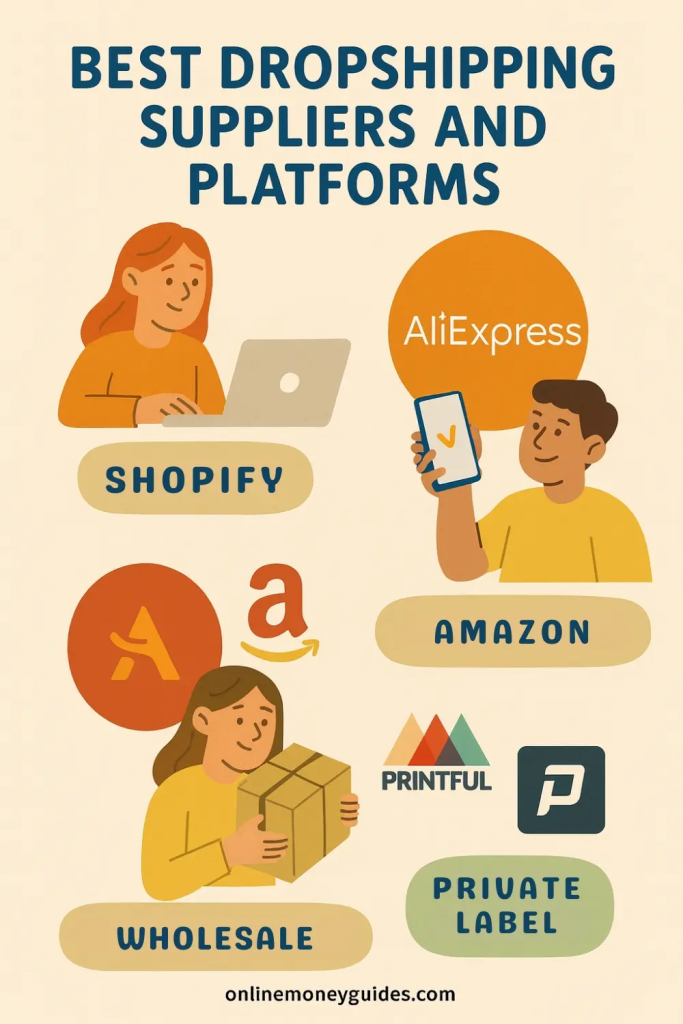
Shopify remains the most popular platform for dropshipping, and for good reason. It’s beginner-friendly, comes with sleek store templates, and integrates directly with automation tools like DSers and AutoDS. For most first-time sellers, Shopify feels like “plug and play,” where you can go from idea to functioning store in a single weekend.
The biggest advantage is the ecosystem. Because so many sellers use Shopify, you’ll find countless apps, tutorials, and communities to help you troubleshoot or scale faster. The downside is the $39/month subscription fee, but for the ease of use, most sellers see it as an investment.
AliExpress vs. U.S.-Based Suppliers
AliExpress has been the starting point for countless dropshippers. Its strengths are obvious: millions of products, low upfront costs, and suppliers who are used to working with small online stores. The drawback is shipping time, and customers don’t want to wait 20–30 days in 2026.
That’s why more sellers are moving to U.S.-based suppliers through networks like Spocket and CJ Dropshipping. With these, your customers can get their orders in 2–7 days instead of weeks. While product costs are slightly higher, the improved customer experience often translates into better reviews, repeat sales, and fewer refund requests.
Amazon Dropshipping Rules in 2026
You can technically dropship on Amazon, but it comes with strict rules. You must ensure your supplier ships products without their own branding or invoices, and you’re fully responsible for customer service. Amazon is ruthless with sellers who break the rules, so it’s not the easiest starting point.
That said, Amazon dropshipping works well for sellers who want access to Amazon’s massive built-in audience. If you follow the rules closely or transition into Amazon FBA later, it can be a profitable channel.
Wholesale and Private Label Options
As you grow, you may want to move beyond pure dropshipping. Some sellers transition into wholesale relationships with suppliers, giving them better pricing and more control. Others start private labeling, where you put your own brand on products.
Platforms like CJ Dropshipping and Printful make it easy to customize packaging, add branded inserts, or even create custom-printed products. These options aren’t necessary at the beginning, but they’re powerful for scaling and building a brand that customers trust long term.
Choose suppliers and platforms that balance cost, shipping speed, and customer experience. Beginners often start with Shopify and Spocket or DSers, then evolve into private label or wholesale as they grow.

Marketing Strategies to Grow Your Dropshipping Store
You’ve got your store set up, your products chosen, and your suppliers in place. Now comes the most important part: getting people to actually buy.
In 2026, marketing isn’t about spamming ads everywhere; it’s about meeting your audience where they spend time and building trust through consistent content.
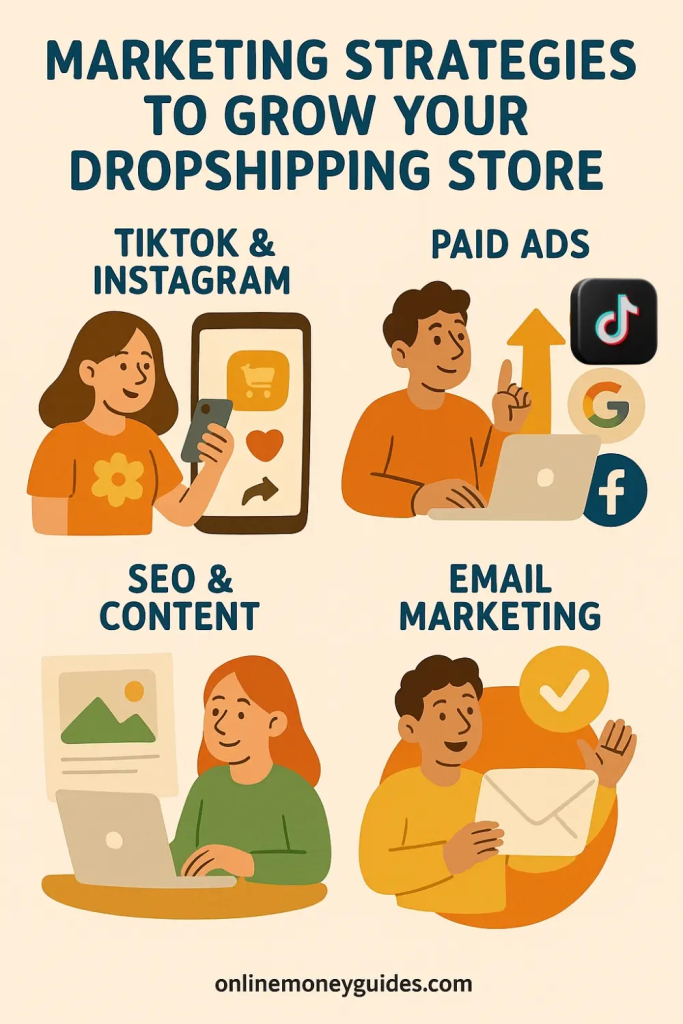
TikTok, Instagram, and Influencer Marketing
Short-form video is king right now. Platforms like TikTok and Instagram Reels make it possible to reach thousands (or even millions) of potential buyers without spending a dime. Many dropshippers are growing stores entirely on organic TikTok content, simply by showcasing their products in creative, relatable ways.
Influencer partnerships are another smart play. Micro-influencers with a few thousand engaged followers often drive more conversions than big-name influencers. By sending them free products (or paying a small fee), you can get authentic content and tap into their community’s trust.
Paid Ads: Facebook, Google, and TikTok Ads
Organic reach is powerful, but at some point, you’ll want to invest in paid ads to scale faster. Meta Ads Manager by Facebook/Instagram is still one of the most effective platforms for testing products quickly. Google Ads works especially well if you’re selling problem-solving products that people search for directly. And of course, TikTok Ads can create explosive growth if you have a product that looks good in a video.
The key is to start small. Run $10–$20 per day campaigns, gather data, and only scale what’s actually working. Treat ads like a testing tool, not a lottery ticket.
SEO and Content Marketing for Dropshipping
SEO (search engine optimization) doesn’t get as much hype in dropshipping circles, but it’s a long-term play that compounds. By writing blog posts, optimizing product descriptions, and targeting keywords your customers search for, you can build free, recurring traffic that doesn’t depend on ad spend.
For example, if you’re selling ergonomic desk products, a blog post titled “Best Desk Setup Ideas for Remote Workers in 2026” could bring in buyers searching on Google. Tools like Ahrefs or Ubersuggest help you spot keywords and content gaps in your niche.
Email Marketing and Retention
Most new sellers obsess over getting new customers, but real profitability comes from repeat buyers. That’s where email marketing shines. With tools like ConvertKit or Klaviyo, you can build an email list and send personalized offers, product recommendations, or simple “thank you” notes that keep customers coming back.
Even a small list of 500 engaged subscribers can turn into thousands of dollars in repeat sales if you nurture it right.
Key Takeaway: In 2026, the best dropshipping marketing mix usually combines organic social content, small paid ad tests, SEO-driven content, and email retention. Start lean, then scale what’s working.
Common Mistakes Beginners Make in Dropshipping (And How to Avoid Them)
Every beginner makes mistakes in dropshipping; that’s part of the learning curve. The good news is that most of these mistakes are predictable, which means you can avoid them if you know what to look out for.
Let’s walk through the most common pitfalls new dropshippers face in 2026, and how you can sidestep them.
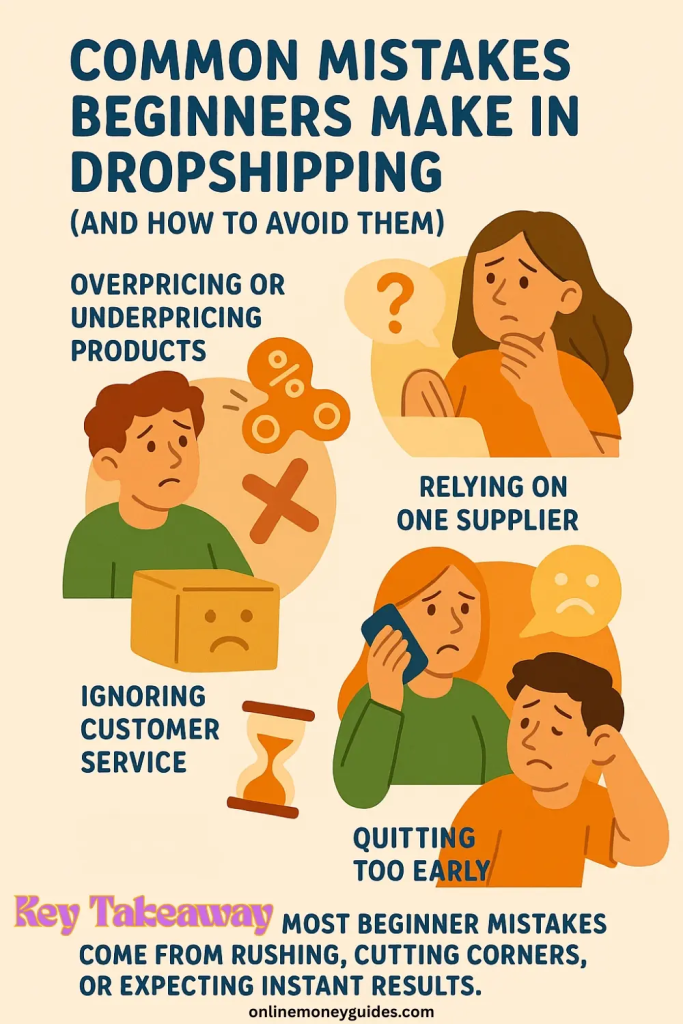
Overpricing or Underpricing Products
Many first-time sellers struggle with pricing. If you set your prices too high, customers click away. If you set them too low, you eat into your already slim margins.
The sweet spot is usually a 2x–3x markup from your supplier cost, but it’s also about how you position your brand. A store that looks polished and trustworthy can charge more than a generic-looking site.
Choosing Oversaturated Niches
Jumping into a niche just because it’s trending can backfire. For example, fidget spinners and LED strip lights were once hot, but by the time most beginners started selling, they were flooded with competition.
Instead of asking, “What’s viral right now?” ask, “What are people consistently spending money on?” That shift helps you find products with long-term demand instead of short-lived hype.
Relying on One Supplier
Putting all your eggs in one supplier’s basket is risky. If they run out of stock, raise prices, or ship late, your store suffers. Smart dropshippers always have at least one backup supplier. Platforms like Spocket and CJ Dropshipping make it easier to diversify without juggling dozens of relationships.
Ignoring Customer Service
Because dropshipping is online and remote, it’s tempting to treat customers like order numbers. But in reality, customer service is one of the easiest ways to differentiate yourself.
Replying quickly, offering clear return/refund policies, and sending friendly follow-up emails go a long way in building trust. Even if shipping takes longer than Amazon, good communication can keep customers happy.
Quitting Too Early
Dropshipping takes time. Some people quit after a month because they don’t see overnight profits. The reality: it often takes 3–6 months to gain traction, especially if you’re learning from scratch. The people who succeed are the ones who treat it like a business, not a quick flip.
Key Takeaway: Most beginner mistakes come from rushing, cutting corners, or expecting instant results. Slow down, focus on quality, and remember that consistency beats quick wins in dropshipping.
Scaling Your Dropshipping Business Beyond $10K/Month
Once you’ve proven that your dropshipping store can make sales consistently, the next step is scaling. Scaling isn’t about adding more chaos or working twice as many hours; it’s about creating systems so your store can grow without you burning out. In 2026, the stores that thrive are the ones that automate, outsource, and diversify.
Outsourcing and Hiring Virtual Assistants
At first, you’re likely wearing all the hats: customer service, product uploads, order tracking, and social media. But once revenue starts coming in, outsourcing becomes your best friend. Virtual assistants (VAs) can handle repetitive tasks like responding to customer emails, updating inventory, or even creating TikTok content.
Platforms like Upwork and OnlineJobs.ph are popular places to find affordable, skilled VAs. Even hiring someone for 10 hours a week can free up your time to focus on strategy and growth.
Automating Customer Service and Fulfillment
Tools like AutoDS and DSers already automate order processing, but you can take it further. With chatbots like Tidio or Gorgias, common customer questions can be answered automatically, reducing the need for manual replies. Automation isn’t about removing the human touch; it’s about creating faster, more consistent experiences for your customers.
Expanding Into Multiple Stores or Niches
Once you’ve built one profitable store, you can replicate the process. Many experienced dropshippers run two or three stores in different niches to spread risk and multiply income. The skills you gain with your first store, finding suppliers, setting up ads, and creating content, transfer directly to the next one.
Moving Into Private Label or Branded Products
Pure dropshipping is great for starting, but branding is what unlocks long-term scale. Private label means taking a product that already sells and putting your brand on it, often with custom packaging or small design tweaks.
Customers are more loyal to brands than generic stores, which means higher repeat sales and stronger margins.
Services like CJ Dropshipping and Printful make it easier than ever to brand products without massive upfront orders. Even small touches like a branded thank-you card or customized packaging can make your store feel more premium.
Key Takeaway: Scaling isn’t about doing more; it’s about working smarter. Automate, outsource, and start thinking like a brand-builder, not just a reseller.

Legal, Tax, and Compliance Considerations in Dropshipping
It’s easy to get caught up in the excitement of launching your store and forget about the less glamorous side of business, the legal and tax details. But handling these early can save you from headaches later.
Don’t worry, you don’t need a law degree to figure it out. You just need to understand the basics and set things up the right way from the start.
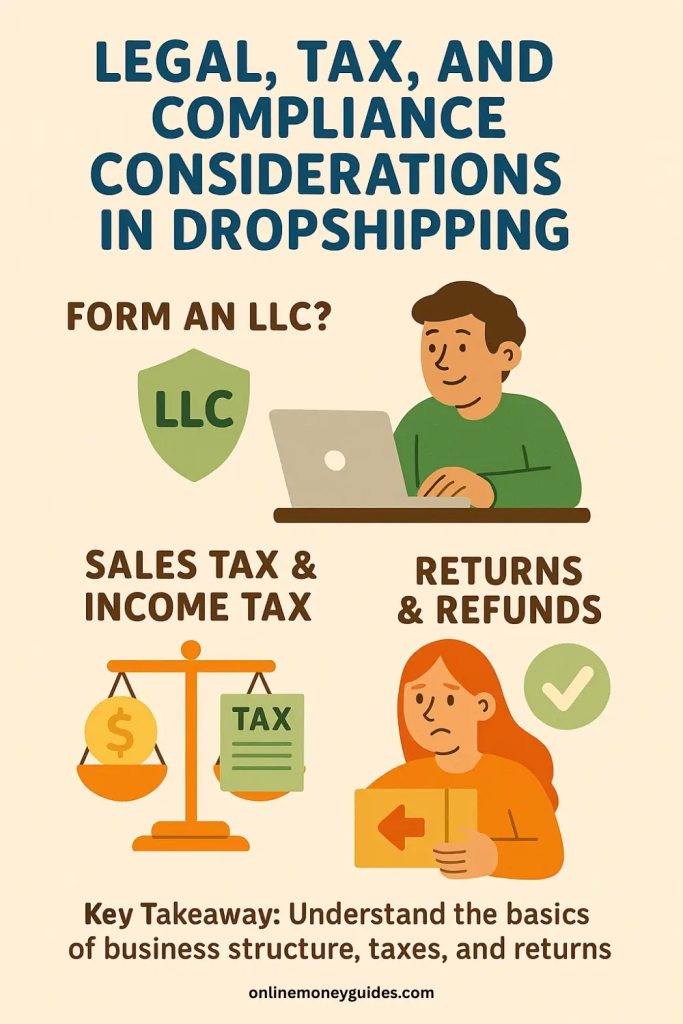
Do You Need an LLC for Dropshipping?
Strictly speaking, you can start a dropshipping store as a sole proprietor without forming an LLC. However, most entrepreneurs eventually register an LLC (Limited Liability Company) for two main reasons: it separates your personal assets from your business, and it makes your store look more professional.
The good news is that forming an LLC is affordable in most U.S. states, often between $50 and $300 depending on where you live. If you’re just testing the waters, you can wait until you see traction, but if you’re serious about scaling, it’s smart to set up sooner rather than later.
Sales Tax and Income Tax Basics
When it comes to taxes, there are two things to keep in mind:
- Sales tax: In the U.S., most states require you to collect sales tax if you have “nexus” (a presence like an office, warehouse, or even significant sales volume in that state). Platforms like Shopify have built-in tools to help you calculate and collect sales tax automatically.
- Income tax: Your profits from dropshipping count as regular business income. That means you’ll report it on your tax return and may need to pay quarterly estimated taxes once you’re profitable.
It may sound intimidating, but a simple accounting tool like QuickBooks can make it much easier to track income and expenses.
How to Handle Returns and Refunds
Even with the best suppliers, returns happen. Having a clear, customer-friendly return policy sets the right expectations and reduces disputes. Most dropshippers adopt one of two approaches:
- Let the customer return items directly to the supplier (if the supplier allows it).
- Accept returns yourself and refund the customer, then handle the supplier separately.
The second option can feel inconvenient, but it often results in happier customers, and happy customers leave positive reviews.
Staying Compliant With Platforms Like Shopify & Amazon
Both Shopify and Amazon have rules you need to follow. Shopify is flexible, but you’re expected to sell legal products, honor your policies, and avoid counterfeit goods. Amazon is stricter: your supplier cannot include their own branding or invoices in packages, and you must handle customer service quickly.
The bottom line? Dropshipping is legal and legitimate, but you need to play by the rules of the platforms and stay on top of tax responsibilities. Setting this up correctly gives you peace of mind and lets you focus on growing instead of worrying about compliance.
Key Takeaway: Treat your dropshipping business like a real business from day one. Handling LLC registration, taxes, and return policies properly not only protects you but also builds trust with customers.

Tools and Resources for Dropshipping Success
One of the best parts about starting a dropshipping business in 2026 is that you don’t have to do it all alone. There’s a whole ecosystem of tools designed to help you set up, run, and scale your store more efficiently. The right tools don’t just save time, they also reduce mistakes and give you insights that can directly boost profits.
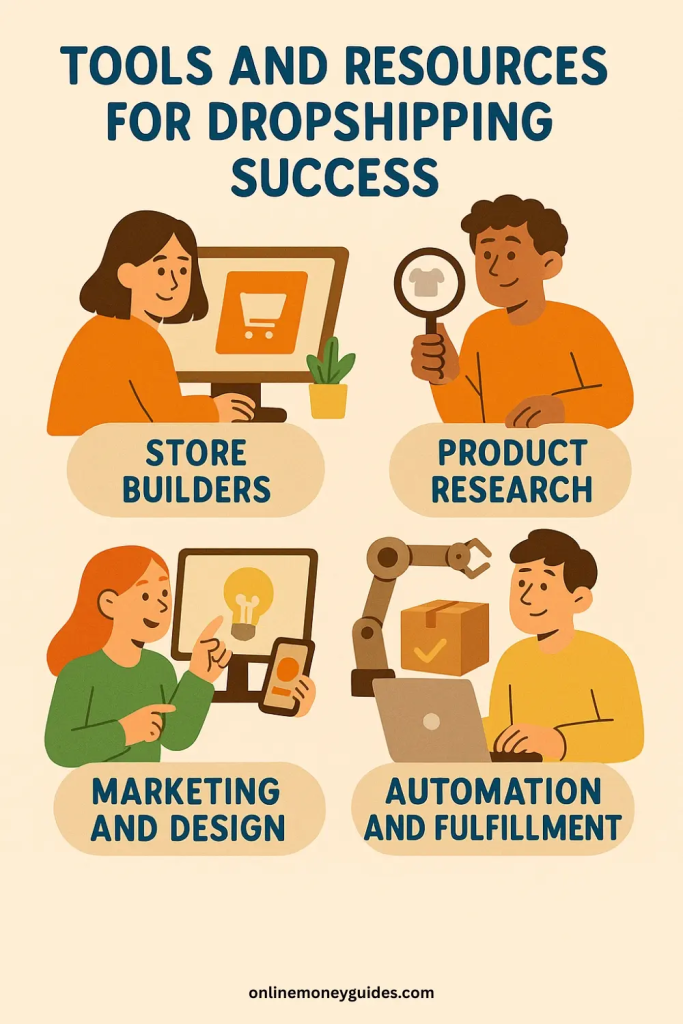
Store Builders
Your e-commerce platform is the foundation of your store. Shopify is the go-to for beginners because it’s intuitive and integrates seamlessly with dropshipping apps.
If you want more control and already use WordPress, WooCommerce is another strong choice, though it requires more setup. Both platforms can give you a professional-looking store without needing to code.
Product Research
Finding the right products to sell can be overwhelming without help. Platforms like SaleHoo and Ecomhunt curate trending products and provide sales data so you can make informed decisions.
For Amazon-focused sellers, JungleScout is a powerful way to spot demand before competitors flood the market. These tools remove much of the guesswork from product selection.
Marketing and Design
When it comes to promoting your store, visuals matter. Canva is perfect for creating logos, social media content, and even product graphics without hiring a designer.
For email marketing, ConvertKit helps you build a list and send personalized campaigns that keep customers coming back. And if you’re ready to run ads, Meta Ads Manager and Google Ads remain core platforms for reaching buyers quickly.
Automation and Fulfillment
The beauty of dropshipping is automation, and tools like AutoDS and DSers are built for that. They can import products directly into your store, auto-place customer orders with your suppliers, and even sync tracking numbers. This means you spend less time on repetitive admin tasks and more time on strategy.
Key Takeaway: The right dropshipping tools make the difference between a stressful side hustle and a streamlined business. Start with the basics — a platform, product research tool, and automation app — then add more as your store grows.
Is Dropshipping Worth It in 2026?
By now, you’ve seen the full picture of what dropshipping looks like today: the opportunities, the challenges, the tools, and the steps to get started.
So let’s answer the big question: Is dropshipping still worth it in 2026?
The short answer is yes. If you approach it the right way. Dropshipping is no longer the “wild west” it was years ago, where you could throw up a random store and expect quick sales.
Customers are smarter, competition is stronger, and expectations for shipping and service are higher. But that’s actually a good thing, because it means people who treat dropshipping like a real business can still thrive.
Here’s what you can realistically expect:
- Beginners who stay consistent can grow to $500–$2,000/month in profit within 6–12 months.
- With the right products and marketing, many sellers scale to $5,000–$10,000/month.
- Long-term players who build branded stores or move into private label can earn far more, with stronger customer loyalty.
The key is patience. Dropshipping won’t make you rich overnight, but it can teach you valuable ecommerce skills, create a consistent income, and open doors to bigger opportunities in online business.
So if you’ve been waiting for the “perfect time” to start, here’s the truth: the perfect time doesn’t exist. The sooner you take action, the sooner you’ll learn what works for you.
Key Takeaway: Dropshipping is worth it in 2026 if you go in with realistic expectations, focus on customer experience, and commit to consistent effort. Start small, learn fast, and scale smart.