Tired of Posting for Free? Let’s Change That.
You’ve been putting in the work. Editing videos, sharing content, and staying consistent. But the only thing growing faster than your follower count is your frustration. Maybe you’re wondering:
“Do brands even work with small creators like me?”
“How do I ask to get paid without sounding awkward?”
“What if I mess it up or seem desperate?”
If you’ve had those thoughts, you’re not alone, and you’re not wrong for feeling overwhelmed. Influencer sponsorships in 2026 feel like a secret club that only “real influencers” get invited to. But here’s the truth:
You don’t need a million followers or a perfect feed. You need a strategy, and this guide is your shortcut.
We’re about to break down exactly how to land brand deals, paid partnerships, and influencer collaborations in today’s creator economy, even if you’re just starting out. Whether you’re a content creator, digital entrepreneur, or side hustler looking to monetize your online presence, this is your ultimate playbook.
No fluff. No hype. Just real steps, tools, pitch tips, and confidence-boosting reframes that help you move from “posting for fun” to “getting paid for your influence.”
Let’s dive in.
A big part of landing sponsorships is knowing your worth. If you’re unsure what to charge, our Influencer Rate Card & Pricing guide breaks down benchmarks and examples for different platforms.

Why Influencer Sponsorships Still Work (And Are Booming in 2026)
Influencer marketing isn’t dying…it’s evolving.
The influencer space has shifted fast. Traditional paid posts still exist, but now brands are prioritizing long-term partnerships, affiliate programs, creator licensing deals, and authentic storytelling that converts. In 2026, influencer sponsorships are no longer just for A-listers. They’re for everyday creators who know how to build trust.
Why brands want to pay you
Brands are shifting budgets away from generic ads and into creator partnerships that drive community-led growth. Here’s why micro- and mid-size creators are more in demand than ever:
- Higher engagement rates (micro-influencers average 3.86%+ vs. 1.21% for mega influencers)
- Lower cost per campaign with stronger ROI
- Authenticity that actually drives purchases
- Niche audiences with buying intent (vs. general reach)
You’re not asking for a favor. You’re offering brands access to a warm, trusting community they can’t reach without you.
What Counts as an Influencer Sponsorship or Brand Deal?
Not all sponsorships look the same, and you don’t need to wait for a “big opportunity” to call yourself a sponsored creator.
Here’s what counts:
| Type of Sponsorship | What It Looks Like | Typical Pay Range |
| Paid Post | A flat-rate video, photo, or carousel post in exchange for cash | You create content that the brand uses in its ads or social media |
| Affiliate Partnership | You earn a % of sales using your unique link/code | 10–30% commission is common |
| Product Seeding | Free products in exchange for a review or feature (paid or unpaid) | Free value: $50–$500 per item |
| Giveaway Collab | You promote a giveaway in exchange for exposure and leads | Follower growth, list building |
| Long-Term Ambassador | Monthly/quarterly brand promotion with set deliverables | $500–$5,000+/month depending on audience |
| UGC Licensing Deal | You create content that the brand uses in their ads or social media | $250–$1,000+ per video |
You don’t have to wait for brands to DM you. You can pitch them directly, and we’ll show you how.
How Much Do Influencers Get Paid in 2026? (Real Numbers & Examples)
One of the most common (and paralyzing) questions new creators ask is:
“How much should I charge?”
You don’t want to undersell yourself, but you also don’t want to scare a brand away. The truth is, there’s no one-size-fits-all number, but there are standard ranges based on audience size, niche, platform, and engagement.
Here’s a breakdown to give you clarity and negotiation power.
Influencer Sponsorship Pricing by Follower Count (2026 Averages)
| Follower Count | Instagram Post | TikTok Video | YouTube Integration | UGC Licensing |
| 1K–10K (Nano) | $50–$150 | $100–$300 | $100–$500 | $100–$250 |
| 10K–50K (Micro) | $150–$500 | $300–$800 | $500–$1,000 | $250–$750 |
| 50K–100K (Mid-Tier) | $500–$1,000 | $800–$1,500 | $1,000–$2,000 | $750–$1,200 |
| 100K–500K+ | $1,000–$5,000+ | $1,500–$5,000+ | $2,000–$10,000+ | $1,000+ |
These are general ranges; your niche, audience quality, engagement, and content style matter just as much as follower count.
Factors That Influence Your Rate
Platform – TikTok often pays higher than Instagram per video due to reach and virality.
Engagement Rate – A 7% engagement on 10K followers can be more valuable than a dead 100K account.
Niche – High-ticket niches like finance, tech, wellness, and B2B can command 2–4x the rates of lifestyle or fashion.
Usage Rights – If a brand wants to reuse your video in ads or on their website, you should charge licensing fees.
Exclusivity – If a brand doesn’t want you to promote competitors for 30–90 days, that should increase your rate.
Brands expect professionalism when it comes to pricing. That means having a clear, transparent rate card. See our full guide on influencer pricing to learn exactly how to build one.
How to Calculate a Starting Rate
Here’s a simple framework:
Base Rate = $100 per 10,000 followers
+ Add: $100–$500 for short-form video
+ Add: $200–$1,000 if brand wants usage rights
+ Add: $100–$1,000 for exclusivity (30–90 days)
Or use our free calculator to get a ballpark based on your platform and stats.
Instagram Influencer Earnings Calculator
Here’s something to consider: Don’t Just Sell Reach, Sell Results
Instead of charging just for how many followers you have, emphasize:
- Your click-through rates
- Your conversion results (ex, “I helped Brand X sell out a product in 48 hours”)
- Your comment quality (not just likes but real conversation)
- Your content quality (cinematic editing, storytelling, etc.)
Your rates are not just about numbers, they’re about value.
How to Find and Approach Brands for Sponsorships (Even If You’re Small)
You don’t need to wait for a brand to slide into your DMs.
Most creators don’t realize this, but you can absolutely reach out to brands first, and in 2026, that’s often the fastest way to land your first influencer sponsorship.
Where to Find Brand Deals (Beyond Just “Email Us”)
Here are practical places to start finding sponsorship-ready brands:
1. Influencer Marketing Platforms (Updated for 2026)
These are marketplaces where creators and brands connect directly:
| Platform | Best For | Free to Join? |
| Aspire | Mid-tier paid campaigns, UGC deals | ✅ |
| Influencity | Data-backed brand matching | ✅ |
| Brandwatch Audiences | Brand discovery by niche/fit | ✅ |
| Collabstr | Sell paid shoutouts & content bundles | ✅ |
| Famebit by YouTube (now retired, replaced by YouTube BrandConnect) | YouTube creators | ⚠️ Invite only |
| TikTok Creator Marketplace | TikTok campaigns, affiliate offers | ✅ |
| Activate by Impact | Advanced analytics and partnership deals | ✅ |
| LTK (LIKEtoKNOW.it) | Fashion, beauty, lifestyle affiliates | ✅ |
| Mavrck | High-quality brand activations | ⚠️ Limited invites |
Pro Tip: Don’t just apply but optimize your profile, include a mini pitch in your bio, and keep it brand-aligned.
You don’t have to wait for brands to discover you. Sponsorship platforms and influencer marketplaces can connect you with campaigns directly. We’ve put together a list of the best influencer sponsorship platforms & marketplaces to help you get started.

2. Find Brands Already Working with Creators Like You
Use these quick strategies:
Search Instagram/TikTok with #ad, #sponsored, #gifted, or #brandpartner in your niche
Click on creators in your niche and see what brands they’ve worked with
Check the Explore/Trending tab on TikTok Creator Marketplace
If a brand has already worked with influencers like you, they’re way more likely to say yes to you too.
3. Tap Into Affiliate Platforms That Lead to Sponsorships
Affiliate programs are a smart “in.” You prove you can drive results, then pitch for a flat-rate deal.
Impact.com (huge brand list: Canva, Walmart, etc)
ShareASale/Awin (great for bloggers + creators)
Amazon Influencer Program (commissions + live shopping)
CJ Affiliate (long-term brand partnerships)
LTK + ShopMy (beauty/fashion)
Once you generate a few sales? Screenshot it and send it to the brand with a short pitch:
“Hey! I’ve already driven sales through your affiliate. I’d love to chat about a formal partnership.”
How to Reach Out (Without Feeling Cringe)
Let’s kill the fear here: you’re not begging, you’re offering value. Brands are actively looking for creators who match their voice and audience.
What to Include in Your Outreach Email or DM:
A personalized opening (mention a recent campaign or product you love)
A quick sentence on who you are and who your audience is
One sentence on how you’d love to partner (ex, “I have an idea for a mini-review series with brands I already love, yours included.”)
A soft call to action: “Would you be open to discussing a potential partnership?”
Keep it under 150 words. You’re not trying to convince, you’re trying to connect.
Quick Example Email:
Subject: Collab Idea with [Brand Name] You’ll Love

Hey [First Name/Brand Team],

I’m [Your Name], a [your niche] content creator who’s already a fan of your .  I’ve seen how your recent [campaign/product] is resonating with the community and I have a content idea I think your audience would love.

Would you be open to a quick chat about a potential collaboration?

Happy to send over my media kit or brainstorm more if you’re interested.

Warmly,

[Your Name]

@handle | [Email] | [Media Kit Link if available]
Pro Tip: Create a spreadsheet today with 15 dream brands and start with 3 outreach emails this week.
How to Pitch Brands Like a Pro (With Templates + What to Say)
So you’ve found the brand. You know you’re a good fit. But now you’re staring at a blank screen, wondering…
“What the heck do I even say to pitch them?”
Here’s the good news: You don’t need to sound like a marketing expert. You just need to sound human and aligned. In 2026, brands want creators who understand their voice, values, and audience. That’s what your pitch should reflect.
The Anatomy of a Great Brand Pitch (2026 Style)
Whether you’re sending an email or DM, structure your message like this:
Personal hook
Start with something brand-specific. Mention a campaign they ran, a product you use, or something you genuinely love about their work.
Who you are
Keep this short and niche-aligned. (“I’m a digital nomad travel creator who helps aspiring creators build a freedom-based lifestyle.”)
The value you bring
This is key. Focus less on “me, me, me” and more on what you offer: your engaged audience, niche authority, and content quality.
Your idea (optional but powerful)
Pitch a simple campaign idea or content format. It helps them visualize what working with you could look like.
Pro Tip: Make it low-pressure: “Would you be open to collaborating?” or “Can I send over my media kit?”
📩 Influencer Sponsorship Pitch Template (Editable)
Subject: [Your Name] x [Brand Name] Collaboration Idea

Hi [Brand Team/Name],

I’m [Your Name], a [Your Niche] content creator with a community of [Follower Count] [Platform] followers who [describe audience: ex: love product recommendations for budget travel gear].

I’ve been following your work since [personal tie-in: ex: your eco-conscious line dropped last spring] and would love to explore a potential influencer collaboration.

I have an idea for a [type of content] that would spotlight your  in an organic, story-driven way that resonates with my audience.

Would you be open to discussing a potential paid partnership? I can share my media kit and examples of past results if helpful.

Thanks for considering it.  I’d be excited to work together!

Warmly,

[Your Name]

@handle | [Email] | [Media Kit Link]
Pro Tip: Keep a Google Doc with 2–3 prewritten templates like this so you can quickly personalize and send at scale.
What to Include in a Media Kit (And Free Tools to Make One)
Your media kit is your sponsorship resume. In 2026, it doesn’t need to be fancy. It just needs to be clear.
Here’s what to include:
| Section | What It Should Cover |
| Bio | Short paragraph on who you are + your niche |
| Audience Stats | Follower count, platform breakdown, engagement rates |
| Demographics | Age, location, gender, interests of your audience |
| Previous Brand Work | Logos, screenshots, or performance highlights |
| Content Samples | Clean images or thumbnails of your best posts |
| Rates & Services | Optional, can offer on request instead |
| Contact Info | Email, social handles, optional link-in-bio page |
Tools to Create One (Free & Easy):
- Canva Influencer Media Kit Templates
- Google Slides (use a simple 1–2 page deck)
- ConvertKit Creator Profile (includes stats + email opt-ins)
You don’t need to have worked with 10 brands to make a great kit. Show off your best content, even if it wasn’t sponsored.
Pitch Timing Matters, Too
Here’s when to send your pitch for better results:
Mid-week (Tues–Thurs) between 9 AM–12 PM (brand teams check email then)
1–2 months before seasonal launches or holidays
Right after you tag them organically in a great post
Pro Tip: Make your media kit this week, even if it’s basic. Then send 1 pitch using the template above.
What Types of Sponsorships Are Available in 2026 (And Which Ones Pay Best?)
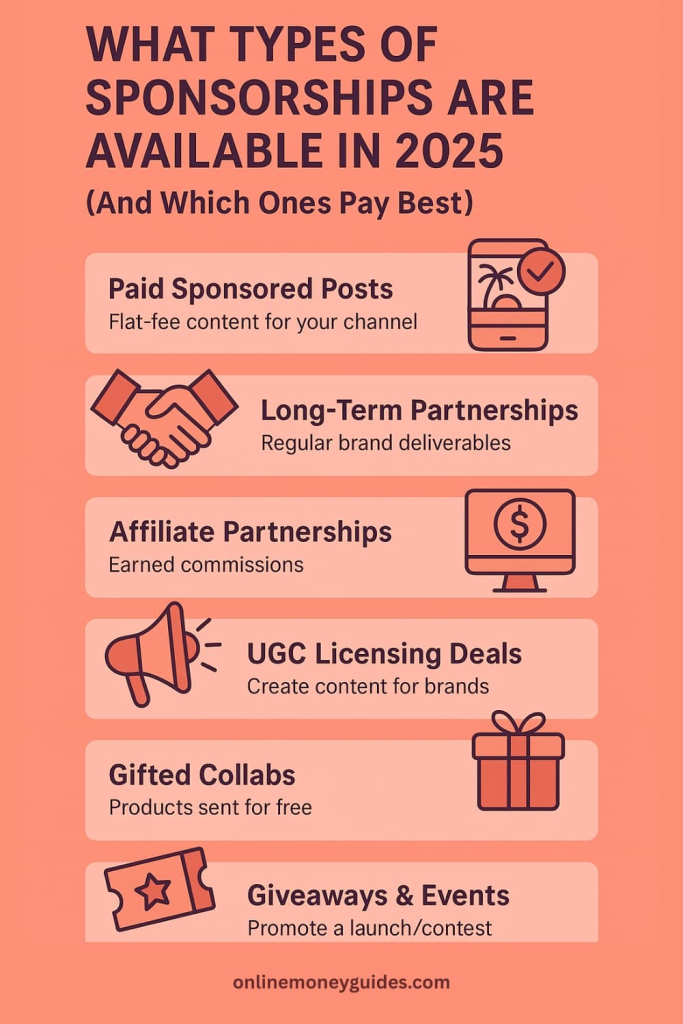
Not every brand deal is a flat-fee Instagram post anymore. In 2026, influencer sponsorships have evolved into a wide menu of partnership models and many of which pay better, last longer, or fit different creator styles.
Here’s a breakdown of the main types of influencer sponsorships you can pursue and how to decide which ones are worth your time.
1. Paid Sponsored Posts (The Classic)
Still the most common, especially on TikTok, Instagram, and YouTube Shorts.
You create content (video or photo) featuring the brand
You’re paid a flat fee for usage on your channel only
You retain content rights (unless negotiated otherwise)
Pay Range: $50–$5,000+ depending on platform, niche, and audience size
Best For: Creators who love storytelling and have high engagement
2. Long-Term Brand Partnerships or Ambassador Deals
Instead of one-and-done campaigns, brands pay you monthly or quarterly to be the official voice of their brand.
You commit to consistent deliverables (ex, 2 videos/month)
You often get sneak peeks, affiliate links, bonuses, or exclusive content
These relationships can last 6–12+ months
Pay Range: $500–$5,000+ per month
Best For: Creators with strong brand alignment and a loyal audience
Here’s something to consider: This is where many micro-influencers scale their income steadily.
3. Affiliate Partnerships and Creator Codes
You earn a commission when someone uses your custom link or code to make a purchase.
Great passive income over time
Many platforms have low minimums to join
Bonus: Some affiliate programs lead to paid sponsorships if you convert well
Commission Range: 5%–30% per sale
Best For: Niche creators who recommend products consistently
Top Platforms in 2026:
| Platform | Great For |
| Impact.com | Tech, apps, SaaS, creator tools |
| ShareASale | Bloggers, lifestyle creators |
| Shopify Collabs | Ecom, small product brands |
| ShopMy / LTK | Fashion, wellness, beauty |
| Amazon Influencer Program | Mass market products |
| ConvertKit Creator Network | Digital products, courses |
4. UGC (User-Generated Content) Licensing Deals
You create content for the brand to use on their ads, site, or social channels, not your own.
No posting to your feed required
You charge a flat rate + usage rights
Great way to monetize even with a small audience
Pay Range: $150–$1,500+ per asset
Best For: Creators with strong editing, voiceover, or product demo skills
Pro Tip: Always include usage timelines in your contract (ex, 3 months, 6 months, 1 year).
5. Product Seeding & Gifted Collabs (The Starting Point)
Brands send you free products with the hope (not guarantee) that you’ll share.
Sometimes includes a contract, other times it’s casual
Great way to test brand fit and build portfolio
You can often turn these into paid deals
Pay: Free product (valued $50–$500+)
Best For: Newer creators testing partnerships
Want to flip this into paid? Create killer content and send a follow-up pitch showing results.
6. Giveaways, Events & Collab Campaigns
These often boost brand awareness, follower growth, or email list building.
You partner on a giveaway or launch event
You promote with other creators or cross-post with a brand
You sometimes get paid, or benefit from exposure
Pay: Sometimes flat fee, often mutual promo or perks
Best For: Creators focused on audience growth or niche influence
7. Thought Leader or Expert Sponsorships (Emerging)
If you’re an educator, coach, or niche authority, you can get sponsored to:
Speak on webinars
Host workshops
Write reviews or case studies
Feature tools in your content
Pay Range: $250–$5,000+ per engagement
Best For: Creators building community, teaching, or selling services
Choosing the Right Sponsorship Type for You
Ask yourself:
Do I want passive income? → Go affiliate
Do I want predictable income? → Go for long-term brand deals
Do I love creating content? → Try UGC licensing
Do I want exposure or portfolio pieces? → Start with gifts or giveaways
*Not every brand collab has to be paid, but every collab should be purposeful.
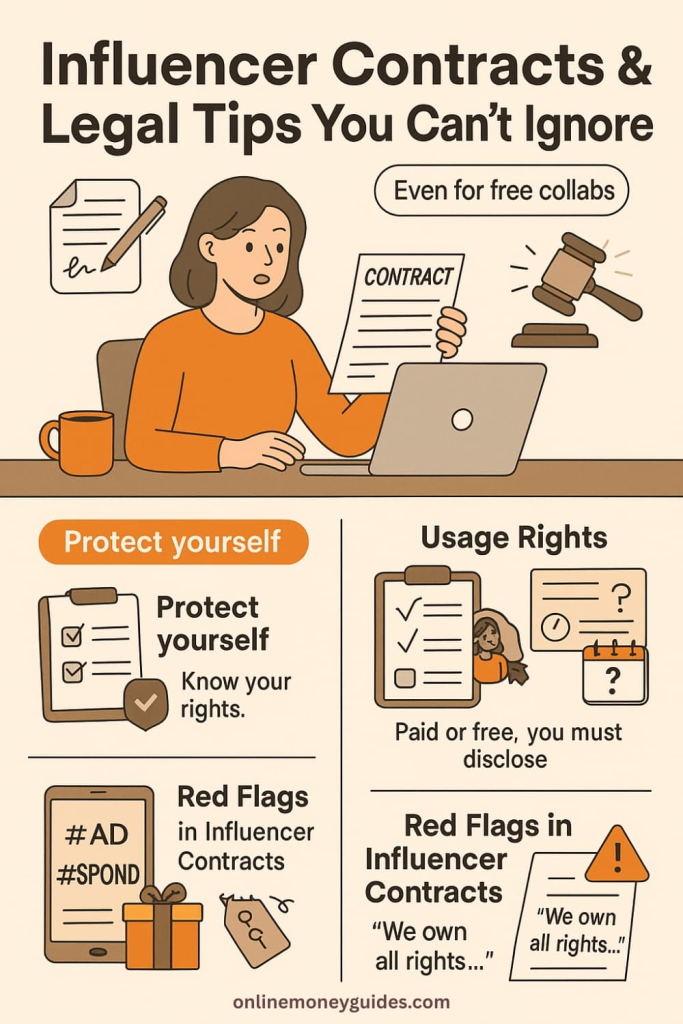
Influencer Contracts & Legal Tips You Can’t Ignore (Even for Free Collabs)
Let’s talk about the unsexy stuff that protects your income and reputation: contracts, rights, and compliance.
If you’ve ever thought, “Do I really need a contract if they’re just gifting me a product?” The answer in 2026 is a BIG YES, even for free collabs.
When you post on behalf of a brand, paid or unpaid, you’re entering a legal relationship.
Protect yourself. Know your rights. Get it in writing.
What to Include in an Influencer Sponsorship Agreement
Whether you’re signing their contract or writing your own, here’s what every influencer agreement should clearly spell out:
| Clause | What It Means |
| Deliverables | What you’re expected to post (format, platform, timeline) |
| Usage Rights | Can the brand repost your content? Use it in ads? For how long? |
| Exclusivity | Are you restricted from working with competitors? For how long? |
| Payment Terms | Amount, payment method, and when you’ll get paid |
| Approval Process | Do you need to send drafts? What’s the revision policy? |
| Disclosure | Language you must use to stay FTC-compliant |
| Cancellation Policy | What happens if either party backs out? |
Here’s something to consider: Don’t skip over usage rights or exclusivity. These can significantly impact your earning potential.
Quick Legal Terms to Understand
Whitelisting – Brand promotes your content from their ad account. Often requires separate fees.
Perpetual Usage – Brand can use your content forever. Avoid unless you’re paid well.
In Perpetuity – Same as above, watch out.
Mutual Indemnity – Both parties agree not to sue unless someone clearly messes up.
FTC Disclosure Rules in 2026 (Still Mandatory)
You must disclose sponsored content clearly, no matter how big or small your following.
Required for:
- Paid posts
- Free products
- Affiliate links
- Brand gift mentions
Use clear, upfront tags: #Ad and #Sponsored
“Thanks to [Brand] for gifting this product!”
“Affiliate link: I may earn a commission.”
Hiding your disclosure in the 10th Instagram hashtag? Nope. That doesn’t fly in 2026.
Tools to Create and Manage Contracts
You don’t need a lawyer on speed dial. Just use one of these:
HelloSign or DocuSign – For sending/signing contracts
Bonsai – Contract templates and client management
Contrac.co – Creator-focused contract builder
Google Docs – Simple and free, just export to PDF for signatures
Pro Tip: Keep a folder of every contract you’ve signed, including screenshots of deliverables, dates, and approvals.
Red Flags in Influencer Contracts
“We own all rights to your content forever.” (🚨 usage grab)
“We’ll pay after 90 days.” (slow cash flow = big stress)
“You must meet performance metrics to be paid.” (unfair unless agreed upfront)
If you’re unsure, ask for edits. You’re a partner, not a pawn.
Can You Use a Template?
Yes, and you should if the brand doesn’t provide one. Start with:
Influencer Contract Template by Later
Creator Contract Builder by Influencer Marketing Hub
DIY with Bonsai or Notion
Pro Tip: Create a simple contract template today that you can send brands when they don’t provide one.
How to Increase Your Chances of Getting Sponsored (Even with 1K Followers)
Let’s clear something up right now:
You do not need a huge following to land brand deals.
You need the right positioning, content strategy, and engagement.
In fact, many brands in 2026 prefer working with micro-influencers (1K–50K followers) because of their trust-building power and niche alignment.
Here’s how to stand out even at the “small creator” stage.

Step 1: Nail Your Personal Brand & Niche Positioning
Brands aren’t looking for “just another lifestyle vlogger.” They’re looking for clear, consistent voices that speak to a specific audience.
Ask yourself:
Who am I speaking to?
What themes come up again and again in my content?
What kind of products/services do I already use and genuinely love?
Let’s break it down: Examples of Niche Clarity:
| Generic | Strong Positioning |
| Travel creator | Budget travel for digital nomads |
| Fitness creator | Strength training for busy moms |
| Food creator | Easy gluten-free meals for college students |
| Finance creator | Budgeting tips for first-gen entrepreneurs |
When your content has a clear focus, brands instantly “get” who your audience is and how they can plug in.
Step 2: Optimize Your Profile for Sponsorships
Whether you’re on TikTok, Instagram, or YouTube, your profile should sell your value to both brands and followers.
Checklist:
- Clear niche in your bio (“Helping [audience] with [value]”)
- Location or region (brands often target specific countries)
- Link to your media kit, landing page, or affiliate shop
- Business contact should be visible
Pinned posts that show:
- Brand collaborations
- High-performing content
- Your storytelling style
Here’s something to consider: Want to go further? Create a simple “Collab With Me” highlight or link page.
Step 3: Boost Your Engagement (The Right Way)
Engagement is king in 2026. Brands care more about comment quality and content saves/shares than just likes.
Here’s how to increase it:
Use calls to action that start conversations (“Have you tried this?” “What’s your go-to?”)
Post behind-the-scenes or opinion-based content to spark responses
Use polls, stickers, or question boxes in Stories
Reply to every comment and DM for 24–48 hours after posting
Post consistently (2–4x/week) in your best-performing formats
Want more engagement? Make your audience feel seen, not sold to.
Step 4: Create “Spec Content” That Attracts Brands
This is one of the fastest ways to land a sponsorship, even if no brand has paid you yet.
Spec content = unpaid content that looks like a professional brand collaboration.
Pick a product you already love and use
Create a short-form video, photo, or reel that tells a story around it
Tag the brand (without asking for anything)
Pro Tip: Add these to your pitch deck to show brands what kind of content you could create for them.
Step 5: Use Analytics to Show Your Value
Even small creators can pull impressive stats if they’re focused.
Track and screenshot:
- Saves, shares, and reach per post
- Conversion screenshots (ex, affiliate dashboard)
- Follower growth over time
- Most engaging posts by category
Tools to help:
- Instagram/TikTok Creator Tools
- YouTube Studio
- Canva Pro (for making polished visuals of stats)
- Notion or Airtable (to log performance data)
Show you’re a data-aware creator, not just a content machine.
Pro Tip: Pick ONE of these strategies today whether it’s updating your bio, creating a spec video, or screenshotting your engagement. Small steps build real results.
Influencer Sponsorship Mistakes to Avoid in 2026 (That Cost Creators Money & Credibility)
Even if your content is great and your pitch is solid, small missteps can cost you brand deals or worse, damage your reputation with future partners.
Here are the most common (and avoidable) mistakes creators make when pursuing influencer sponsorships in 2026.
Mistake #1: Undervaluing Your Work
It’s tempting to accept a lowball offer just to get your foot in the door. But when you constantly say yes to:
- Free work “for exposure”
- $50 brand posts that take 5 hours
- Affiliate codes without a base pay
…you burn out fast.
Here’s something to consider: “My work isn’t expensive, it’s valuable.”
The right brands will pay for that value.
Mistake #2: Ghosting Brands or Missing Deadlines
You’d be shocked at how many creators vanish after getting a deal. Brands keep track. If you:
- Delay delivery without communication
- Don’t respond to feedback
- Forget deadlines or guidelines
…they likely won’t work with you again.
Let’s break it down: Use tools like Notion or ClickUp to track campaign timelines.
Mistake #3: Not Reading the Contract
We covered this earlier, but it’s worth repeating:
Never sign without understanding what you’re agreeing to.
Watch out for:
- Unlimited usage rights
- Long exclusivity periods
- Performance-based payments
Think of it this way: If it’s unclear, ask questions. If they’re pushy, that’s a red flag.
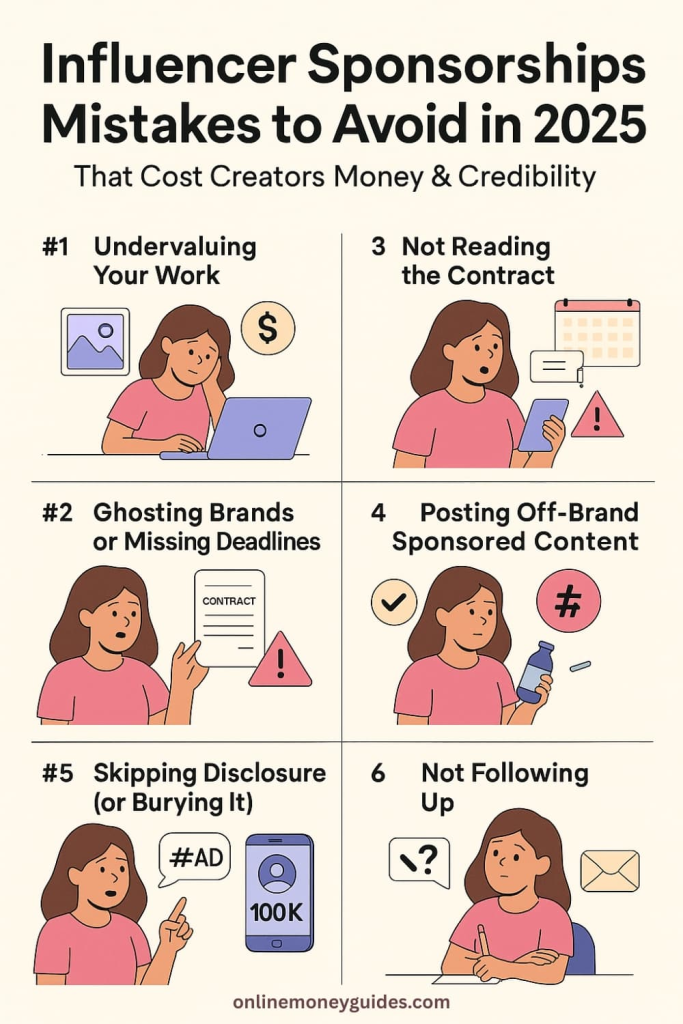
Mistake #4: Posting Off-Brand Sponsored Content
Yes, it’s money, but if the partnership doesn’t align with your niche or values, it can:
- Confuse your audience
- Tank your engagement
- Make future brands hesitant to work with you
If you’ve never talked about stocks, don’t randomly promote a stock. Stay consistent with your content identity.
Mistake #5: Skipping Disclosure (or Burying It)
FTC rules aren’t optional. You must clearly disclose partnerships, and the brand should expect you to.
Don’t:
Hide #ad in 10th hashtag
Use vague captions like “partnered with” or “special thanks”
Let’s break it down: Do:
Say “This post is sponsored by…” or use clear tags like #Ad and #Sponsored
Here’s something to consider: Transparency builds trust with your audience AND with brands.
Mistake #6: Focusing Only on Follower Count
Brands care about:
- Engagement rate
- Niche authority
- Creative quality
- Storytelling skills
- Audience trust
A 100K follower account with 0.5% engagement is less valuable than a 5K account with a 10% comment rate.
Think of it this way: Position yourself as a community-builder, not just a broadcaster.
Mistake #7: Not Following Up
Most brand deals don’t happen on the first message.
If a brand doesn’t reply:
Wait 5–7 days, then send a friendly follow-up
Share a new piece of content or an idea
Keep the door open for future collabs
Following up shows professionalism, not desperation.
Pro Tip: Audit your last few brand interactions. Are you doing any of these? Pick one to improve this week and build trust with every pitch moving forward.
Putting It All Together: Your Influencer Sponsorship Blueprint for 2026
By now, you’ve seen that landing brand deals isn’t about luck. It’s about being intentional, strategic, and trustworthy.
This blueprint gives you a clear roadmap to go from posting for fun…
→ to pitching brands confidently
→ to building long-term sponsorship income.
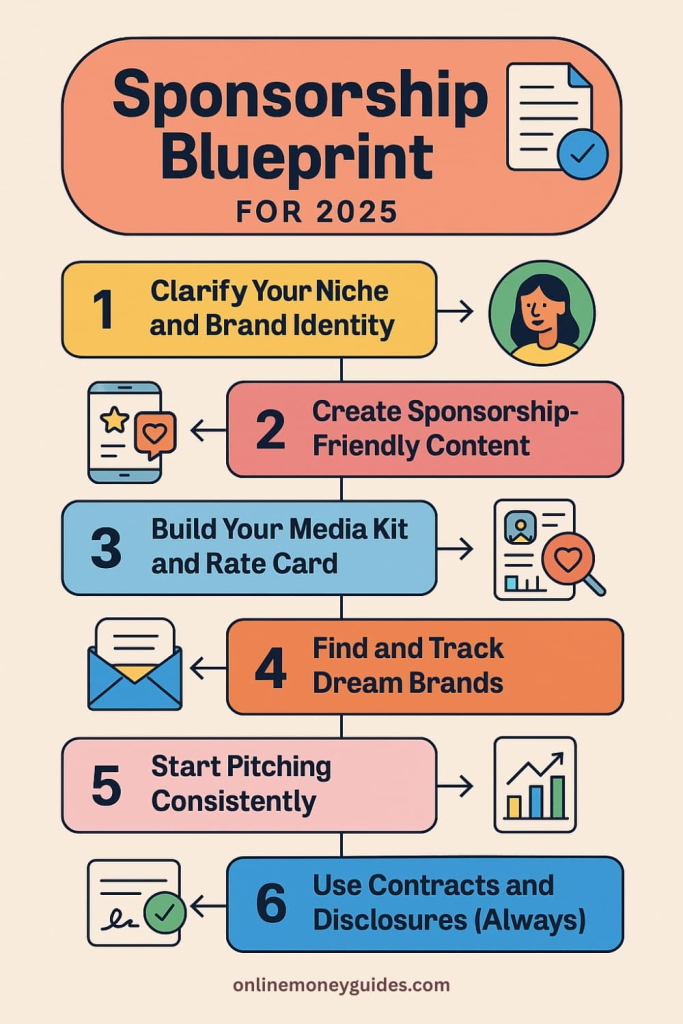
Step 1: Clarify Your Niche and Brand Identity
Start with focus. Confused creators don’t get collabs.
Let’s break it down:
Write a 1-line niche summary: “I help [audience] with [topic/value].”
Audit your last 12 posts and ask, are they consistent?
Update your bio, pinned content, and link-in-bio to reflect your niche.
Step 2: Create Sponsorship-Friendly Content
Brands need to see what working with you looks like even before they reach out.
Start with these steps:
- Make 1–3 spec posts with your favorite products
- Showcase storytelling, trust, and value, not just aesthetics
- Use real captions, CTAs, and show results (if applicable)
Step 3: Build Your Media Kit and Rate Card
Don’t wait to “feel ready.” Your media kit is a confidence builder.
- Use Canva or ConvertKit to create a 1–2 page kit
- Include audience stats, past results (if any), and contact info
- Save as a PDF or link for easy sharing
Step 4: Find and Track Dream Brands
The key is alignment. You want to work with brands your audience would naturally love.
- Make a spreadsheet with 15 ideal brands (and their contact info)
- Research past influencer campaigns they’ve run
- Note any affiliate programs or marketplaces they’re part of
Step 5: Start Pitching Consistently
You don’t need to sound fancy, just real and relevant.
- Use the email pitch template from earlier
- Personalize each pitch with brand-specific context
- Aim for 3–5 pitches per week (follow up after 5–7 days)
Step 6: Use Contracts and Disclosures (Always)
Protect your time, income, and reputation.
- Keep a contract template ready to send (via Bonsai or Google Docs)
- Always clarify: usage rights, payment terms, deliverables, deadlines
- Disclose paid, gifted, or affiliate content clearly
Step 7: Track Your Metrics and Learn
Sponsorships aren’t one-off wins. They’re learnable systems.
- Use Notion, Airtable, or Sheets to log pitches, responses, and campaign results
- Review your highest-performing content monthly
- Ask brands for feedback post-campaign
Stay Consistent, Not Perfect
Your first brand deal might not be your dream partnership, but it’s momentum.
Remember: You only need ONE yes to start everything.
Mini Challenge:
Set a 30-day goal: “I will send 10 pitches, create 3 spec posts, and build my media kit this month.”
Pitching is one of the fastest ways to land paid partnerships—especially for small creators. If you want copy-and-paste templates and proven scripts, check out our full guide on how to pitch to brands as a small influencer.
Your Influence Is Worth Investing In
You’re not “too small.”
You’re not “too late.”
You’re just early in the game and you’ve already got what most people don’t:
A roadmap, a message, and the willingness to show up.
The creator economy in 2026 is wide open for thoughtful, real, values-based influencers who know how to connect. That’s you.
So take the first step. Send the pitch. Post the video. Ask for the rate you deserve.
The brand deals, paid partnerships, and life-changing collaborations?
They’re waiting for you to raise your hand.