You’ve probably thought about starting a YouTube channel but felt stuck on one big question: what niche should I choose? It’s easy to get discouraged when you see huge creators dominating popular categories like gaming, beauty, or general lifestyle. With millions of videos already out there, it can feel impossible to break through.
Here’s the good news: you don’t need to fight your way into overcrowded spaces. In fact, the smartest path is often finding low competition niches for YouTube. These are the corners of the platform where audiences are eager for content, but creators are scarce. Less competition means your videos can rank faster, grow an audience quicker, and monetize sooner.
Think of it this way: YouTube is like a massive city. You don’t need to open your shop in the busiest mall where rent is sky-high and competition is brutal. You can set up on a side street that hasn’t been discovered yet, where people are still hungry for what you’re offering. That’s how you build loyal viewers who stick around.
And here’s something worth remembering: you don’t need millions of views to make money. With the right niche, a smaller but engaged audience can bring in consistent income through ads, affiliates, sponsorships, or your own products.
By the end of this guide, you’ll know:
- What makes a niche “low competition” but still profitable.
- The 11 best YouTube niches that beginners and side hustlers can step into today.
- How to monetize each niche with practical examples, tools, and strategies.
Most importantly, you’ll leave with confidence that you can start now, even if you’ve never uploaded a video before.
Start small, stay consistent, and treat YouTube like an asset you’re building for your future.
This article is part of our Ultimate Guide to Making Money on YouTube, where we cover everything from choosing a niche to scaling into sponsorships and digital products.

What Are Low-Competition Niches for YouTube (and Why They Work)
A low-competition YouTube niche is a category where there’s solid audience demand but not enough creators consistently serving that demand. These niches often fly under the radar because they’re not as flashy as mainstream trends, but they’re goldmines for beginners and side hustlers who want to grow faster without needing years of grind.
The beauty of low competition niches for YouTube is that the playing field is much fairer. Instead of fighting against established channels with million-dollar setups, you’re stepping into a space where viewers are actively searching and not finding enough fresh content. That gap is your opportunity.
Here’s why they work so well:
- Easier discoverability. When fewer creators are making content, your videos have a better chance of ranking in search results and getting suggested.
- Faster audience trust. In underserved niches, viewers quickly latch onto new creators who consistently show up. You become their go-to source.
- Higher monetization potential. Many of these niches attract advertisers willing to pay more, leading to stronger RPMs (for example, finance niches can earn $6–$15 per 1,000 views, while general vlogs may sit at $2–$4).
Success on YouTube doesn’t mean chasing trends or competing in oversaturated spaces. It’s about finding the overlap between what you enjoy creating, what people are searching for, and where competition is light.
You don’t need to reinvent the wheel either. Sometimes, it’s simply taking a broad idea, like fitness or cooking, and narrowing it down to a specific angle that no one else is focusing on.
The less crowded the space, the louder your voice becomes.
11 Best Low-Competition Niches for YouTube That Make the Most Money
The following niches are not just ideas pulled out of thin air. They’re proven categories where real creators are making income with fewer barriers to entry. Each one comes with clear monetization paths and room for faceless YouTube niches if you’re not comfortable being on camera.
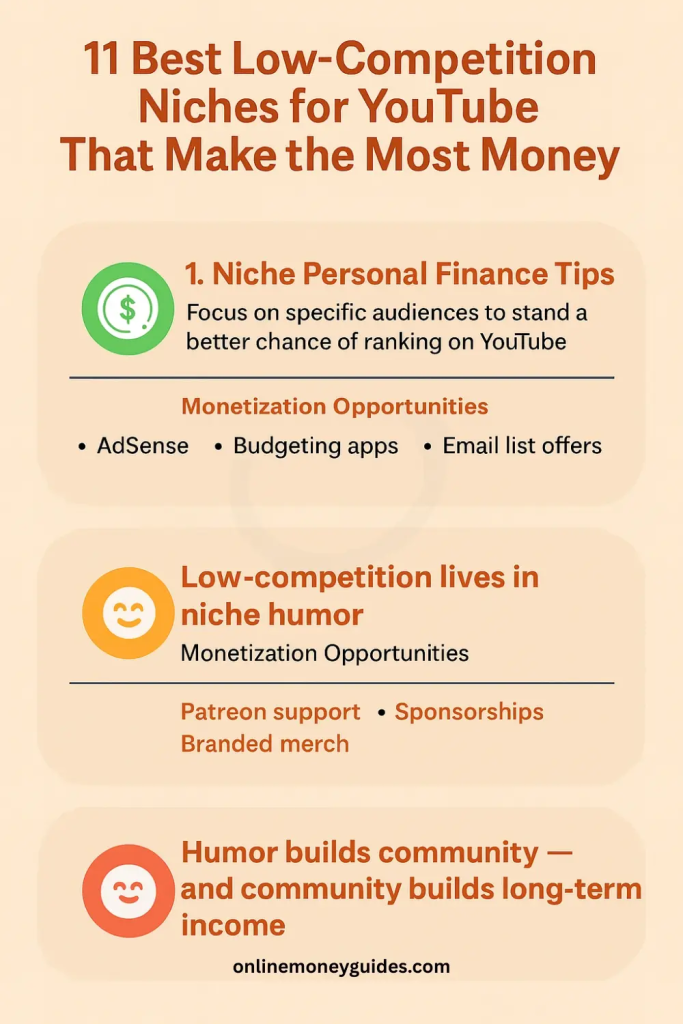
1. Niche Personal Finance Tips
Money talk is everywhere on YouTube, but here’s the secret: the biggest channels cover broad topics like investing or credit cards. That leaves gaps in smaller, highly specific areas, which creates the sweet spot for low competition niches.
Instead of making generic “how to save money” videos, you could create content around:
- Budgeting for students or young families
- Simple money tips for freelancers or side hustlers
- Credit repair or debt payoff journeys
Advertisers love these audiences. Finance videos often see RPMs between $6–$15, making them some of the most profitable YouTube niches. And you don’t need massive views for this to add up.
Monetization opportunities include:
- YouTube AdSense at high RPMs
- Promoting financial tools like budgeting apps or side hustle platforms
- Building an email list with ConvertKit and offering digital guides
The best part? You don’t have to be a financial guru. Sharing your own experiences, like how you paid off debt or managed money as a freelancer, is often more relatable and trustworthy than textbook advice.
Don’t wait until you’re “an expert.” Start with what you know and grow as your audience grows.
2. Comedy with a Twist
Comedy is one of the oldest YouTube categories, but most people chase the same mainstream formats. Low-competition opportunities live in niche humor. Think workplace comedy skits, digital nomad jokes, or even parent humor.
These are easier to create, often short-form, and perfect for faceless YouTube niches since you can use animation, memes, or voiceovers. Audiences crave relatable laughs in their specific situations, and advertisers like attaching themselves to lighthearted, shareable content.
The income potential here is less about high RPMs (comedy typically sits closer to $2–$5) and more about sponsorships, Patreon support, or branded merchandise. Small audiences can still fuel steady sales if your content hits the right emotional notes.
Consistency matters more than production value. One relatable video that goes viral can build your subscriber base faster than months of “safe” content.
Humor builds community, and community builds long-term income.
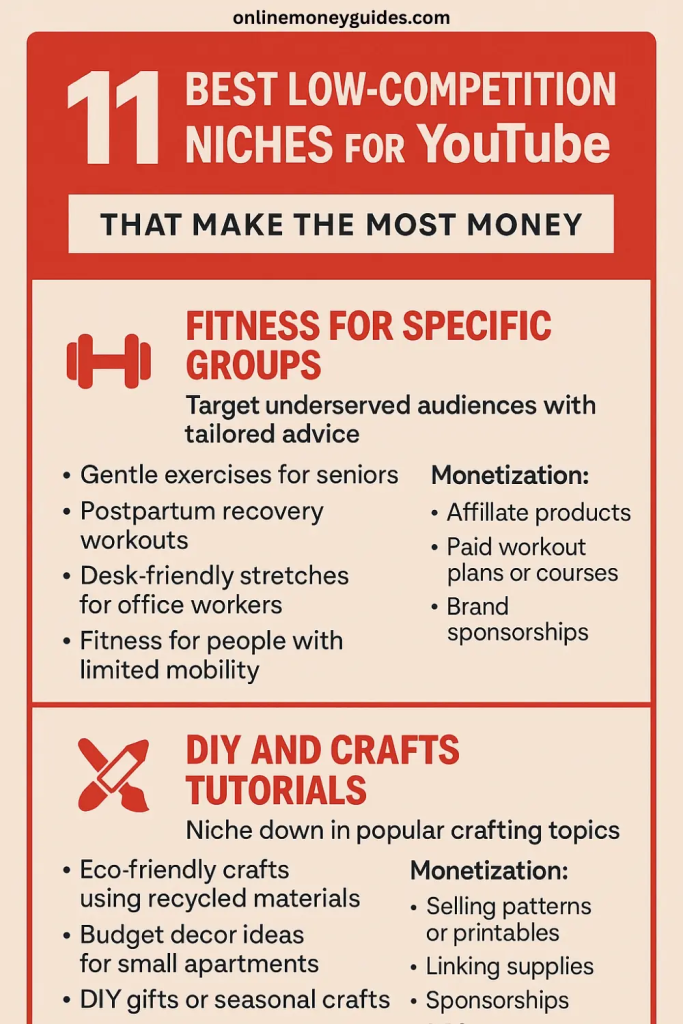
3. Fitness for Specific Groups
Fitness is a huge space on YouTube, but broad workout content is crowded with influencers, gyms, and brands. Where the opportunity lies is in fitness for specific groups. These are underserved audiences who need tailored advice, not generic routines.
Some examples include:
- Gentle exercises for seniors
- Postpartum recovery workouts
- Desk-friendly stretches for office workers
- Fitness for people with limited mobility
Because these niches are hyper-focused, they don’t attract as many big creators, making them ideal low competition niches for YouTube. Viewers are also loyal. Once they find someone who understands their unique challenges, they stick around.
Monetization here is flexible:
- Affiliate products (yoga mats, resistance bands, fitness apps)
- Paid workout plans or digital courses hosted through ConvertKit
- Brand sponsorships with wellness companies
Fitness content can earn $3–$7 RPM, but the real power is in creating products or services that your audience genuinely needs. Even a small, engaged group can translate into steady income.
Your expertise doesn’t have to be broad; it just has to meet one group’s needs really well.
4. DIY and Crafts Tutorials
DIY is one of the most evergreen content areas on YouTube. People will always search for ways to make things with their hands, whether it’s home décor, upcycling, or creative projects for kids. The trick is to niche down.
Examples of low-competition DIY angles:
- Eco-friendly crafts using recycled materials
- Budget décor ideas for small apartments
- DIY gifts or seasonal crafts
This niche works brilliantly for faceless YouTube channels since you can film your hands doing the work, with no need to appear on camera. It’s also a space where creativity often beats polish. Viewers value clear steps over flashy production.
Monetization options include:
- Selling patterns, templates, or printables on Etsy
- Linking supplies through Creative Fabrica or Amazon
- Sponsorships with craft brands
- AdSense (average $3–$6 RPM)
DIY tutorials create a backlog of evergreen videos that keep generating views months or years after you upload them.
Each tutorial becomes a small digital asset working for you long-term.
5. Cooking for Specific Diets
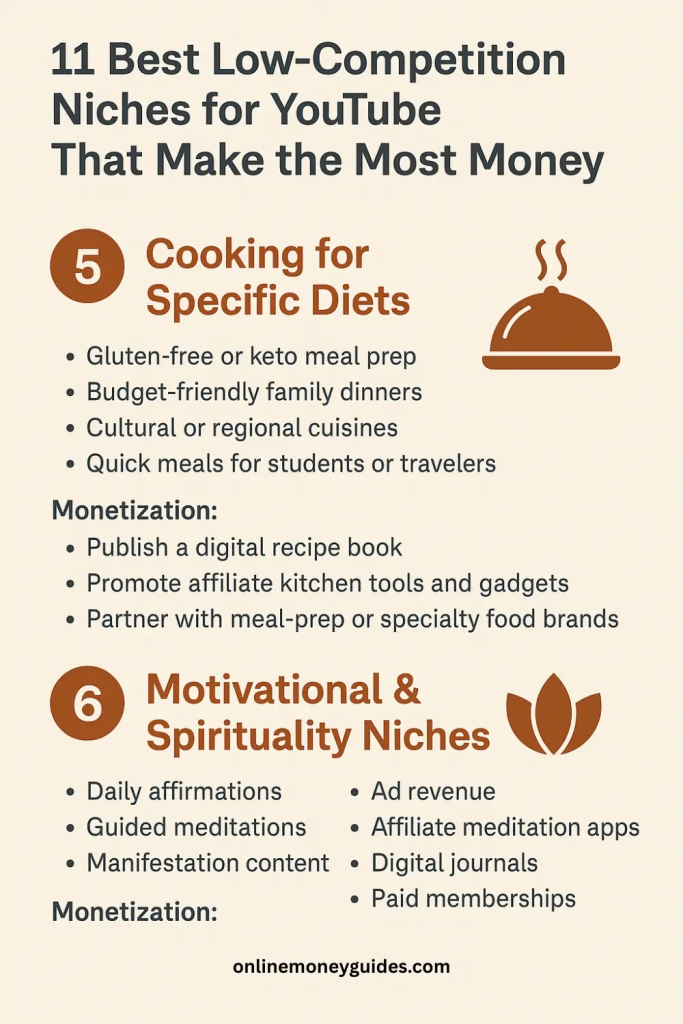
Food is a massive category, but like fitness, the opportunity comes when you go specific. Instead of trying to compete with giant recipe channels, focus on niche cooking content that solves problems for targeted groups.
Think:
- Gluten-free or keto meal prep
- Budget-friendly family dinners
- Cultural or regional cuisines
- Quick meals for students or travelers
Cooking niches often see $3–$7 RPM, and the monetization extends beyond ads. You can:
- Publish a digital recipe book
- Promote affiliate kitchen tools and gadgets
- Partner with meal-prep or specialty food brands
This is also one of the best niches for faceless creators. Overhead shots of cooking steps, simple captions, and voiceovers are more than enough to create high-value videos.
Cooking isn’t just about recipes; it’s about solving daily problems with food. That’s what people will subscribe to.
6. Motivational & Spirituality Niches
People turn to YouTube for motivation as much as they do for entertainment. What makes this one of the best YouTube niches is how versatile it can be. You don’t need to be on camera; faceless formats like voiceovers, stock footage, or calming visuals work beautifully.
Low-competition opportunities here include daily affirmations, guided meditations, manifestation content, or short motivational stories. Because the content is timeless, your videos can stay relevant for years, slowly building a library that generates steady income.
Monetization is strong even at smaller subscriber counts: ad revenue, affiliate meditation apps, digital journals, or paid memberships. While RPMs average $3–$8, creators often earn more from selling supportive digital products than from ads alone.
Inspiration never goes out of style, and your content could become part of someone’s daily routine.
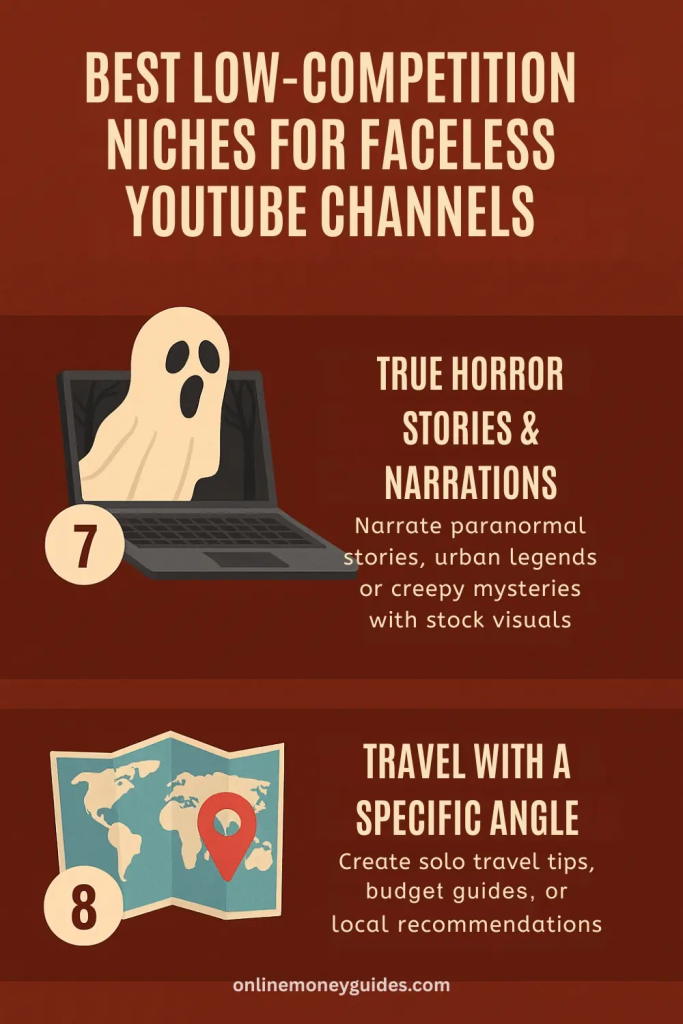
7. True Horror Stories & Narrations
Storytelling channels have exploded in recent years, but the horror niche remains surprisingly underserved outside of big names. If you enjoy narration or researching unusual stories, this is a faceless YouTube niche with high engagement potential.
The model is simple: narrate real-life paranormal stories, creepy internet mysteries, or urban legends while using stock visuals or AI-generated images. You don’t need elaborate editing. What matters most is atmosphere and consistency.
Ads can deliver $3–$6 RPM, but income often comes from Patreon support, audiobook tie-ins, or merchandise. Many viewers want to support their favorite storytellers simply because they feel part of a community.
If you can keep people listening late into the night, you can build a loyal fanbase that sticks around.
8. Travel with a Specific Angle
Travel vlogs may look saturated, but broad “day in the life” content is what’s overcrowded. Where creators win is by narrowing down to a specific angle that solves problems for travelers.
Some strong low-competition examples are budget travel guides, solo female travel tips, hidden local gems, or themed content like train journeys. These niches bring together adventure and utility people watch to dream, but also to plan.
Monetization goes beyond AdSense (average $2–$5 RPM). You can use Stay22 maps to recommend hotels, promote Travelpayouts for flights and tours, or sell your own digital maps and itineraries.
The secret is to focus on helping, not just showing. That’s what makes travel content stand out.
9. Gaming Niches with a Twist
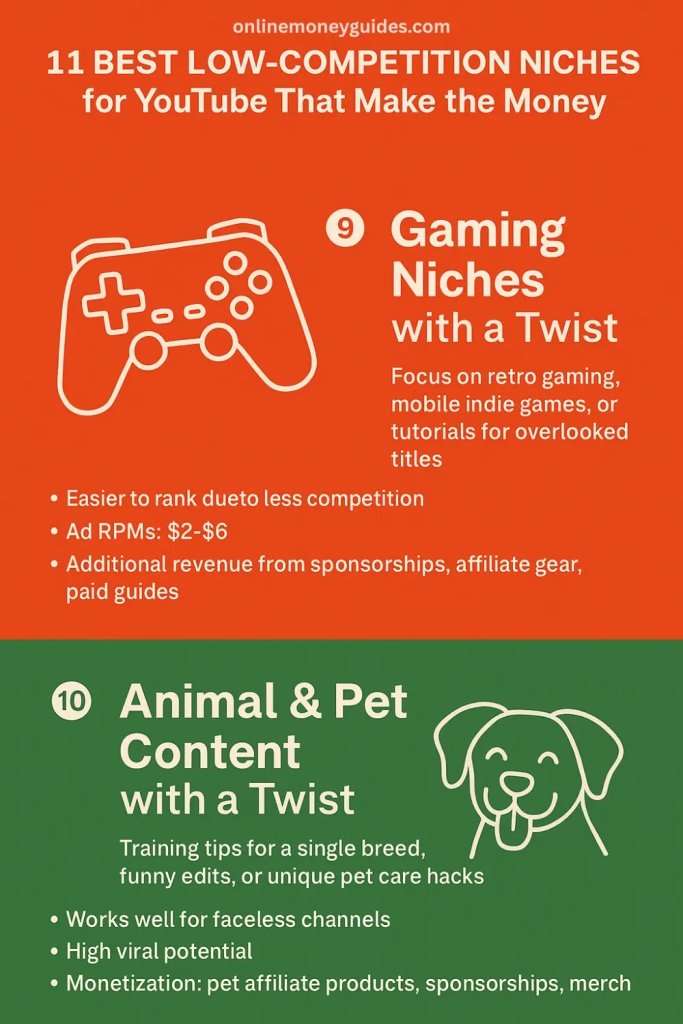
Yes, gaming is crowded, but low competition lives in the corners. Instead of competing with Fortnite or Minecraft giants, focus on retro gaming, mobile indie games, or tutorials for overlooked titles.
These videos are easier to rank because fewer creators are covering them. Gaming tends to have lower ad RPMs ($2–$6), but sponsorships, affiliate gear, or even your own paid guides can add to revenue streams.
The key is consistency and niching down. A gamer who becomes “the go-to person” for one overlooked title often sees faster growth than those chasing every trend.
Being small but focused beats being broad and forgettable.
10. Animal & Pet Content with a Twist
Animals always win the internet, but broad pet compilations are everywhere. The low-competition opportunities are in specific, creative angles. That could mean training tips for a single breed, funny edits with clever voiceovers, or pet care hacks people don’t usually see.
This type of content works well for faceless YouTube niches since the focus is on the animals, not you. It’s also one of the easiest spaces to go viral because viewers love sharing short, funny, or heartwarming clips.
Ad RPMs hover around $2–$5, but revenue grows when you layer on pet affiliate products, sponsorships from pet brands, or even launching your own pet merch. A few videos that strike the right emotional chord can build momentum quickly.
Cute plus useful is a combination that rarely fails on YouTube.
11. Educational & “How-To” Tutorials
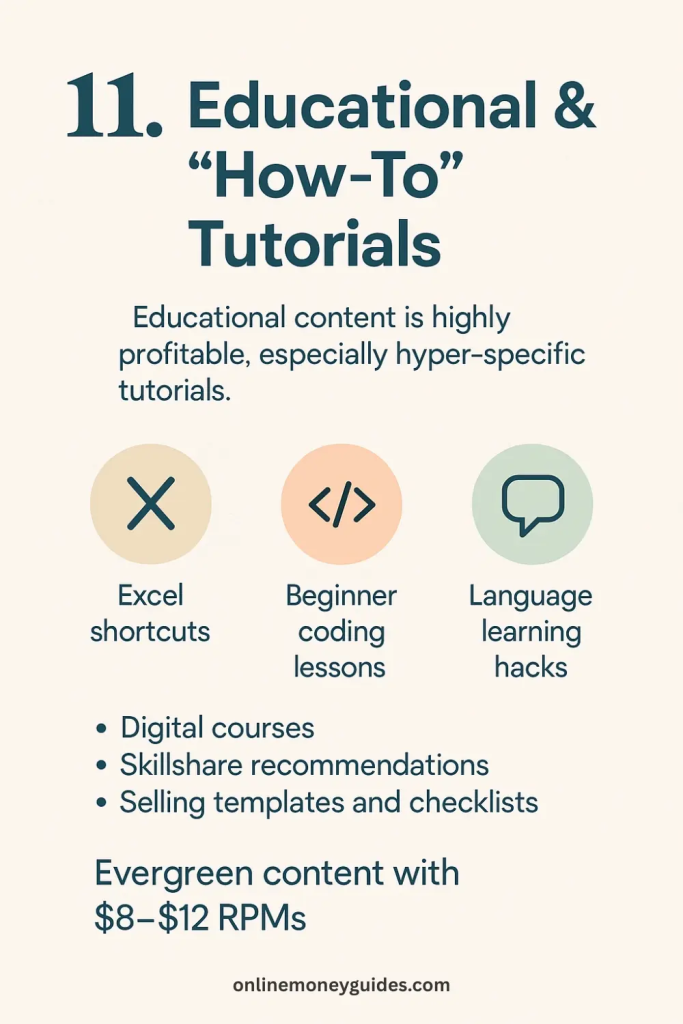
Educational content is one of the most profitable YouTube niches because people are always searching for solutions. What keeps competition low is when you zoom in on hyper-specific tutorials.
Think Excel shortcuts, beginner coding lessons, language learning hacks, or even how to use certain apps. Unlike entertainment-driven niches, these videos consistently appear in search results because people frequently need help with the same problems.
This niche consistently delivers higher advertiser payouts, with RPMs in the $8–$12 range. And it’s one of the easiest to monetize beyond ads: you can create digital courses, recommend learning platforms like Skillshare, or sell your own templates and checklists through ConvertKit.
Every tutorial you upload becomes a mini asset that helps someone today and another person a year from now. That’s the power of evergreen educational content.
How to Choose the Best Low-Competition YouTube Niche for You
By now, you’ve seen that there are plenty of low competition niches for YouTube with strong income potential. But with so many choices, how do you know which one is right for you? Picking a niche isn’t about guessing it’s about aligning what you enjoy with what the market needs.
The best way to choose is to run your idea through three simple filters:
- Passion and sustainability. Ask yourself: “Could I talk about this topic every week for the next year?” Even if you start small, enjoying the subject keeps you consistent.
- Audience demand. Use free tools like Google Trends or paid options like VidIQ to see whether people are actively searching for your topic. You want steady, not one-time, interest.
- Monetization potential. Look at whether advertisers care about your niche. Finance, education, and tools often attract higher ad rates, while lifestyle or comedy may rely more on sponsorships and products.
When these three align, you’ve found a sweet spot where growth and income feel natural instead of forced.
Here’s a simple way to think about it: you don’t need to pick the “perfect” niche right away. You need to pick one niche you can commit to for a season, create content, and learn from the response. You can always adjust and refine as you go.
Clarity comes from creating, not just thinking.

How to Monetize Low-Competition Niches Faster
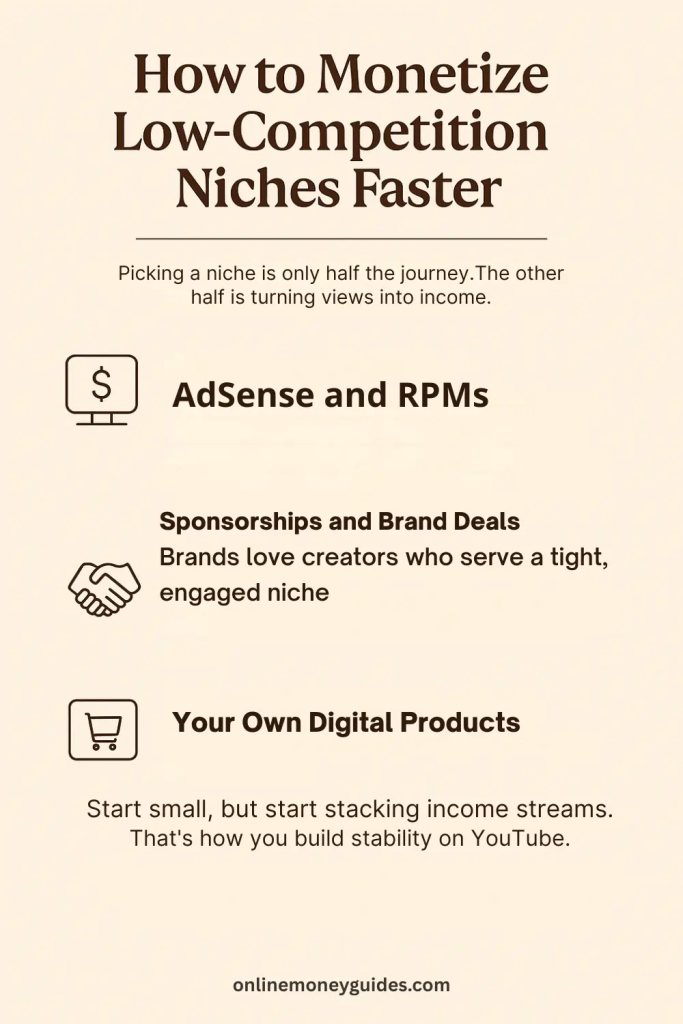
Picking a niche is only half the journey. The other half is turning views into income. The good news is that low-competition YouTube niches often monetize faster because they attract targeted audiences that advertisers value. You don’t need millions of views to start seeing results; you need the right systems in place.
AdSense and RPMs
YouTube’s built-in ad revenue is usually the first step. Different niches pay differently depending on advertiser demand. For example, finance and education might see RPMs between $6–$15, while entertainment-focused niches like comedy or pets average closer to $2–$5. Even within low-competition categories, knowing your RPM potential helps you set realistic expectations.
Affiliate Marketing
Affiliate programs are one of the quickest ways to earn without creating your own products. They work best when you recommend tools or services that your audience genuinely needs. For instance:
- ConvertKit for email marketing and selling digital products
- Visme for design templates and infographics
- VidIQ for keyword research and YouTube growth
- Stay22 or Travelpayouts for travel niches
When you place these links naturally in your video descriptions, a small audience can still generate meaningful commissions.
Sponsorships and Brand Deals
Brands love creators who serve a tight, engaged niche. Even with a few thousand subscribers, you can land sponsorships if your audience is the right fit. A DIY channel might partner with a craft supply company, while a pet channel could collaborate with a food or toy brand. The key is to show brands that you have trust with your viewers.
Your Own Digital Products
Eventually, the most sustainable income comes from selling your own offers. That could be a recipe e-book, workout plans, templates, or online courses. Tools like ConvertKit make it simple to set up a landing page and start collecting payments. With your own products, every sale builds your brand instead of just boosting another company’s.
Monetization doesn’t have to wait until you’re “big.” Even with a small subscriber base, layered strategies can bring in revenue early. Think of ads as your baseline, affiliates as your accelerator, sponsorships as your growth lever, and digital products as your long-term foundation.
Start small, but start stacking income streams. That’s how you build stability on YouTube.
Case Study Example: Monetizing a Faceless Finance Channel
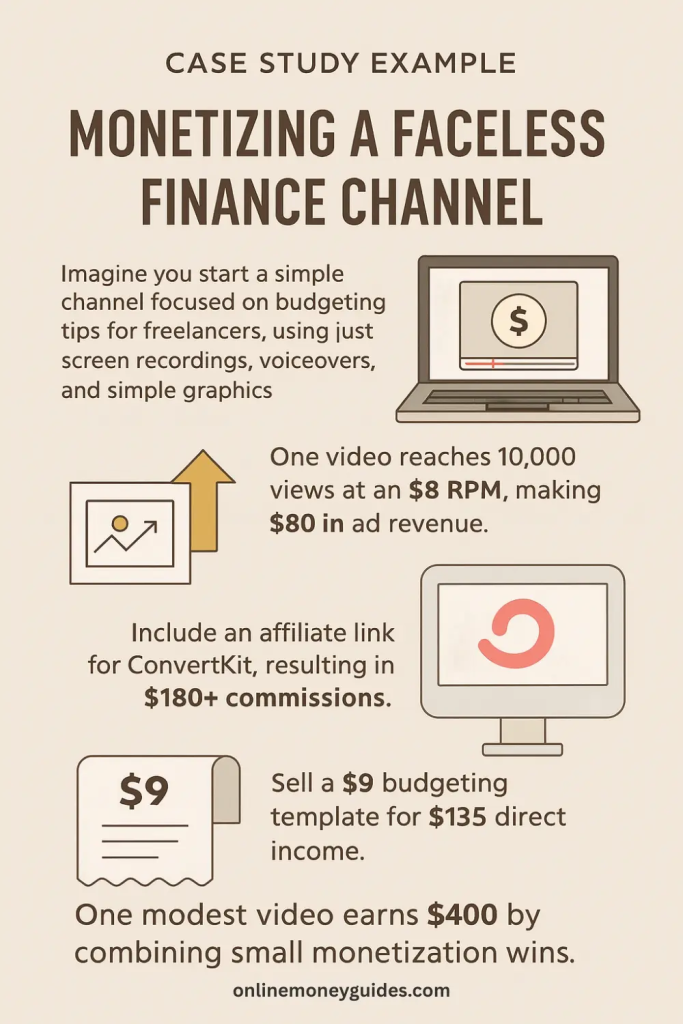
Imagine you start a simple channel focused on budgeting tips for freelancers. You never show your face, just screen recordings, voiceovers, and simple graphics created in Visme.
Within three months, one of your videos about “How to Track Side Hustle Income in Excel” picks up steady search traffic. It reaches 10,000 views. At an average RPM of $8, that single video makes around $80 in ad revenue. Not life-changing, but here’s where the stacking begins:
- In your video description, you link to ConvertKit for viewers who want to start organizing their client invoices and email lists. Even if just 20 people sign up through your link, that could mean $180–$200 in affiliate commission.
- You also create a $9 budgeting template and sell it directly through ConvertKit’s commerce tools. If only 15 viewers buy, that’s $135 in direct income.
So from one modest video, you’ve earned roughly $400 by layering ad revenue, affiliate commissions, and a small digital product. That’s the power of monetization in low competition niches: you don’t need viral views to build meaningful income.
The secret isn’t one strategy. It’s combining small wins into steady growth.
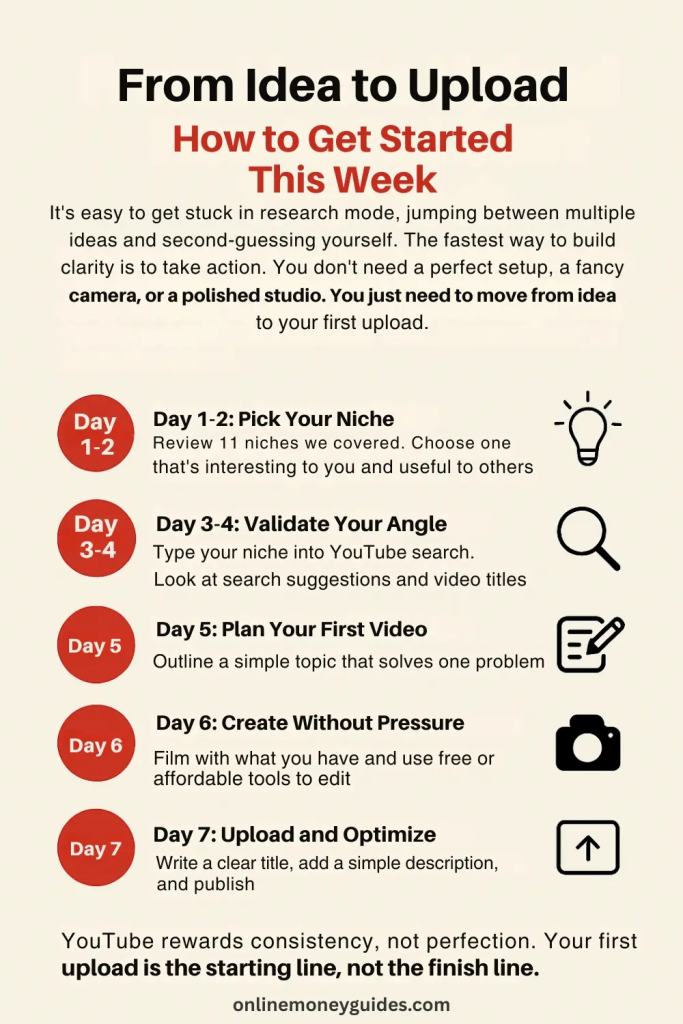
From Idea to First Upload: How to Get Started This Week
It’s easy to get stuck in research mode, jumping between niche ideas and second-guessing yourself. The fastest way to build clarity is to take action. You don’t need a perfect setup, a fancy camera, or a polished studio. You just need to move from idea to your first upload.
Here’s a simple plan to follow over the next seven days:
Day 1–2: Pick Your Niche
Review the 11 niches we covered. Choose one that feels both interesting to you and useful to others. Don’t overthink it, commit for now. You can always pivot later.
Day 3–4: Validate Your Angle
Type your niche into YouTube search. Look at the “search suggestions” and notice which video titles come up. These are signals of what people are actively looking for. A tool like VidIQ can also confirm search volume and competition.
Day 5: Plan Your First Video
Outline a simple topic that solves one problem. For example, if you’re starting a budgeting-for-freelancers channel, your first video could be “3 Ways to Track Client Payments Without Expensive Software.”
Day 6: Create Without Pressure
Film with what you have. Your phone is fine. Use free or affordable tools for editing. If you want graphics, Visme is a strong alternative to Canva. Remember, your audience cares more about value than flashy production.
Day 7: Upload and Optimize
Upload your video, write a clear title with your niche keyword, and add a simple description. Don’t worry about perfection. Focus on publishing. Once it’s live, share it with one or two people who might find it helpful.
By the end of the week, you’ll have your first video out in the world. That’s more progress than months of overthinking. Each upload will get easier, and every video will teach you something new about your audience and yourself.
YouTube rewards consistency, not perfection. Your first upload is the starting line, not the finish line.
Finding the right niche is just step one. To learn how to grow, monetize, and build a sustainable channel, read our full YouTube money-making guide.