You’ve probably seen people online bragging about how they “make money in their sleep” by selling digital products. And maybe part of you wonders if that’s just hype or if there’s actually a way for someone like you, starting from scratch, to make it work.
We get it. Scrolling through endless “online business ideas” can feel overwhelming. Everyone seems to be shouting about the next big thing, but none of it feels clear, doable, or realistic. The truth? You don’t need a giant audience, a tech degree, or a huge upfront investment to succeed. What you need is a clear list of proven, profitable digital products that people are already buying and a path to choose the one that fits you best.
That’s exactly what you’ll find here. In this guide, we’ll walk through 15 of the most profitable digital products that actually sell online in 2026 and beyond. These aren’t pie-in-the-sky ideas. They’re practical, low-risk, and high-demand options that creators, side hustlers, and digital entrepreneurs are using to build real income.
By the end, you’ll not only know what works but also feel confident about where to start. Whether that’s publishing your first ebook, selling a simple printable on Etsy, or building a course around something you already know.
This list is part of our broader resource, The Ultimate 2026 Guide to Making Money with Digital Products, where we cover setup, marketing, and scaling strategies.

Why Digital Products Are the Best Low-Risk Business Model
Starting a business used to mean stocking a garage full of products, worrying about shipping costs, and taking on real financial risk. Digital products flip that script.
With digital products, you create something once and then sell it again and again without worrying about inventory or delivery. That’s why so many creators and side hustlers are leaning into them.
Here’s why they’re considered one of the best digital products business models right now:
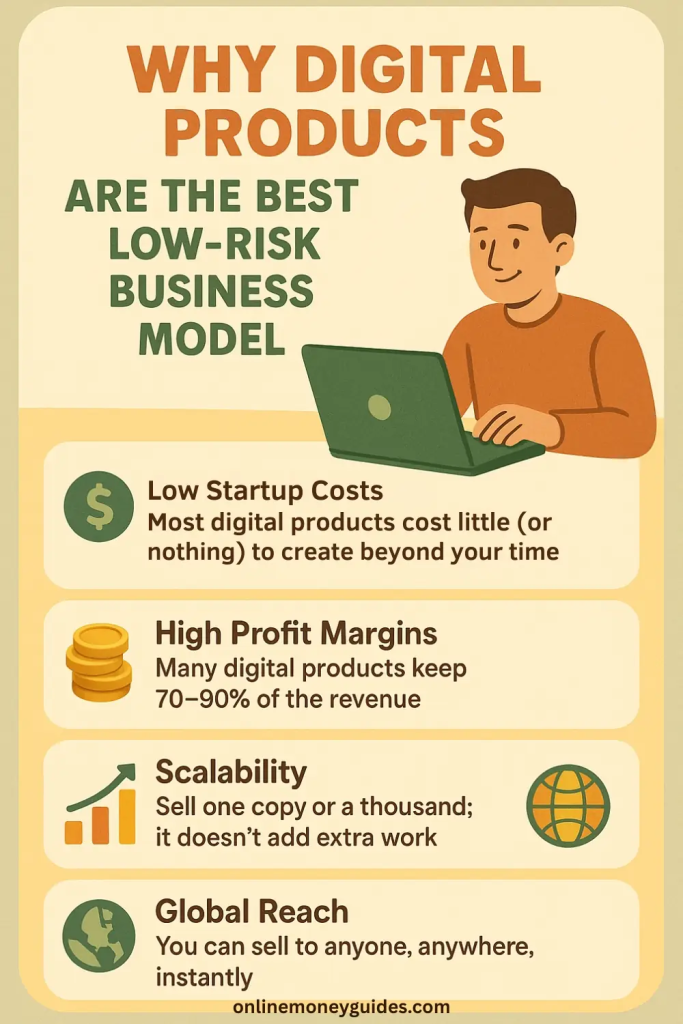
- Low startup costs: Most digital products cost little (or nothing) to create beyond your time. You don’t need warehouses, packaging, or shipping fees.
- High profit margins: Many digital products keep 70–90% of the revenue because there’s no physical overhead.
- Scalability: Sell one copy or a thousand; it doesn’t add extra work. Your audience grows, but your effort doesn’t multiply at the same rate.
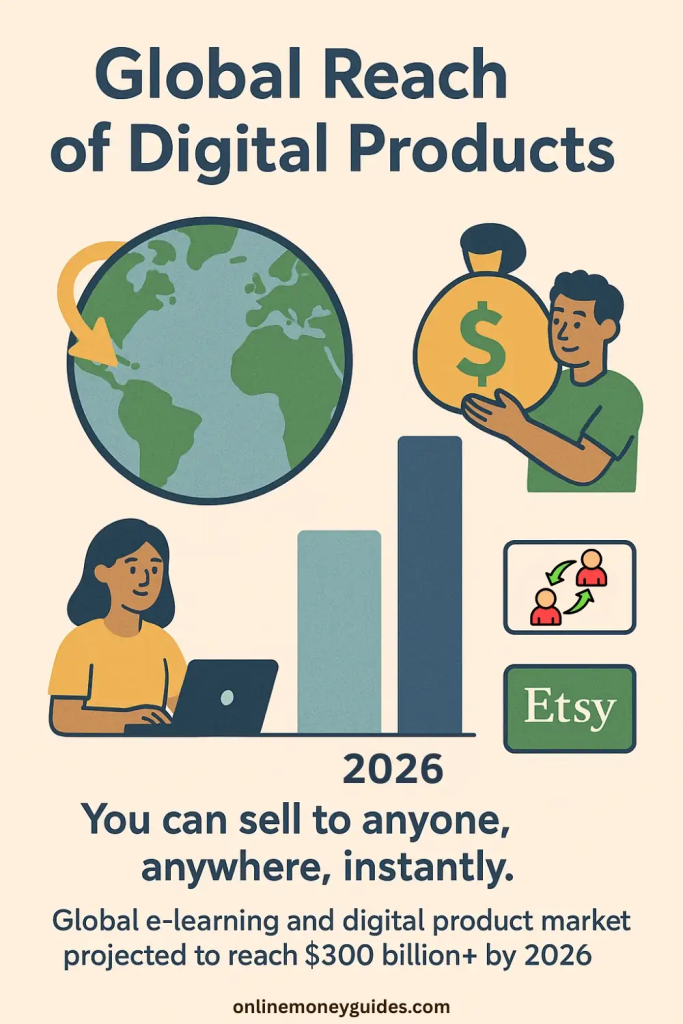
- Global reach: You can sell to anyone, anywhere, instantly. Platforms like Gumroad, Shopify or Etsy make setup easy.
The industry numbers back this up. The global e-learning and digital product market is projected to hit $300 billion+ in 2026. That means the demand is real and growing.
Digital products aren’t just profitable; they’re also flexible. Whether you’re into teaching, writing, design, or just organizing spreadsheets, there’s a way to turn your skills into something people are eager to pay for.
The 15 Most Profitable Digital Products to Sell Online
1. Online Courses
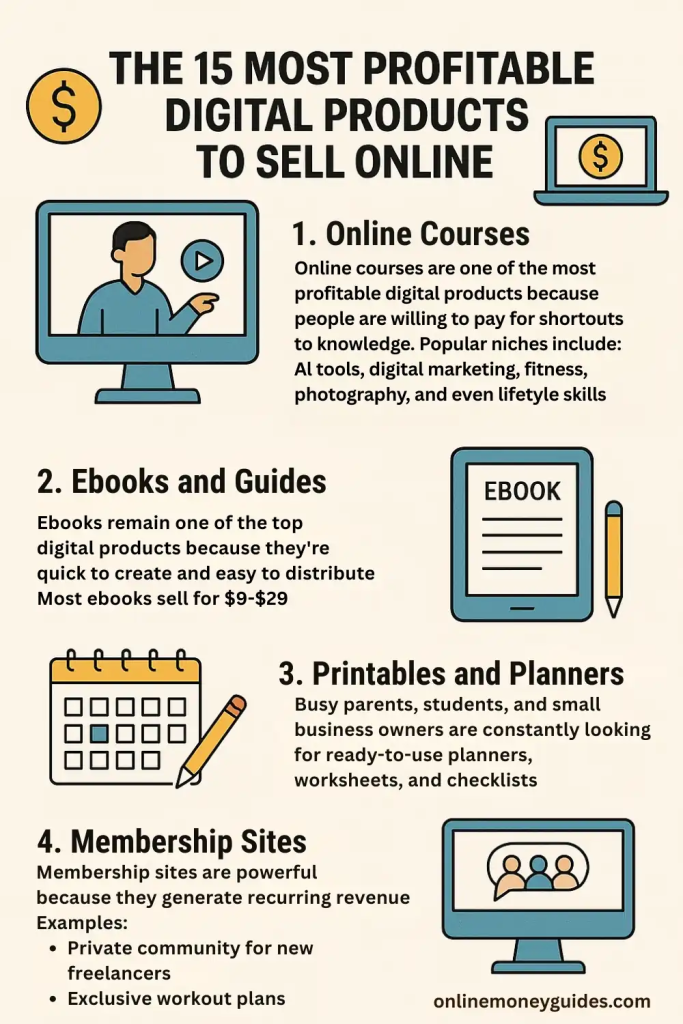
Online courses are one of the most profitable digital products because people are willing to pay for shortcuts to knowledge. You don’t need to be a professor; you just need to be a few steps ahead of the person you’re teaching.
Popular niches include: AI tools, digital marketing, fitness, photography, and even lifestyle skills like minimalism or productivity. Courses can be small “mini-classes” for $29–$49, or premium programs priced at $500+.
Kajabi makes it easy to package your expertise into a course without coding. Even simpler, you could record a video series and sell it directly through Gumroad.
Think about what you already know how to do. Could you teach it in a clear, beginner-friendly way? That’s the foundation of a successful online course.
2. Ebooks and Guides
Ebooks remain one of the top digital products because they’re quick to create and easy to distribute. If you can write a series of blog posts, you can turn them into a polished ebook.
Ebooks work best when they solve a specific problem. For example:
- “The Beginner’s Guide to Remote Work”
- “30 Easy Plant-Based Recipes for Busy People”
- “How to Start a Freelance Writing Career in 30 Days”
You can sell ebooks on Amazon Kindle Direct Publishing, Gumroad, or even through your own website using ConvertKit for email delivery.
Most ebooks sell for $9–$29, making them affordable for readers but still profitable for you, especially since there’s no limit to how many times they can be sold.
3. Printables and Planners
If you’ve ever downloaded a meal planner, budget tracker, or calendar from Etsy, you know how valuable printables can be. They’re one of the best digital products for beginners because they require little tech skill and can be made with tools like Canva or Visme.
Printables thrive because they save people time. Busy parents, students, and small business owners are constantly looking for ready-to-use planners, worksheets, and checklists.
And here’s the kicker: once you design a printable, you can sell it forever without touching it again. Sellers on Etsy report making hundreds to thousands of dollars a month with just a small catalog of printables.
If you enjoy design or organization, this is a low-risk way to dip your toe into digital product sales.
4. Membership Sites
Membership sites are powerful because they generate recurring revenue. Instead of a one-time purchase, people pay monthly or annually to stay part of your community or access your premium content.
Examples of successful membership models:
- A private community for new freelancers
- Exclusive workout plans and live Q&A sessions for fitness fans
- Niche learning hubs, like “Mastering Notion for College Students”
Platforms like Patreon and Circle make it simple to create gated communities and drip out content.
The beauty of this model is stability. Even if you charge just $10 per month, 100 members equals $1,000 of steady, repeatable income.
5. Stock Photos and Videos
With businesses, bloggers, and creators publishing content daily, stock media is always in demand. Selling stock photos and videos is one of those high-demand digital products that keeps paying you long after you click the shutter.
You don’t need to be a pro photographer. High-quality lifestyle shots, flat lays, or even short B-roll clips can sell well.
Where to sell:
Every time someone licenses your photo, you earn a royalty. With a large enough library, stock media can become a steady stream of passive income.
6. Software and Apps
Software is a bigger lift upfront, but it’s also among the most profitable digital products when done right. Think of popular tools like grammar checkers, budgeting apps, or productivity extensions.
The good news? You don’t always need to code. No-code platforms like Bubble and Glide make it possible to create simple apps without technical expertise.
Monetization options:
- One-time purchase
- Monthly subscription
- Freemium model with paid upgrades
Because software solves specific, high-value problems, customers are often willing to pay $10–$50 per month, which adds up quickly.
7. Digital Templates
Digital templates are lifesavers for people who don’t want to start from scratch. These are among the top digital products on marketplaces like Etsy and Creative Market.
Think:
- Resume templates for job seekers
- Email templates for small business owners
- Website or WordPress themes for bloggers
The key is creating templates that save people time and make them look more professional. Canva and Visme are go-to tools for designing templates that even beginners can use.
Price points vary: $10–$50 for simple templates, up to $200+ for full website kits.
8. AI Prompts and Tools
This is one of the newest and highest-demand digital products to sell online. With AI tools like ChatGPT, MidJourney, and Stable Diffusion exploding in popularity, people are willing to pay for curated prompt packs that help them get better results.
For example:
- Social media caption prompts for creators
- MidJourney prompts for photographers
- Business productivity prompts for entrepreneurs
Prompt marketplaces are emerging quickly, and you can also sell directly on Gumroad. Since prompts are text-based, they’re incredibly easy to package and deliver.

9. Graphic Design Assets
From Lightroom presets to clipart, icons, and textures, graphic design assets remain a staple in the best digital products category. They’re especially popular with content creators who want professional-quality visuals without hiring a designer.
For instance, photographers sell Lightroom presets that instantly give photos a consistent look. Designers create icon packs or vector files that other businesses use in branding.
Marketplace like Creative Market makes it simple to upload and start selling. The demand is steady, especially as more people launch online businesses and need polished branding.
10. Fonts and Typography
Fonts are small files with big value. They’re one of the best digital products because they blend creativity with utility. Businesses, designers, and creators are constantly looking for unique fonts to stand out.
If you’re skilled in lettering or typography, you can create custom fonts and sell them through platforms like Creative Market or MyFonts. Even simple but stylish fonts can sell for $15–$50 each, and bundles often go for more.
The beauty of fonts is scalability. Once created, you can license them endlessly without any extra effort.
11. Podcasts and Audio Content
Podcasts are more than just a way to build an audience. They can be packaged into profitable digital products when combined with extras like transcripts, guides, or exclusive audio series.
Monetization paths include:
- Sponsorships once you have listeners
- Paid subscriptions through Apple Podcasts or Patreon
- Bonus content for members (Q&A episodes, behind-the-scenes chats)
Even if your podcast itself is free, you can repurpose episodes into ebooks, courses, or premium bundles. That way, your voice works double duty.
12. Digital Art and NFTs
Digital art has exploded thanks to platforms like OpenSea and Rarible. While NFTs are a niche, they can still be top digital products for artists who know how to market to collectors.
You don’t have to chase the hype. Many creators sell affordable, downloadable wall art, illustrations, or wallpapers on Etsy. Others mint limited-edition NFT collections for higher-value buyers.
The key here is community. Art buyers often support the creator as much as the work itself, so showing your process and building relationships online makes a huge difference.

13. Social Media Content Packs
Social media content packs are a high-demand digital product for busy entrepreneurs and creators. Instead of designing everything from scratch, they can grab pre-made Instagram templates, Pinterest pin designs, or even caption libraries.
For example, a creator might sell:
- 30 editable Canva templates for Instagram Stories
- A library of 100 plug-and-play captions for coaches
- Pinterest pin templates with matching blog graphics
These packs save time and help small businesses look professional. Price ranges typically fall between $15–$50, but larger bundles can command $100+.
14. Notion Templates
Notion has grown into a powerhouse productivity app, and templates are one of the top digital products selling in this niche. From student planners to business dashboards, people love ready-made setups that organize their lives.
Examples of popular Notion templates:
- College class planners
- Small business CRM dashboards
- Daily routines and goal trackers
You don’t need advanced design skills, just a knack for organizing information in a clear, useful way. Many sellers start by offering a few free templates to build an audience, then expand into premium versions.
15. Excel and Spreadsheet Templates
It doesn’t get much more practical than spreadsheets. Excel and Google Sheets templates are among the most profitable digital products because they solve immediate problems — tracking expenses, planning budgets, or managing projects.
Think about:
- Monthly budget trackers
- Wedding planning spreadsheets
- Social media analytics dashboards
Even simple templates can sell for $10–$30. And because spreadsheets are flexible, you can bundle multiple tools together and increase your average order value.

How to Choose the Best Digital Product for You
After seeing all 15 options, you might be thinking, “Okay, but which one do I start with?” That’s a fair question. The truth is, not every product will fit your skills, interests, or lifestyle — and that’s a good thing. You don’t need them all. You just need the one that aligns with you.
Here are a few guiding points to help you decide:
1. Play to your strengths.
What do people already ask you for advice on? If you’re the go-to person for fitness tips, maybe a course or printable workout tracker makes sense. If you’re a spreadsheet nerd, Excel templates could be your lane.
2. Solve a real problem.
The best digital products aren’t just “cool”; they make life easier for someone. Ask yourself: Does this save time, reduce stress, or help someone reach a goal faster? If yes, it’s worth selling.
3. Start small, test fast.
You don’t have to launch a massive course or app on day one. Begin with something simple, like a $15 printable or a $10 template, to test the waters. Early feedback will guide your next move.
4. Consider scalability.
Some digital products (like courses or memberships) take more upfront effort but pay off long-term. Others (like ebooks or printables) are quick wins you can launch in a week. Pick based on your current bandwidth.
At the end of the day, the most profitable digital product for you is the one you’ll actually create and market consistently. Don’t overthink it. Pick one, launch it, and refine as you go.
Tools to Help You Launch Quickly
One of the best parts about selling digital products is that you don’t need expensive software or a full tech team to get started. There are simple, affordable tools that can take you from idea to launch in a matter of days.
Here are some categories to cover your bases:
Design & Creation
- Visme — perfect for designing printables, templates, or social media packs.
- Audacity (free) — if you’re recording audio products or podcasts.
Selling Platforms
- Gumroad — beginner-friendly, great for ebooks, templates, and courses.
- Etsy — ideal for printables, planners, and creative assets.
- Shopify — best if you want to build a full storefront and scale.
Marketing & Delivery
- ConvertKit — email marketing made simple, great for delivering ebooks and building an audience.
- Flodesk — a stylish alternative for creators who want beautiful email designs.
- Stripe & PayPal — essential payment gateways for global sales.
You don’t need all of these at once. Start with the minimum viable setup, usually one design tool, one selling platform, and one marketing tool. That’s enough to validate your idea and make your first sales.
Tips for Selling Digital Products Successfully
Creating your product is just the first step. To actually make money, you’ll need a plan for marketing and selling it. The good news? You don’t need to be a pushy salesperson. You just need to connect with the right people and give them a clear reason to buy.
Here are a few strategies that consistently work:
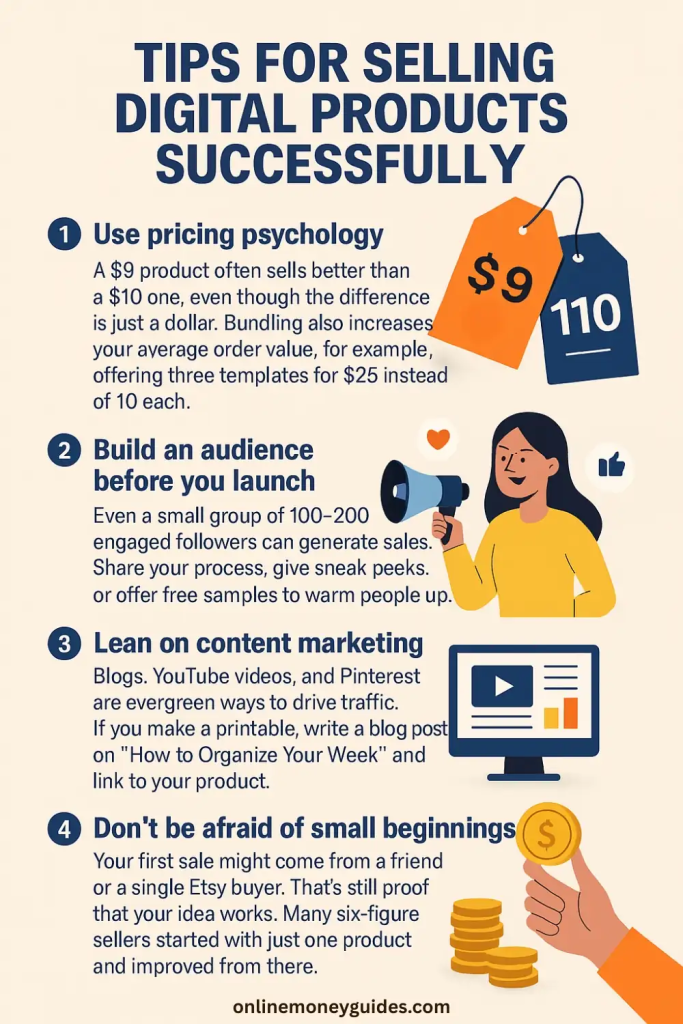
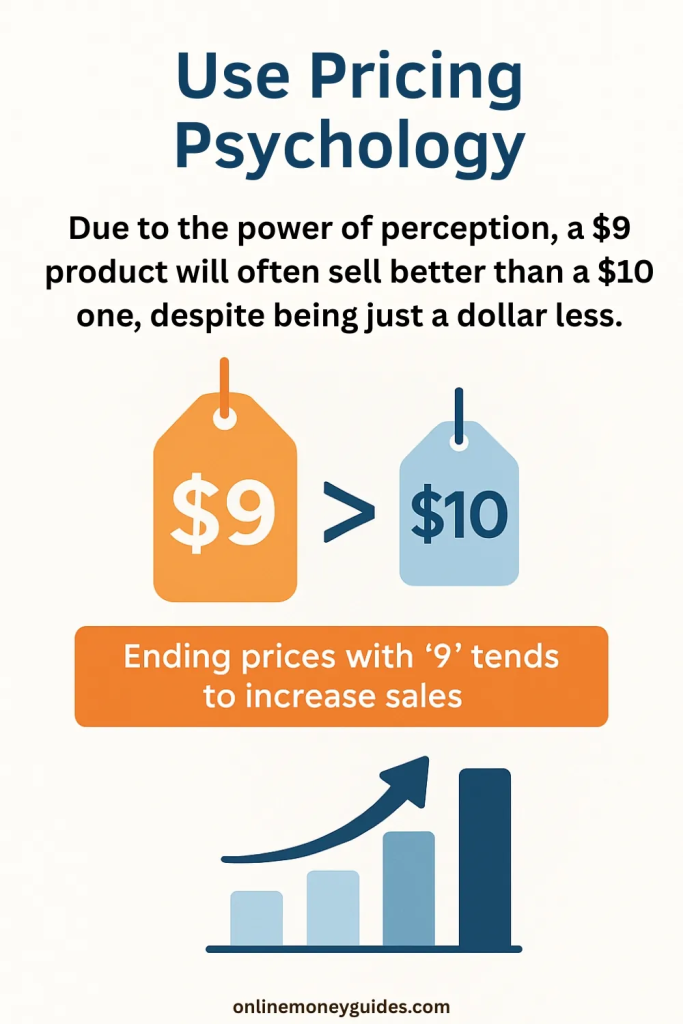
1. Use pricing psychology.
A $9 product often sells better than a $10 one, even though the difference is just a dollar. Bundling also increases your average order value, for example, offering three templates for $25 instead of $10 each.
2. Build an audience before you launch.
Even a small group of 100–200 engaged followers can generate sales. Share your process, give sneak peeks, or offer free samples to warm people up.
3. Lean on content marketing.
Blogs, YouTube videos, and Pinterest are evergreen ways to drive traffic. If you make a printable, write a blog post on “How to Organize Your Week” and link to your product. It’s helpful content that also sells.
4. Don’t be afraid of small beginnings.
Your first sale might come from a friend or a single Etsy buyer. That’s still proof that your idea works. Many six-figure sellers started with just one product and improved from there.
5. Keep customer feedback close.
If buyers ask for a variation, consider making it. Listening to your audience is the fastest way to refine your catalog into a lineup of the best digital products that truly sell.
Remember, selling digital products is a long game. Success often comes from consistency, not a one-time viral hit.
Your First Step Into Digital Products
Looking at this list of the most profitable digital products, it’s easy to get excited and maybe a little overwhelmed. You might even catch yourself thinking, “Do I need to do all of these to succeed?”
The answer is no. You don’t need all 15. You just need one.
Pick the product that feels most natural for your skills, your interests, and your lifestyle. Maybe that’s a simple printable you design in Visme. Maybe it’s the ebook you’ve been thinking about writing for months. Or maybe it’s finally launching that course you’ve been daydreaming about.
Here’s the secret: digital products are forgiving. You don’t have to be perfect on your first try. You can launch small, learn from real customers, and keep improving. Every seller you admire started with a single product and grew from there.
So take the first step. Create, publish, and share. Your future audience is already out there waiting. Your first sale could be closer than you think.
Once you’ve chosen a product, the next step is learning how to market, deliver, and scale it. Our complete guide to digital products walks you through the full process.